 Pocket Botanist
Pflanzenratgeber
Annual bluegrass.
Poa annua
Aussprache POH-ah AN-yoo-ah
Auch bekannt als Annual Bluegrass, Annual Meadow Grass, Annual Meadow-Grass, Annual Poa, Winter Grass


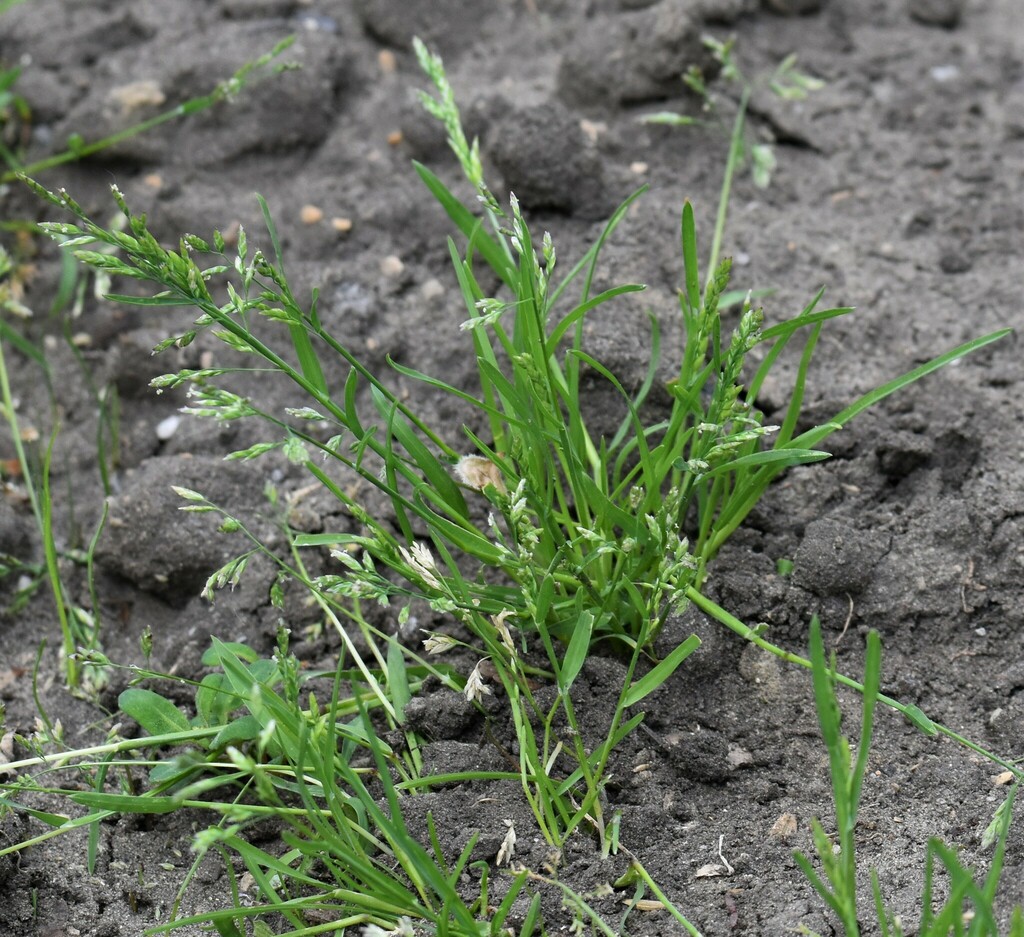
This is a common, opportunistic grass that often shows up in lawns and gardens as a winter annual. It grows in small, light green tufts and spreads rapidly by seed. Most gardeners consider it a pesky weed because it thrives in compacted soil and cool, moist conditions.

Auf einen Blick
- Pflegestufe
- Einfach
- Pflanzenart
- Grass
- Licht
- Full sun to partial shade
- Licht im Innenraum
- Direkte Sonne
- Gießen
- Alle 1 bis 3 Tage
- Endgröße
- 6 to 12 inches
- Wachstum
- Schnell
- Winterhärte
- USDA 2 bis 10
- Blütezeit
- Early spring to late autumn
Pflege
Because this is typically viewed as a weed, you should focus on prevention through healthy lawn maintenance. Keep your grass thick and tall to shade out seedlings. If you spot it, pull it by hand before it drops its seeds.
- Gießen
- It prefers consistently moist soil to thrive.
- Düngen
- It responds well to nitrogen, though it usually gets what it needs from standard lawn fertilizer.
- Schneiden
- Regular mowing helps keep it from spreading seeds.
- Umtopfen
- It is rarely grown in containers, but it would need a refresh if it becomes root bound.
- Boden
- Moist, compacted soils
- Boden-pH
- 6.0 to 7.0
- Temperatur
- -10 bis 30°C
- Luftfeuchtigkeit
- 40 bis 80%
Sicherheit
- Menschen
- There is no known toxicity to humans.
- Kinder
- No specific risks exist for children, though it is a common weed in play areas.
- Kontaktallergene
- The leaf blades can cause minor skin irritation or cuts if handled roughly.
- Allergene in der Luft
- The pollen is a common trigger for seasonal hay fever.
- Essbarkeit
- While not toxic, the foliage is too fibrous and unpalatable for human consumption.
So erkennst du die Pflanze
- Light green, soft leaf blades
- Boat shaped leaf tips
- Forms dense, low growing clumps
- Produces light green seed heads
- Ligule is prominent and membranous
- Höhe
- 0,05 bis 0,3m
- Breite
- 0,05 bis 0,2m
- Blätter
- light green, deciduous
- Blüten
- green, white, 0,1 bis 0,3cm
- Früchte
- tan, Late spring to autumn
Häufige Probleme
- Dollar spot — Small, bleached spots appear on the foliage during humid weather.
Standort und Pflege
- Vermehrung
- seed
- Pflanzzeit
- spring, autumn
Encourage taller, more vigorous grasses to outcompete this species for light.
Gute Pflanzpartner
- Poa pratensis — They often grow together in managed turf environments.
Ähnliche Arten
- Poa trivialis — It has a similar appearance but prefers much wetter soil conditions.
Botanisches
- Familie
- Poaceae
- Gattung
- Poa
- Ordnung
- Poales
- Klasse
- Liliopsida
- Ursprüngliche Heimat
- Europe and temperate Asia.
- Artenschutz
- It is considered a widespread invasive weed in many regions.
It thrives in compacted soils and disturbed areas where other grasses struggle to grow.
- Nutzen für Wildtiere
- seeds provide food for small birds
- Bestäuber
- Bienen
- Verwendung
- ground cover, wildlife food source
Im Jahresverlauf
Ökologische Zeigerwerte
- Salzgehalt
- 2/9
- Bodenreaktion
- 5/9
- Licht
- 7/9
- Temperatur
- 5/9
- Feuchtigkeit
- 6/9
- Nährstoffe
- 7/9
Taxonomie abgeglichen mit GBIF.
Häufige Fragen
- Is it a perennial or annual?
- It is typically an annual, but can act as a short lived perennial in mild climates.
- How do I get rid of it?
- Maintain a dense lawn to shade out seedlings and prevent seed germination.
Woher der Name kommt
The name Poa is the ancient Greek word for fodder, while annua refers to its annual growth habit.
Gut zu wissen
- It is one of the most successful weeds in the world.
- It can produce seeds even when mowed extremely short.
- The name annua refers to its annual life cycle.
Probleme mit Annual bluegrass?
Diese Seite bietet allgemeine Infos. Pocket Botanist erkennt Probleme anhand eines Fotos deiner echten Pflanze, passt das Gießen an dein Licht und deinen Standort an und erinnert dich an die Pflege.
Dieser Ratgeber wurde mit KI erstellt und mit der GBIF-Taxonomie abgeglichen. Er dient zur allgemeinen Information und ersetzt keine gärtnerische oder tierärztliche Beratung. Hier erfährst du, wie wir diese Ratgeber erstellen.