 Pocket Botanist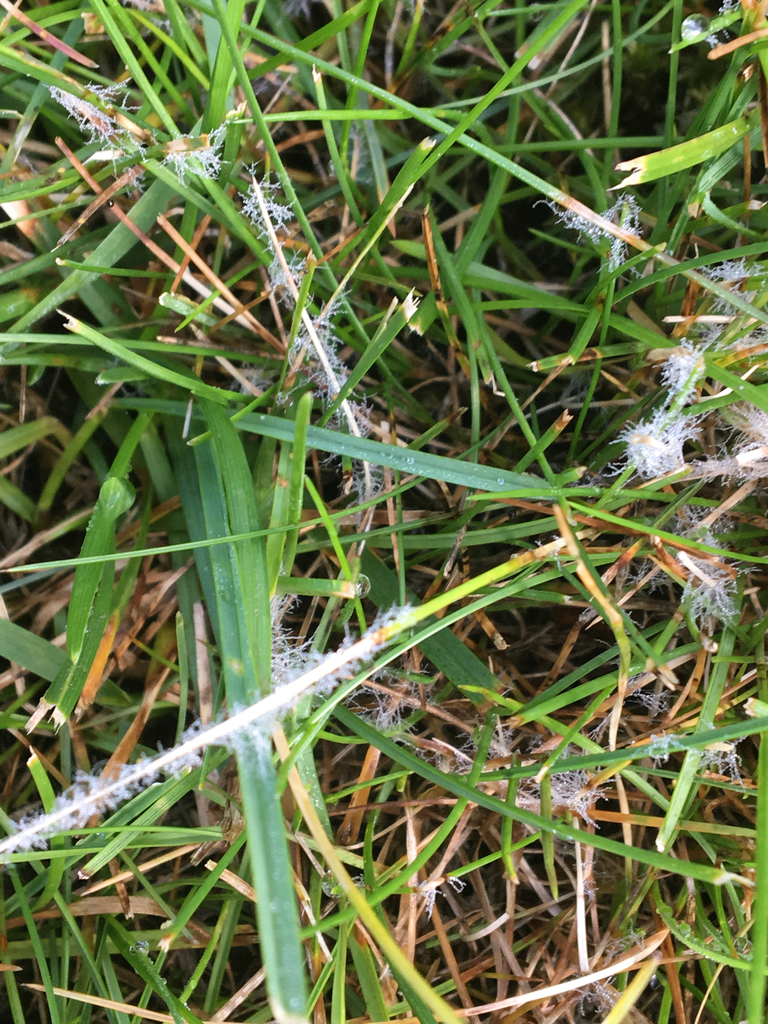
Symptoms by part
Leaves
Individual blades show distinct, hourglass shaped lesions that are tan or straw colored with a reddish brown border. In the early morning, you might see a fine, white, cobweb like fungal growth across the affected patches.
Causes
- Extended periods of high humidity or heavy dew that keeps grass blades wet for long hours.
- Low nitrogen levels in the soil which leave the grass vulnerable.
- Temperatures ranging from 15 to 30 degrees Celsius.
- Poor air circulation or thatch buildup that traps moisture near the soil surface.
Could be confused with
- Red Thread · Red thread produces bright pink or red needle like structures on the leaf tips, whereas dollar spot lesions are hourglass shaped with tan centers.
- Snow Mold · Snow mold appears specifically after snow melts in late winter or early spring, while dollar spot is active during the warm growing season.
Treatment
- Water the lawn deeply and early in the morning to ensure the grass blades dry out quickly as the sun rises.
- Apply a nitrogen rich fertilizer to the affected area to encourage vigorous growth and help the grass recover.
- Aerate the soil to improve drainage and reduce the moisture levels that the fungus thrives in.
Without chemicals
- Remove thatch buildup with a dethatching rake to improve airflow.
- Prune back nearby shrubs or trees to increase sunlight and air movement across the lawn.
- Collect and dispose of grass clippings from infected areas to prevent the fungus from spreading to healthy parts of the lawn.
Preventing it
- Maintain a consistent fertilization schedule to keep nitrogen levels adequate.
- Water only when necessary and always in the early morning to minimize the time blades stay wet.
- Keep mower blades sharp to ensure clean cuts, as ragged edges provide easy entry points for the fungus.
- Regularly remove thatch to keep the soil surface dry.
Season
The warm growing season, particularly when days are warm and nights are cool with heavy dew.
Spread risk
Moderate
Severity
Moderate
When to act
Act as soon as you notice small, circular bleached spots appearing in your lawn. If the patches cover more than half of your lawn despite cultural changes, you may need to replace the affected turf sections.
Think it's Dollar Spot?
This guide covers the general picture. Pocket Botanist looks at your actual plant from a photo and tells you what's really going on, how serious it is, and what to try first. Identification and a health check are free.


Questions people ask
- Will dollar spot kill my entire lawn?
- It rarely kills the entire lawn, but it can cause significant thinning and leave the grass susceptible to other weeds and diseases.
- Does dollar spot go away on its own?
- It can subside if weather conditions change to be less favorable for the fungus, but it will likely return if the underlying issues like low nitrogen or poor drainage are not addressed.
Plants it affects
This guide was generated with AI and is general information, not horticultural advice. Read about how we build these guides.