 Pocket Botanist
Guide botanique
Annual bluegrass.
Poa annua
Prononciation POH-ah AN-yoo-ah
Aussi appelée Annual Bluegrass, Annual Meadow Grass, Annual Meadow-Grass, Annual Poa, Winter Grass


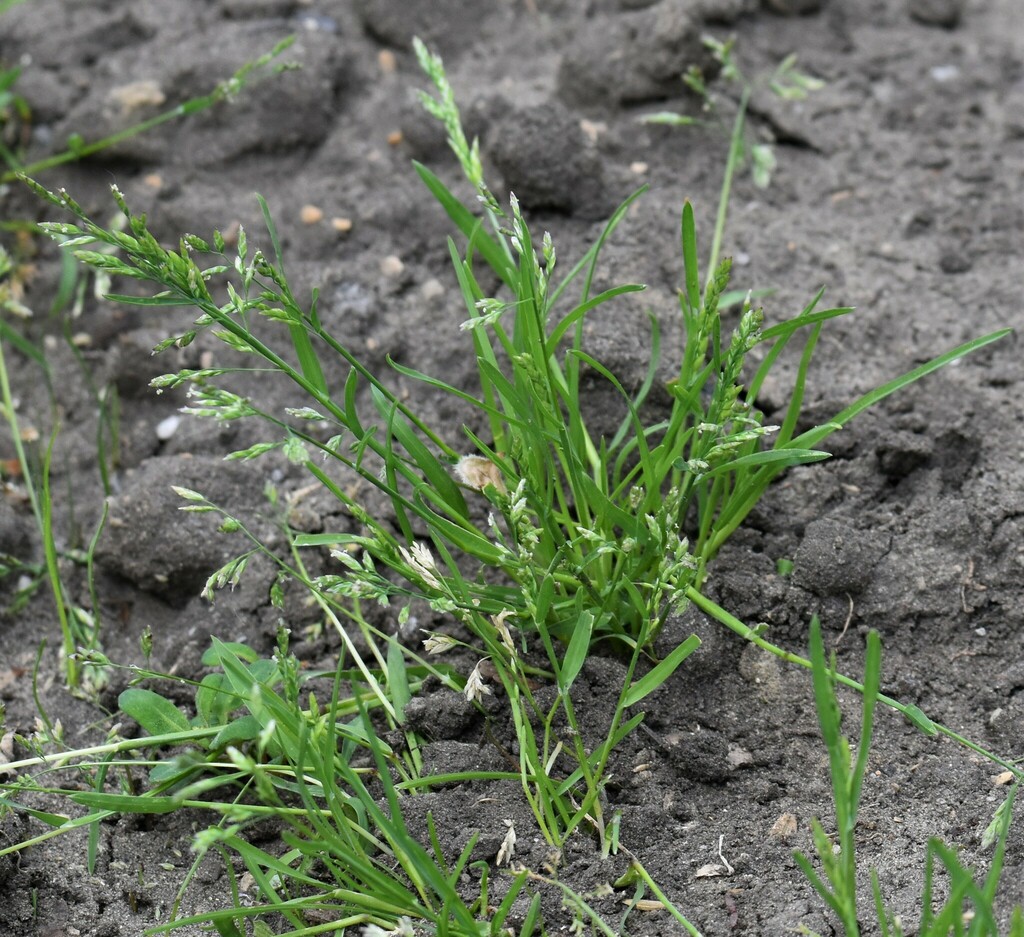
This is a common, opportunistic grass that often shows up in lawns and gardens as a winter annual. It grows in small, light green tufts and spreads rapidly by seed. Most gardeners consider it a pesky weed because it thrives in compacted soil and cool, moist conditions.

En un coup d'œil
- Niveau d'entretien
- Facile
- Type de plante
- Grass
- Lumière
- Full sun to partial shade
- Lumière en intérieur
- Soleil direct
- Arrosage
- Tous les 1 à 3 jours
- Taille adulte
- 6 to 12 inches
- Croissance
- Rapide
- Rusticité
- USDA 2 à 10
- Floraison
- Early spring to late autumn
Entretien
Because this is typically viewed as a weed, you should focus on prevention through healthy lawn maintenance. Keep your grass thick and tall to shade out seedlings. If you spot it, pull it by hand before it drops its seeds.
- Arrosage
- It prefers consistently moist soil to thrive.
- Engrais
- It responds well to nitrogen, though it usually gets what it needs from standard lawn fertilizer.
- Taille
- Regular mowing helps keep it from spreading seeds.
- Rempotage
- It is rarely grown in containers, but it would need a refresh if it becomes root bound.
- Sol
- Moist, compacted soils
- pH du sol
- 6.0 to 7.0
- Température
- -10 à 30°C
- Humidité
- 40 à 80%
Sécurité
- Humains
- There is no known toxicity to humans.
- Enfants
- No specific risks exist for children, though it is a common weed in play areas.
- Allergènes de contact
- The leaf blades can cause minor skin irritation or cuts if handled roughly.
- Allergènes aéroportés
- The pollen is a common trigger for seasonal hay fever.
- Comestibilité
- While not toxic, the foliage is too fibrous and unpalatable for human consumption.
Comment l'identifier
- Light green, soft leaf blades
- Boat shaped leaf tips
- Forms dense, low growing clumps
- Produces light green seed heads
- Ligule is prominent and membranous
- Hauteur
- 0,05 à 0,3m
- Envergure
- 0,05 à 0,2m
- Feuilles
- light green, deciduous
- Fleurs
- green, white, 0,1 à 0,3cm
- Fruits
- tan, Late spring to autumn
Problèmes courants
- Dollar spot — Small, bleached spots appear on the foliage during humid weather.
La cultiver
- Multiplication
- seed
- Quand planter
- spring, autumn
Encourage taller, more vigorous grasses to outcompete this species for light.
Bonnes associations
- Poa pratensis — They often grow together in managed turf environments.
Espèces similaires
- Poa trivialis — It has a similar appearance but prefers much wetter soil conditions.
Science
- Famille
- Poaceae
- Genre
- Poa
- Ordre
- Poales
- Classe
- Liliopsida
- Région d'origine
- Europe and temperate Asia.
- Préservation
- It is considered a widespread invasive weed in many regions.
It thrives in compacted soils and disturbed areas where other grasses struggle to grow.
- Intérêt pour la faune
- seeds provide food for small birds
- Pollinisateurs
- abeilles
- Utilisations
- ground cover, wildlife food source
Au fil des saisons
Repères écologiques
- Salinité
- 2/9
- Réaction du sol
- 5/9
- Lumière
- 7/9
- Température
- 5/9
- Humidité
- 6/9
- Nutriments
- 7/9
Taxonomie vérifiée avec le GBIF.
Ce qu'on demande souvent
- Is it a perennial or annual?
- It is typically an annual, but can act as a short lived perennial in mild climates.
- How do I get rid of it?
- Maintain a dense lawn to shade out seedlings and prevent seed germination.
D'où vient le nom
The name Poa is the ancient Greek word for fodder, while annua refers to its annual growth habit.
Bon à savoir
- It is one of the most successful weeds in the world.
- It can produce seeds even when mowed extremely short.
- The name annua refers to its annual life cycle.
Ta plante a mauvaise mine ?
Cette page est un guide général. Pocket Botanist diagnostique les problèmes directement à partir d'une photo de ta plante, adapte l'arrosage à sa luminosité et te prévient quand il faut t'en occuper.
Ce guide a été généré par IA et vérifié avec la taxonomie du GBIF. Il s'agit d'informations générales, et non de conseils horticoles ou vétérinaires. Découvre comment nous concevons ces guides.