 Pocket Botanist
Plant guide
American pokeweed.
Phytolacca americana L.
Pronounced fy-toh-LAK-uh uh-mer-ih-KAY-nuh
Also known as American Pokeweed, Common Pokeweed, Inkberry, Pigeo, Poke, Pigeonberry, Poke, Pokeberry, Pokeroot


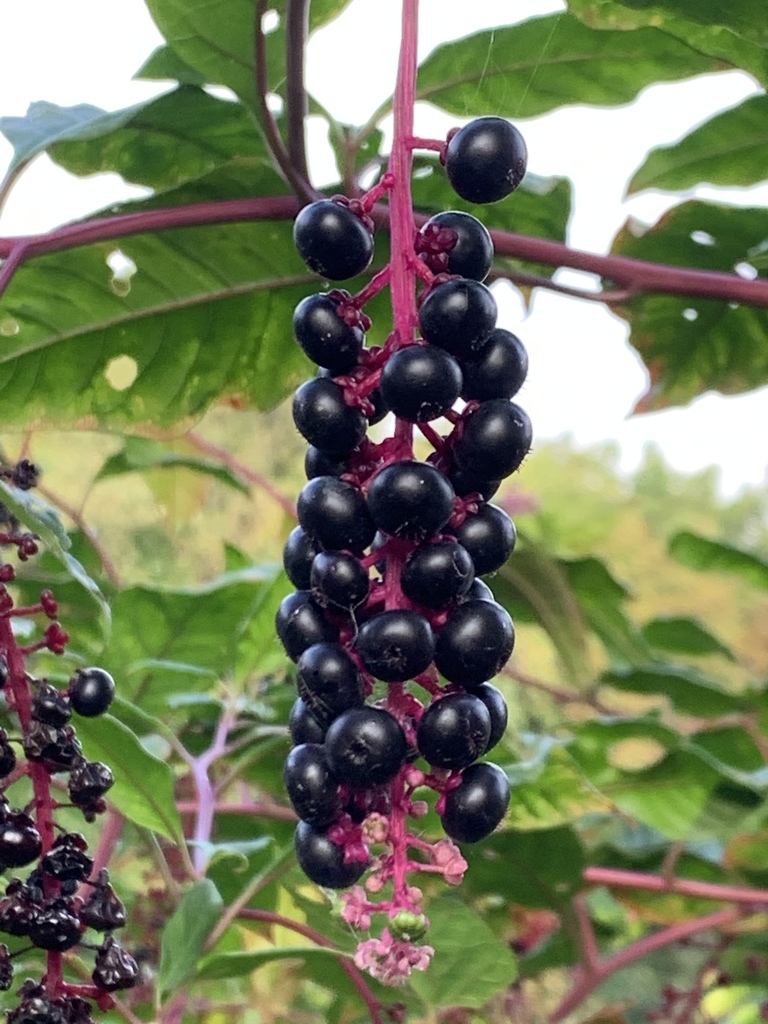
The American pokeweed is a large, herbaceous perennial native to North America. It is known for its striking appearance with deep purple berries and reddish stems. While it is quite beautiful, it is important to remember that all parts of this plant are toxic if ingested.
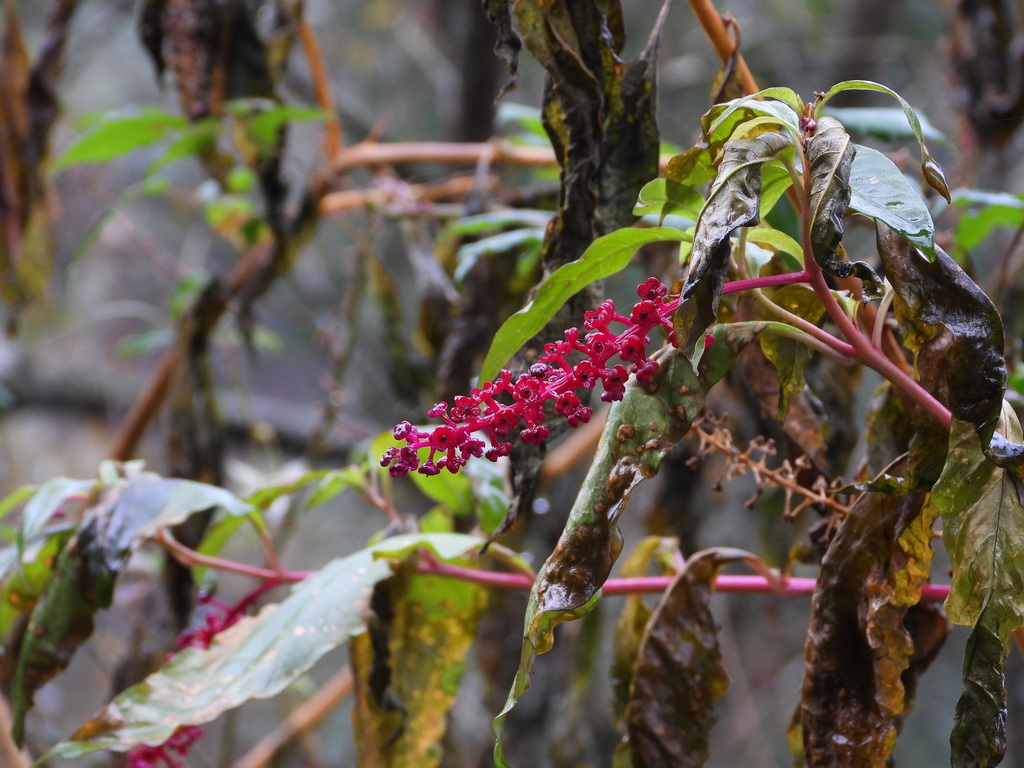
At a glance
- Care level
- Easy
- Plant type
- Herbaceous perennial
- Light
- Full sun to partial shade
- Indoor light
- Bright indirect
- Water
- Every 7 to 14 days
- Mature size
- 8 to 10 feet
- Growth rate
- Fast
- Hardiness
- USDA 4 to 9
- Bloom time
- Mid to late summer
Care
Pokeweed is very hardy and thrives in most soil conditions without much help. Watch for rapid growth during the summer months, as it can quickly take over a garden bed. If you want to keep it contained, make sure to remove the berries before they drop to prevent unwanted seedlings.
- Watering
- Keep the soil consistently moist but not waterlogged.
- Feeding
- It rarely needs extra food, but a light application of compost in spring is plenty.
- Pruning
- Cut the plant back to the ground in late autumn after the foliage dies.
- Repotting
- If growing in a container, move it to a larger pot every year or two as the taproot expands.
- Soil
- Well-draining, moist soil
- Soil pH
- 5.0 to 8.0
- Temperature
- -25 to 35°C
- Humidity
- 40 to 80%
- Drought tolerance
- Moderate
- Lifespan
- Perennial, typically 5 to 10 years.
- Deer and rabbits
- High
Signs it needs repotting
- Roots growing out of the drainage holes.
- Stunted growth during the active season.
Safety
- People
- The plant contains phytolaccatoxin and other compounds that cause severe gastrointestinal distress and potential systemic toxicity.
- Pets
- This plant is toxic to cats and dogs if consumed.
- Children
- The berries are highly attractive to children but are poisonous, so keep them away from play areas.
- Contact allergens
- Handling the plant can cause skin irritation or dermatitis in sensitive individuals.
- Airborne allergens
- Pollen may cause mild respiratory irritation for those with severe allergies.
- Edibility
- All parts of this plant are toxic to humans if ingested, especially the roots and seeds.
How to identify it
- Large, oval, alternate green leaves
- Bright red or purple stems
- Long, drooping clusters of white flowers
- Dark purple to black berries
- Deep, fleshy taproot system
- Height
- 1.5 to 3m
- Spread
- 0.9 to 1.8m
- Leaves
- green, deciduous
- Flowers
- white, green, 0.5 to 1cm
- Fruit
- purple, black, Late summer to autumn
Problems to watch for
- Leaf SpotCommon
- AphidsUncommon
- CaterpillarsUncommon
- Root RotUncommon
Check your american pokeweed from a photo
Pocket Botanist looks at a photo of your plant and tells you what's wrong and what to try first.
Growing it
- Propagation
- seed
- When to plant
- spring, autumn
- Overwintering
- The foliage will die back completely after the first frost. You can cut the stems to the ground in late autumn or early winter.
- In containers
- It is generally too large and aggressive for container gardening.
Seed
- 1. Collect ripe berries in autumn.
- 2. Clean the seeds from the pulp.
- 3. Sow seeds directly in the garden in autumn for spring germination.
Give this plant plenty of space as it can quickly crowd out smaller perennials.
Grows well with
- Goldenrod — They share similar habitat requirements and bloom times.
- Aster — These provide a nice visual contrast in late summer gardens.
Similar species
- Inkberry — It is a closely related species with similar growth habits.
Science
- Family
- Phytolaccaceae
- Genus
- Phytolacca
- Order
- Caryophyllales
- Class
- Magnoliopsida
- Native range
- Eastern and central North America.
- Conservation
- This is a common native plant and is not of conservation concern.
It thrives in disturbed soils, forest edges, and meadows where it acts as a pioneer species.
- Value to wildlife
- nectar source, bird food source
- Pollinators
- bees, butterflies
- Uses
- ornamental, wildlife garden
Through the year
Ecological indicators
- Nutrients
- 7/9
- Salinity
- 1/9
- Soil reaction
- 5/9
- Light
- 6/9
- Temperature
- 5/9
- Moisture
- 6/9
Taxonomy resolved against GBIF.
Questions people ask
- Is pokeberry edible?
- No, it is considered toxic and should not be consumed.
- How do I get rid of it?
- You must dig out the entire taproot, as any remaining pieces can sprout again.
Where the name comes from
The genus name comes from the Greek word phyton meaning plant and the French word lac meaning lake, referring to the red dye. The species name americana indicates its origin in the Americas.
Good to know
- It is a fast growing perennial that can reach its full height in a single season.
- The roots are massive and fleshy, making them difficult to remove once established.
- Birds love the berries and are the primary method of seed dispersal.
Also in
Keep your american pokeweed growing
This page is a general guide. Save your plant in Pocket Botanist and you get care reminders timed for this plant, plus a care history that shows what worked.
This guide was generated with AI and checked against GBIF taxonomy. It is general information, not horticultural or veterinary advice. Read about how we build these guides.