 Pocket Botanist
Guide botanique
Phytolaque d'Amérique.
Phytolacca americana L.
Prononciation fy-toh-LAK-uh uh-mer-ih-KAY-nuh
Aussi appelée Phytolaque d'Amérique, Phytolaque américaine, Inkberry, Pigeo, Poke, Pigeonberry, Poke, Teinturier, Pokeroot


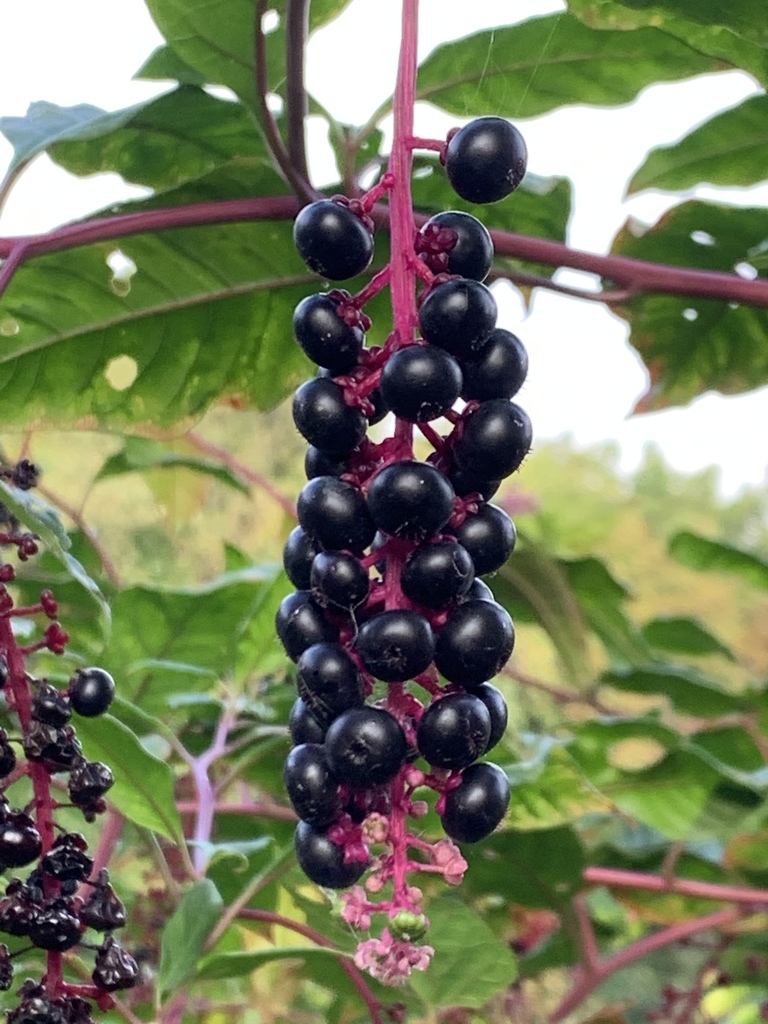
Le phytolaque d'Amérique est une grande plante herbacée vivace originaire d'Amérique du Nord. Il est connu pour son apparence saisissante avec ses baies d'un pourpre profond et ses tiges rougeâtres. Bien qu'il soit très beau, il est important de se rappeler que toutes les parties de cette plante sont toxiques si elles sont ingérées.
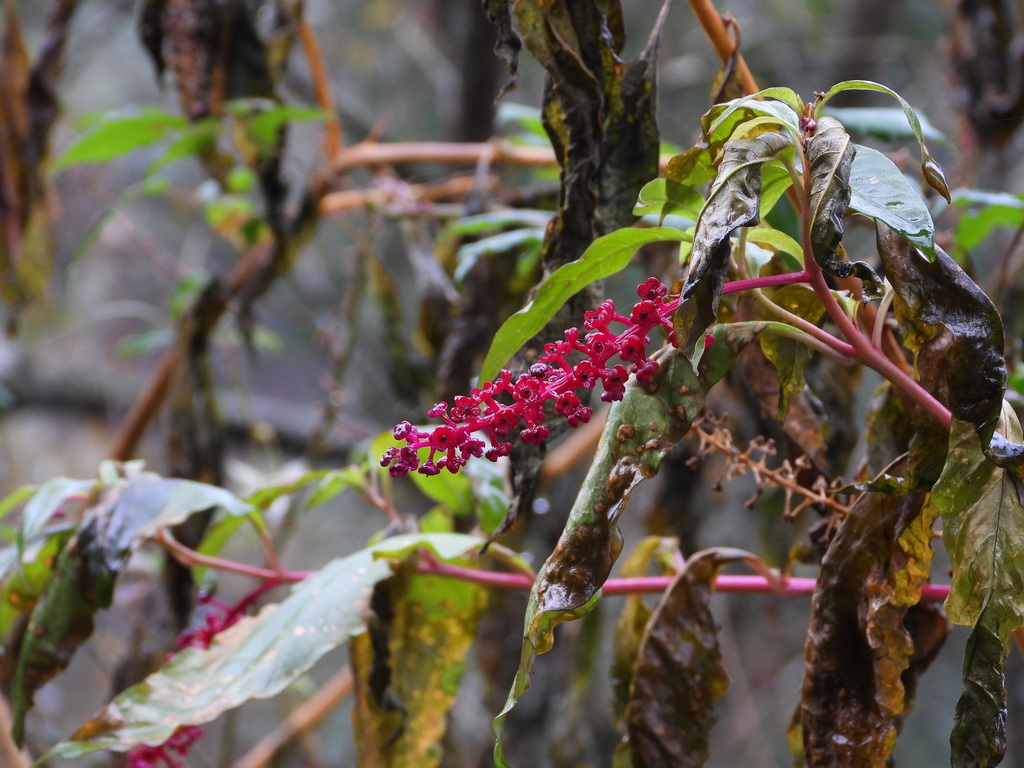
En un coup d'œil
- Niveau d'entretien
- Facile
- Type de plante
- Plante herbacée vivace
- Lumière
- Plein soleil à ombre partielle
- Lumière en intérieur
- Lumière vive indirecte
- Arrosage
- Tous les 7 à 14 jours
- Taille adulte
- 8 à 10 pieds
- Croissance
- Rapide
- Rusticité
- USDA 4 à 9
- Floraison
- Milieu à fin de l'été
Entretien
Le phytolaque est très rustique et prospère dans la plupart des conditions de sol sans beaucoup d'aide. Surveillez sa croissance rapide pendant les mois d'été, car il peut rapidement envahir un parterre de jardin. Si vous souhaitez le contenir, assurez-vous de retirer les baies avant qu'elles ne tombent pour éviter les semis indésirables.
- Arrosage
- Gardez le sol constamment humide mais pas détrempé.
- Engrais
- Il a rarement besoin de nourriture supplémentaire, mais une légère application de compost au printemps est amplement suffisante.
- Taille
- Taillez la plante jusqu'au sol à la fin de l'automne, après la chute du feuillage.
- Rempotage
- Si vous cultivez en pot, transplantez-le dans un pot plus grand tous les un à deux ans, à mesure que la racine pivotante se développe.
- Sol
- Sol bien drainé et humide
- pH du sol
- 5.0 à 8.0
- Température
- -25 à 35°C
- Humidité
- 40 à 80%
- Résistance à la sécheresse
- Moyenne
- Durée de vie
- Vivace, généralement 5 à 10 ans.
- Résistance aux chevreuils et lapins
- Élevée
Signes qu'il faut rempoter
- Les racines sortent des trous de drainage.
- Croissance ralentie pendant la saison active.
Sécurité
- Humains
- La plante contient de la phytolaccatoxine et d'autres composés qui provoquent de graves troubles gastro-intestinaux et une toxicité systémique potentielle.
- Animaux
- Cette plante est toxique pour les chats et les chiens s'ils la consomment.
- Enfants
- Les baies sont très attrayantes pour les enfants mais sont vénéneuses, alors tenez-les à l'écart des aires de jeux.
- Allergènes de contact
- La manipulation de la plante peut provoquer une irritation cutanée ou une dermatite chez les personnes sensibles.
- Allergènes aéroportés
- Le pollen peut provoquer une légère irritation respiratoire chez les personnes souffrant d'allergies sévères.
- Comestibilité
- Toutes les parties de cette plante sont toxiques pour l'homme en cas d'ingestion, en particulier les racines et les graines.
Comment l'identifier
- Grandes feuilles vertes ovales, alternes
- Tiges rouge vif ou violettes
- Longs amas pendants de fleurs blanches
- Baies d'un violet foncé à noir
- Système racinaire pivotant profond et charnu
- Hauteur
- 1,5 à 3m
- Envergure
- 0,9 à 1,8m
- Feuilles
- vert, deciduous
- Fleurs
- blanc, vert, 0,5 à 1cm
- Fruits
- violet, noir, Fin de l'été à l'automne
Problèmes à surveiller
- Taches foliairesCourant
- ChenillesPeu courant
- Pourriture des racinesPeu courant
- PuceronsPeu courant
Par symptôme
Vérifie la santé de ta plante en photo
Pocket Botanist analyse une photo de ta plante et te dit ce qui ne va pas et quoi essayer en premier.
La cultiver
- Multiplication
- semis
- Quand planter
- printemps, automne
- Hivernage
- Le feuillage mourra complètement après le premier gel. Vous pouvez couper les tiges au ras du sol à la fin de l'automne ou au début de l'hiver.
- En pot
- Il est généralement trop grand et trop agressif pour la culture en conteneur.
Semis
- 1. Récoltez les baies mûres en automne.
- 2. Nettoyez les graines de la pulpe.
- 3. Semez directement dans le jardin en automne pour une germination au printemps.
Donnez beaucoup d'espace à cette plante car elle peut rapidement étouffer les plantes vivaces plus petites.
Bonnes associations
- Verge d'or — Ils partagent des exigences d'habitat et des périodes de floraison similaires.
- Symphyotrichum — Ceux-ci offrent un joli contraste visuel dans les jardins de fin d'été.
Espèces similaires
- Phytolacca acinosa — C'est une espèce étroitement apparentée avec des habitudes de croissance similaires.
Science
- Famille
- Phytolaccaceae
- Genre
- Phytolacca
- Ordre
- Caryophyllales
- Classe
- Magnoliopsida
- Région d'origine
- Est et centre de l'Amérique du Nord.
- Préservation
- C'est une plante indigène commune et elle n'est pas préoccupante pour la conservation.
Il prospère dans les sols perturbés, les lisières de forêts et les prairies où il agit comme une espèce pionnière.
- Intérêt pour la faune
- source de nectar, source de nourriture pour les oiseaux
- Pollinisateurs
- abeilles, papillons
- Utilisations
- ornemental, jardin de faune
Au fil des saisons
Repères écologiques
- Nutriments
- 7/9
- Salinité
- 1/9
- Réaction du sol
- 5/9
- Lumière
- 6/9
- Température
- 5/9
- Humidité
- 6/9
Taxonomie vérifiée avec le GBIF.
Ce qu'on demande souvent
- Le phytolaque est-il comestible ?
- Non, il est considéré comme toxique et ne doit pas être consommé.
- Comment s'en débarrasser ?
- Il faut déterrer toute la racine pivotante, car tout morceau restant peut repousser.
D'où vient le nom
Le nom du genre vient du mot grec phyton signifiant plante et du mot français lac signifiant lac, faisant référence à la teinture rouge. Le nom de l'espèce americana indique son origine dans les Amériques.
Bon à savoir
- C'est une plante vivace à croissance rapide qui peut atteindre sa pleine hauteur en une seule saison.
- Les racines sont massives et charnues, ce qui les rend difficiles à enlever une fois établies.
- Les oiseaux adorent les baies et sont le principal moyen de dispersion des graines.
Aussi dans
Garde ta plante en pleine forme
Cette page est un guide général. Enregistre ta plante dans Pocket Botanist et tu reçois des rappels d'entretien adaptés à cette plante, ainsi qu'un historique d'entretien qui montre ce qui a marché.
Ce guide a été généré par IA et vérifié avec la taxonomie du GBIF. Il s'agit d'informations générales, et non de conseils horticoles ou vétérinaires. Découvre comment nous concevons ces guides.