 Pocket Botanist
Guía de plantas
American pokeweed.
Phytolacca americana L.
Pronunciación fy-toh-LAK-uh uh-mer-ih-KAY-nuh
También se conoce como Bayas de tinta, Pigeonberry


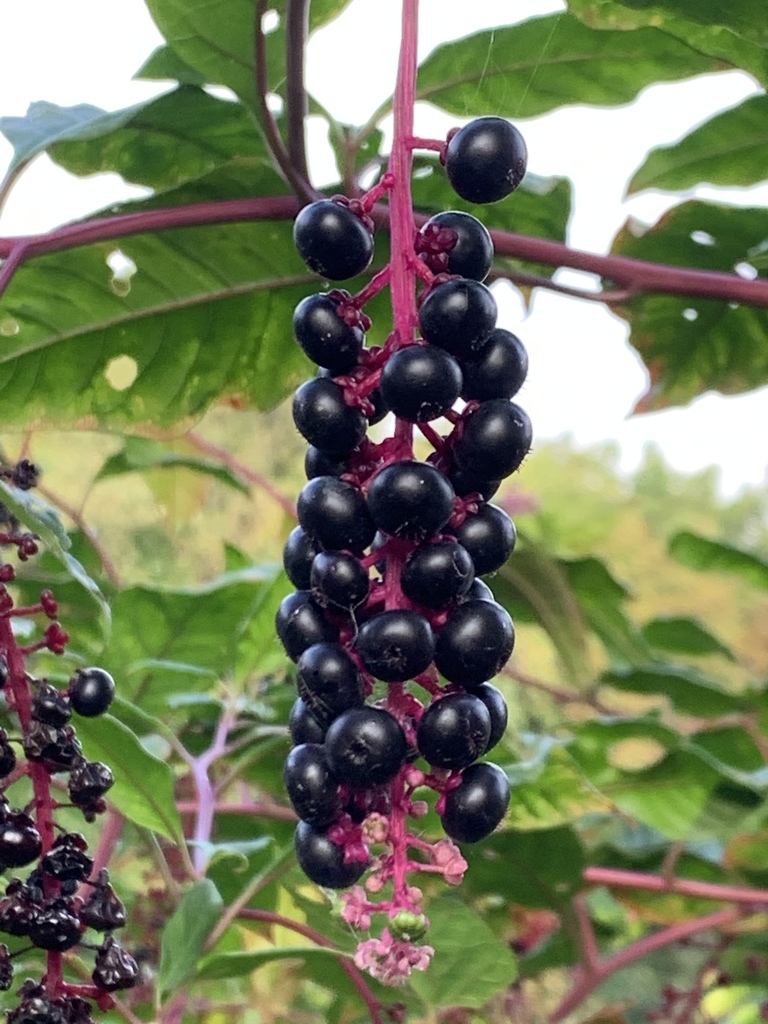
La hierba mora americana es una planta perenne herbácea grande originaria de América del Norte. Es conocida por su llamativa apariencia con bayas de color púrpura intenso y tallos rojizos. Si bien es bastante hermosa, es importante recordar que todas las partes de esta planta son tóxicas si se ingieren.
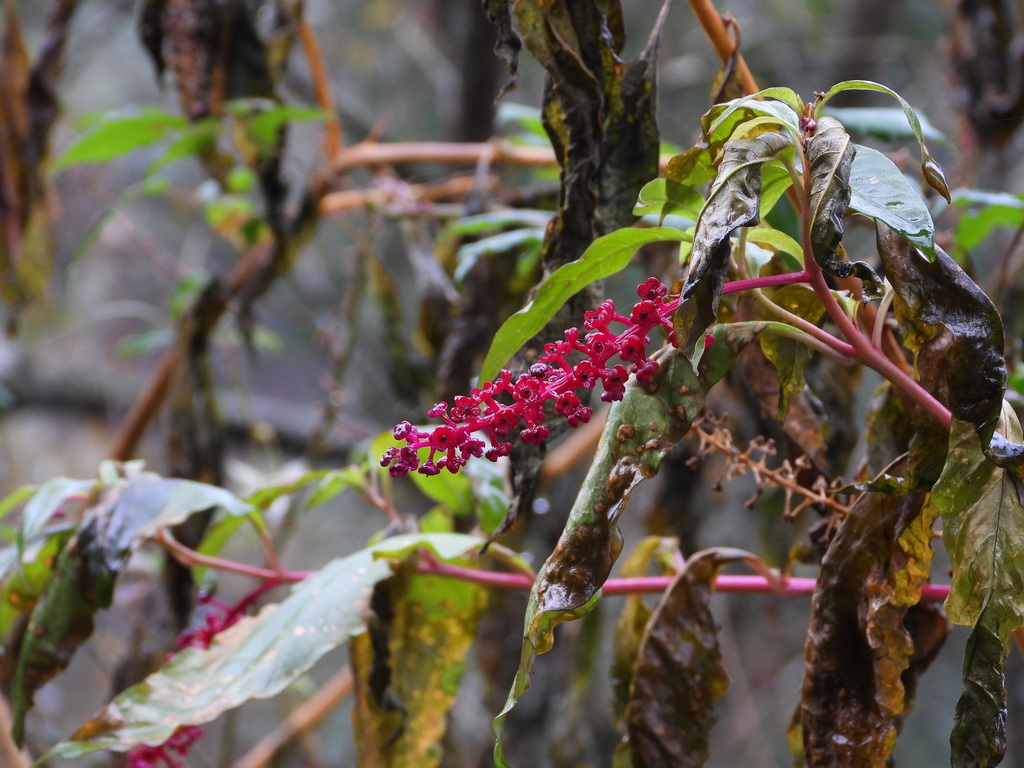
De un vistazo
- Nivel de cuidados
- Fácil
- Tipo de planta
- Planta perenne herbácea
- Luz
- Sol pleno a sombra parcial
- Luz en interior
- Luz indirecta brillante
- Riego
- Cada 7 a 14 días
- Tamaño adulto
- 8 a 10 pies
- Ritmo de crecimiento
- Rápido
- Rusticidad
- USDA 4 a 9
- Floración
- Mediados a finales de verano
Cuidados
La hierba mora es muy resistente y prospera en la mayoría de las condiciones del suelo sin mucha ayuda. Esté atento a su rápido crecimiento durante los meses de verano, ya que puede apoderarse rápidamente de un macizo de flores. Si desea mantenerla contenida, asegúrese de quitar las bayas antes de que caigan para evitar plántulas no deseadas.
- Riego
- Mantenga la tierra constantemente húmeda pero no encharcada.
- Abonado
- Raramente necesita alimento extra, pero una ligera aplicación de compost en primavera es suficiente.
- Poda
- Corte la planta hasta el suelo a finales de otoño, después de que el follaje muera.
- Trasplante
- Si la cultiva en maceta, trasplántela a una maceta más grande cada uno o dos años a medida que la raíz pivotante se expande.
- Suelo
- Suelo húmedo y bien drenado
- pH del suelo
- 5.0 a 8.0
- Temperatura
- -25 a 35°C
- Humedad
- 40 a 80%
- Tolerancia a la sequía
- Moderada
- Longevidad
- Perenne, típicamente de 5 a 10 años.
- Resistencia a ciervos y conejos
- Alta
Señales de que necesita trasplante
- Las raíces crecen fuera de los agujeros de drenaje.
- Crecimiento atrofiado durante la temporada activa.
Seguridad
- Personas
- La planta contiene fitolaccatoxina y otros compuestos que causan graves molestias gastrointestinales y posible toxicidad sistémica.
- Mascotas
- Esta planta es tóxica para gatos y perros si se consume.
- Niños
- Las bayas son muy atractivas para los niños, pero son venenosas, así que manténlos alejados de las áreas de juego.
- Alérgenos por contacto
- Manipular la planta puede causar irritación de la piel o dermatitis en personas sensibles.
- Alérgenos en el aire
- El polen puede causar leve irritación respiratoria en personas con alergias severas.
- Comestibilidad
- Todas las partes de esta planta son tóxicas para los humanos si se ingieren, especialmente las raíces y las semillas.
Cómo identificarla
- Hojas grandes, ovales, verdes y alternas
- Tallos de color rojo brillante o púrpura
- Largas y caídas racimos de flores blancas
- Bayas de color púrpura oscuro a negro
- Sistema de raíz pivotante profunda y carnosa
- Altura
- 1,5 a 3m
- Anchura
- 0,9 a 1,8m
- Hojas
- verde, caducifolio
- Flores
- blanco, verde, 0,5 a 1cm
- Frutos
- morado, negro, Finales de verano a otoño
Problemas a vigilar
- Manchas foliaresComún
- OrugasPoco común
- Podredumbre radicularPoco común
- PulgonesPoco común
- Mancha foliar — Aparecen manchas fúngicas en el follaje durante períodos de alta humedad.
Por síntoma
Revisa tu american pokeweed con una foto
Pocket Botanist mira una foto de tu planta y te dice qué le pasa y qué probar primero.
Cómo cultivarla
- Propagación
- semilla
- Cuándo plantar
- primavera, otoño
- Cuidados en invierno
- El follaje se marchitará por completo después de la primera helada. Puedes cortar los tallos hasta el suelo a finales de otoño o principios de invierno.
- En maceta
- Generalmente es demasiado grande y agresiva para la jardinería en contenedores.
Semilla
- 1. Recoge las bayas maduras en otoño.
- 2. Limpia las semillas de la pulpa.
- 3. Siembra las semillas directamente en el jardín en otoño para la germinación en primavera.
Dale a esta planta mucho espacio ya que puede desplazar rápidamente a las plantas perennes más pequeñas.
Buenas compañeras
- Vara de oro — Comparten requisitos de hábitat y tiempos de floración similares.
- Symphyotrichum — Estos proporcionan un buen contraste visual en los jardines de finales de verano.
Especies parecidas
- Phytolacca acinosa — Es una especie estrechamente relacionada con hábitos de crecimiento similares.
Ciencia
- Familia
- Phytolaccaceae
- Género
- Phytolacca
- Orden
- Caryophyllales
- Clase
- Magnoliopsida
- Distribución natural
- Este y centro de América del Norte.
- Conservación
- Esta es una planta nativa común y no es de preocupación para la conservación.
Prospera en suelos alterados, bordes de bosques y praderas donde actúa como especie pionera.
- Valor para la fauna
- fuente de néctar, fuente de alimento para pájaros
- Polinizadores
- abejas, mariposas
- Usos
- ornamental, jardín para la vida silvestre
A lo largo del año
Indicadores ecológicos
- Nutrientes
- 7/9
- Salinidad
- 1/9
- Reacción del suelo
- 5/9
- Luz
- 6/9
- Temperatura
- 5/9
- Humedad
- 6/9
Taxonomía cotejada con GBIF.
Lo que más preguntan
- ¿Es comestible la hierba carmín?
- No, se considera tóxica y no debe consumirse.
- ¿Cómo me deshago de ella?
- Debes desenterrar toda la raíz pivotante, ya que cualquier trozo restante puede volver a brotar.
De dónde viene el nombre
El nombre del género proviene de la palabra griega 'phyton' que significa planta y la palabra francesa 'lac' que significa lago, refiriéndose al tinte rojo. El nombre de la especie 'americana' indica su origen en las Américas.
Bueno saberlo
- Es una planta perenne de rápido crecimiento que puede alcanzar su altura máxima en una sola temporada.
- Las raíces son masivas y carnosas, lo que dificulta su eliminación una vez establecida.
- A los pájaros les encantan las bayas y son el principal método de dispersión de semillas.
También en
Que tu american pokeweed siga creciendo
Esta página es una guía general. Guarda tu planta en Pocket Botanist y tendrás recordatorios de cuidado pensados para esta planta, además de un historial de cuidados que muestra qué ha funcionado.
Esta guía se ha generado con IA y se ha cotejado con la taxonomía de GBIF. Es información general, no asesoramiento botánico ni veterinario. Descubre cómo elaboramos estas guías.