 Pocket Botanist
Plant guide
Heavenly bamboo.
Nandina domestica
Pronounced nan-DEE-nuh doh-MES-tih-kuh
Also known as Chinese-bamboo, Heavenly Bamboo, Sacred bamboo, heavenly-bamboo, nandina, nanten, sacred-bamboo, southern heaven-bamboo


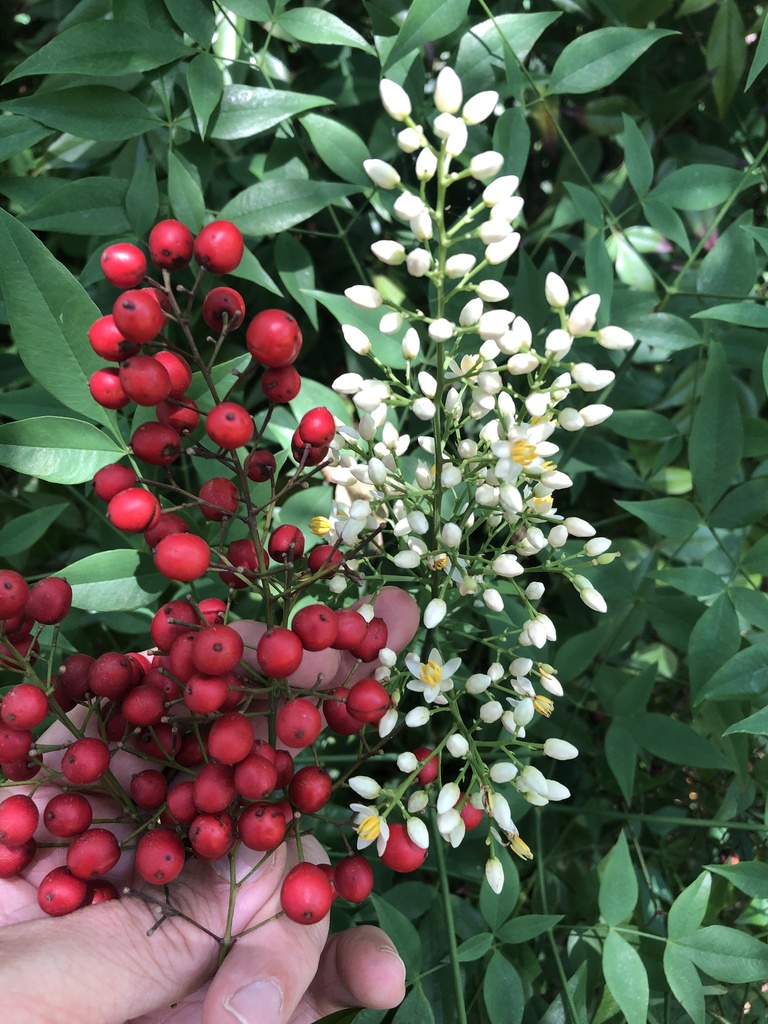
Nandina is a hardy evergreen shrub that brings lovely texture to the garden with its bamboo like stems. It is a favorite for its seasonal color changes and bright red berries. You will find it is quite adaptable to various garden conditions.
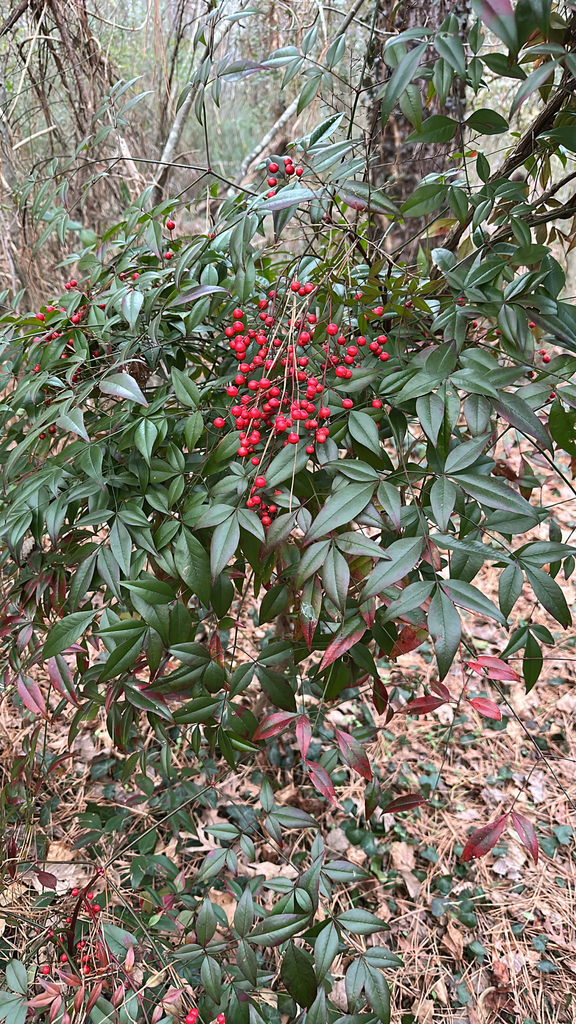
At a glance
- Care level
- Easy
- Plant type
- Evergreen shrub
- Light
- Full sun to partial shade
- Indoor light
- Bright indirect
- Water
- Every 7 to 14 days
- Mature size
- 8 feet
- Growth rate
- Medium
- Hardiness
- USDA 6 to 9
- Bloom time
- Late spring to early summer
Care
Keep the soil consistently moist but never soggy to ensure the best growth. Watch for yellowing leaves which often signal that the plant is getting too much water. Prune out old canes to keep the shrub looking fresh and full.
- Watering
- Water when the top inch of soil feels dry to the touch.
- Feeding
- Apply a balanced fertilizer during the active growing season.
- Pruning
- Remove dead or damaged canes in late winter to encourage new growth.
- Repotting
- Repot only when the plant becomes root bound in its container.
- Soil
- Well draining loamy soil
- Soil pH
- 6.0 to 7.5
- Temperature
- -15 to 35°C
- Humidity
- 40 to 70%
- Drought tolerance
- Moderate
- Lifespan
- Perennial, typically 20 plus years
- Deer and rabbits
- High
Signs it needs repotting
- roots growing out of the drainage holes
- water running straight through the pot
- stunted growth despite proper care
Safety
- People
- The plant contains compounds that can release cyanide when consumed, making it dangerous for people and pets.
- Pets
- This plant is toxic to cats and dogs if ingested.
- Children
- The bright red berries are attractive to children but pose a serious ingestion risk.
- Contact allergens
- Handling the foliage may cause mild skin irritation in sensitive individuals.
- Airborne allergens
- The pollen can trigger mild allergic reactions in some people during the flowering season.
- Edibility
- All parts of this plant are toxic to humans and animals if ingested due to cyanogenic glycosides.
How to identify it
- Compound leaves with pointed leaflets
- Upright cane like woody stems
- Clusters of small white flowers
- Bright red spherical berries
- Foliage turns bronze in winter
- Height
- 1.2 to 2.4m
- Spread
- 0.9 to 1.5m
- Leaves
- green, red, bronze, evergreen
- Flowers
- white, 0.5 to 1cm
- Fruit
- bright red, Autumn to winter
Problems to watch for
- Nandina VirusCommon
- Scale InsectsCommon
- ChlorosisUncommon
- Leaf SpotUncommon
- Root RotUncommon
- Sooty MoldUncommon
By symptom
Check your heavenly bamboo from a photo
Pocket Botanist looks at a photo of your plant and tells you what's wrong and what to try first.
Growing it
- Propagation
- cuttings, division, seed
- When to plant
- spring, autumn
- Overwintering
- In colder regions, apply a layer of mulch around the base to protect the roots from deep freezes.
- In containers
- It grows well in large containers, provided the pot is at least 40 centimeters wide and has excellent drainage.
Stem Cuttings
- 1. Take semi hardwood cuttings in summer.
- 2. Dip the cut end in rooting hormone.
- 3. Place in a well draining potting mix.
- 4. Keep humid until roots develop.
Plant in groups to ensure better pollination and a more dramatic display of berries.
Grows well with
- Hosta — They share similar shade requirements and provide a nice textural contrast.
- Japanese Maple — They share a common aesthetic and environmental preference for woodland settings.
Similar species
- Barberry — Both are in the same family and share similar growth habits.
Science
- Family
- Berberidaceae
- Genus
- Nandina
- Order
- Ranunculales
- Class
- Magnoliopsida
- Native range
- Eastern Asia and Japan
- Conservation
- It is considered invasive in many parts of the southeastern United States where it escapes cultivation.
It thrives in forest understories and disturbed areas, spreading easily via bird dispersed seeds.
- Value to wildlife
- provides winter food for birds
- Pollinators
- bees, butterflies
- Uses
- ornamental shrub, hedging, container plant, winter interest
Through the year
Ecological indicators
- Salinity
- 2/9
- Soil reaction
- 5/9
- Light
- 5/9
- Temperature
- 6/9
- Moisture
- 5/9
- Nutrients
- 4/9
Taxonomy resolved against GBIF.
Questions people ask
- Is it really bamboo?
- No, it just looks like bamboo because of its upright, cane like stems.
- Does it need pruning?
- You can prune out old canes at the base in late winter to keep the plant looking fresh.
Where the name comes from
The genus name Nandina is a latinized version of the Japanese name nanten, while domestica refers to its long history of cultivation in home gardens.
Good to know
- The leaves often turn brilliant shades of red or purple in the winter.
- It is a very tough plant that handles urban pollution well.
- Birds often spread the seeds, which contributes to its invasive status in some regions.
Also in
Keep your heavenly bamboo growing
This page is a general guide. Save your plant in Pocket Botanist and you get care reminders timed for this plant, plus a care history that shows what worked.
This guide was generated with AI and checked against GBIF taxonomy. It is general information, not horticultural or veterinary advice. Read about how we build these guides.