 Pocket Botanist
Guide botanique
Nandina domestica.
Nandina domestica
Prononciation nan-DEE-nuh doh-MES-tih-kuh
Aussi appelée Chinese-bamboo, bambou céleste, Nandina domestica, bambou céleste, nandina, nanten, bambou sacré, bambou du paradis


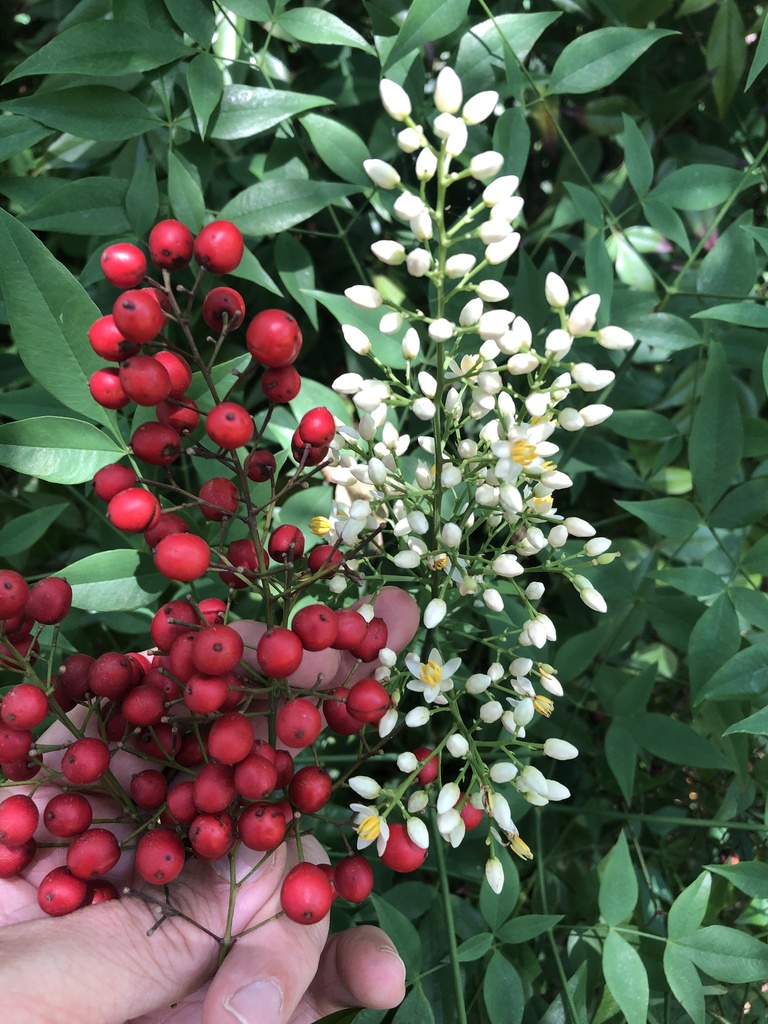
Le Nandina est un arbuste à feuilles persistantes robuste qui ajoute une belle texture au jardin avec ses tiges semblables à du bambou. C'est un favori pour ses changements de couleurs saisonniers et ses baies rouge vif. Vous constaterez qu'il s'adapte très bien à diverses conditions de jardin.
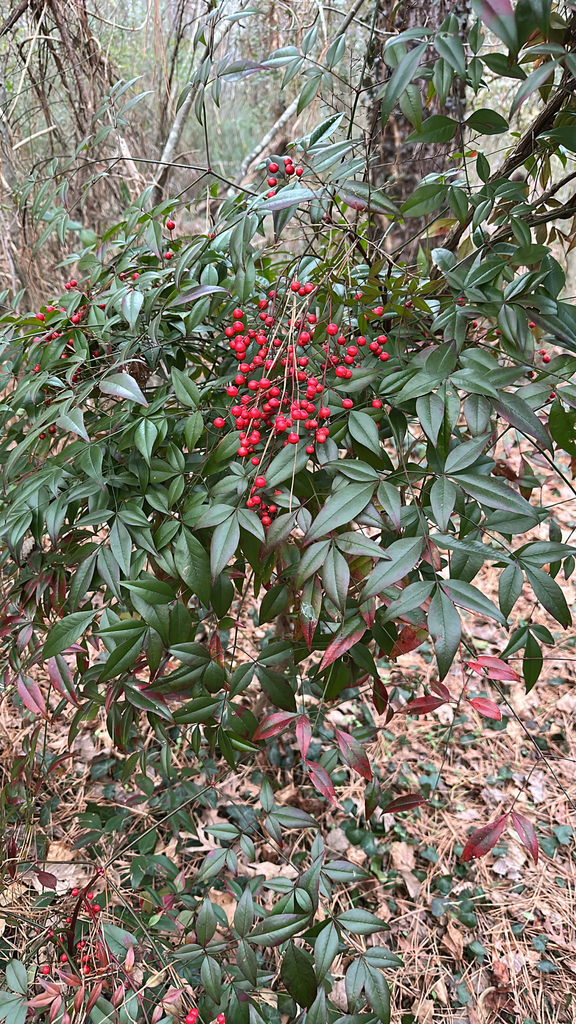
En un coup d'œil
- Niveau d'entretien
- Facile
- Type de plante
- Arbuste à feuilles persistantes
- Lumière
- Plein soleil à ombre partielle
- Lumière en intérieur
- Lumière vive indirecte
- Arrosage
- Tous les 7 à 14 jours
- Taille adulte
- 8 pieds
- Croissance
- Moyenne
- Rusticité
- USDA 6 à 9
- Floraison
- Fin du printemps au début de l'été
Entretien
Gardez le sol constamment humide, mais jamais détrempé, pour assurer la meilleure croissance. Surveillez le jaunissement des feuilles, qui signale souvent que la plante reçoit trop d'eau. Taillez les vieilles tiges pour que l'arbuste reste frais et touffu.
- Arrosage
- Arrosez lorsque le pouce supérieur de terre est sec au toucher.
- Engrais
- Appliquez un engrais équilibré pendant la saison de croissance active.
- Taille
- Retirez les cannes mortes ou endommagées à la fin de l'hiver pour encourager la nouvelle croissance.
- Rempotage
- Rempotez uniquement lorsque la plante est à l'étroit dans son conteneur.
- Sol
- Sol limoneux bien drainé
- pH du sol
- 6.0 à 7.5
- Température
- -15 à 35°C
- Humidité
- 40 à 70%
- Résistance à la sécheresse
- Moyenne
- Durée de vie
- Vivace, généralement plus de 20 ans
- Résistance aux chevreuils et lapins
- Élevée
Signes qu'il faut rempoter
- racines sortant des trous de drainage
- l'eau s'écoulant directement à travers le pot
- croissance ralentie malgré des soins appropriés
Sécurité
- Humains
- La plante contient des composés qui peuvent libérer du cyanure lorsqu'elle est consommée, ce qui la rend dangereuse pour les humains et les animaux de compagnie.
- Animaux
- Cette plante est toxique pour les chats et les chiens si ingérée.
- Enfants
- Les baies rouge vif sont attrayantes pour les enfants mais présentent un risque d'ingestion grave.
- Allergènes de contact
- La manipulation du feuillage peut provoquer une légère irritation cutanée chez les personnes sensibles.
- Allergènes aéroportés
- Le pollen peut déclencher de légères réactions allergiques chez certaines personnes pendant la saison de floraison.
- Comestibilité
- Toutes les parties de cette plante sont toxiques pour les humains et les animaux si ingérées en raison des glycosides cyanogènes.
Comment l'identifier
- Feuilles composées avec des folioles pointues
- Tiges ligneuses dressées semblables à des cannes
- Grappes de petites fleurs blanches
- Baies sphériques rouge vif
- Feuillage devient bronze en hiver
- Hauteur
- 1,2 à 2,4m
- Envergure
- 0,9 à 1,5m
- Feuilles
- green, red, bronze, evergreen
- Fleurs
- white, 0,5 à 1cm
- Fruits
- bright red, Automne à hiver
Problèmes à surveiller
- CochenillesCourant
- Virose du nandinaCourant
- ChlorosePeu courant
- FumaginePeu courant
- Pourriture des racinesPeu courant
- Taches foliairesPeu courant
- Virus du Nandina — Provoque une distorsion des feuilles et un ralentissement de la croissance.
Par symptôme
Vérifie la santé de ta plante en photo
Pocket Botanist analyse une photo de ta plante et te dit ce qui ne va pas et quoi essayer en premier.
La cultiver
- Multiplication
- cuttings, division, seed
- Quand planter
- spring, autumn
- Hivernage
- Dans les régions plus froides, appliquez une couche de paillis autour de la base pour protéger les racines des fortes gelées.
- En pot
- Il pousse bien dans de grands conteneurs, à condition que le pot mesure au moins 40 centimètres de large et qu'il ait un excellent drainage.
Boutures de tige
- 1. Prélevez des boutures mi-aoûtées en été.
- 2. Trempez l'extrémité coupée dans de l'hormone d'enracinement.
- 3. Placez dans un mélange de terreau bien drainant.
- 4. Gardez humide jusqu'à ce que les racines se développent.
Plantez en groupe pour assurer une meilleure pollinisation et un affichage plus spectaculaire des baies.
Bonnes associations
- Hosta — Ils partagent des exigences d'ombre similaires et offrent un joli contraste de texture.
- Érable du Japon — Ils partagent une esthétique et une préférence environnementale communes pour les environnements boisés.
Espèces similaires
- Berberis — Tous deux appartiennent à la même famille et partagent des habitudes de croissance similaires.
Science
- Famille
- Berberidaceae
- Genre
- Nandina
- Ordre
- Ranunculales
- Classe
- Magnoliopsida
- Région d'origine
- Asie de l'Est et Japon
- Préservation
- Il est considéré comme envahissant dans de nombreuses régions du sud-est des États-Unis, où il s'échappe des cultures.
Il prospère dans les sous-bois et les zones perturbées, se propageant facilement par les graines dispersées par les oiseaux.
- Intérêt pour la faune
- fournit de la nourriture en hiver pour les oiseaux
- Pollinisateurs
- abeilles, papillons
- Utilisations
- arbuste d'ornement, haie, plante en pot, attrait hivernal
Au fil des saisons
Repères écologiques
- Salinité
- 2/9
- Réaction du sol
- 5/9
- Lumière
- 5/9
- Température
- 6/9
- Humidité
- 5/9
- Nutriments
- 4/9
Taxonomie vérifiée avec le GBIF.
Ce qu'on demande souvent
- Est-ce vraiment du bambou ?
- Non, il ressemble au bambou à cause de ses tiges dressées, semblables à des cannes.
- A-t-il besoin de taille ?
- Vous pouvez tailler les vieilles tiges à la base à la fin de l'hiver pour que la plante garde un aspect frais.
D'où vient le nom
Le nom de genre Nandina est une version latinisée du nom japonais nanten, tandis que domestica fait référence à sa longue histoire de culture dans les jardins familiaux.
Bon à savoir
- Les feuilles prennent souvent des teintes éclatantes de rouge ou de violet en hiver.
- C'est une plante très résistante qui supporte bien la pollution urbaine.
- Les oiseaux dispersent souvent les graines, ce qui contribue à son statut envahissant dans certaines régions.
Aussi dans
Garde ta plante en pleine forme
Cette page est un guide général. Enregistre ta plante dans Pocket Botanist et tu reçois des rappels d'entretien adaptés à cette plante, ainsi qu'un historique d'entretien qui montre ce qui a marché.
Ce guide a été généré par IA et vérifié avec la taxonomie du GBIF. Il s'agit d'informations générales, et non de conseils horticoles ou vétérinaires. Découvre comment nous concevons ces guides.