 Pocket Botanist
Plant guide
Grape Hyacinth.
Muscari armeniacum
Pronounced mus-KAH-ree ar-men-ee-AY-kum
Also known as Garden Grape-hyacinth


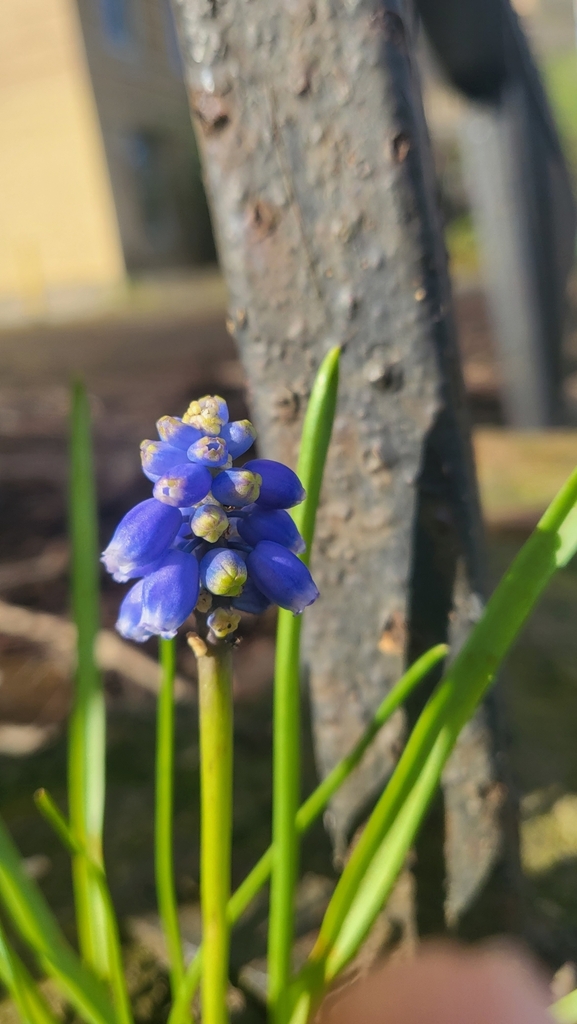
Grape hyacinths are charming spring bulbs that produce dense clusters of bell shaped flowers. They naturalize easily and look best when planted in large drifts. These hardy plants are a wonderful addition to any spring garden.
At a glance
- Care level
- Easy
- Plant type
- Bulbous perennial
- Light
- Full sun to partial shade
- Indoor light
- Bright indirect
- Water
- Every 7 to 14 days
- Mature size
- 15 to 25 cm
- Growth rate
- Medium
- Hardiness
- USDA 4 to 8
- Bloom time
- Mid to late spring
Care
Plant bulbs in autumn with the pointed end facing up. Ensure the soil drains well to prevent rot during the dormant summer months. Watch for yellowing foliage after flowering, which indicates the bulb is storing energy for next year.
- Watering
- Keep soil moist during the active growing season but allow it to dry out during summer dormancy.
- Feeding
- Apply a balanced bulb fertilizer in early spring as new growth emerges.
- Pruning
- Remove spent flower stalks after blooming, but leave the foliage until it turns yellow and dies back naturally.
- Repotting
- Divide overcrowded clumps every few years during the dormant season.
- Soil
- Well draining, fertile soil
- Soil pH
- Neutral to slightly acidic
- Temperature
- -20 to 30°C
- Humidity
- 40 to 60%
- Drought tolerance
- Moderate
- Lifespan
- Perennial, typically 5 to 10 years
- Fragrance
- Light
- Deer and rabbits
- High
Signs it needs repotting
- Bulbs are crowded and pushing out of the soil.
- Flowering performance has significantly declined.
- Water drains too slowly from the pot.
Safety
- People
- The plant contains calcium oxalate crystals which can cause irritation if handled or eaten.
- Pets
- This plant is considered mildly toxic to cats and dogs if ingested.
- Children
- Keep bulbs away from small children as they can be a choking hazard and cause digestive distress if swallowed.
- Contact allergens
- The sap can cause skin irritation in sensitive individuals.
- Airborne allergens
- The pollen is generally not considered a major allergen.
- Edibility
- While not highly toxic, the bulbs can cause stomach upset if ingested.
How to identify it
- Dense spikes of cobalt blue flowers
- Small bell shaped florets
- Narrow grass like basal leaves
- Flowers resemble tiny bunches of grapes
- Height
- 0.15 to 0.25m
- Spread
- 0.05 to 0.1m
- Leaves
- green, deciduous
- Flowers
- blue, purple, 0.5 to 1cm
Problems to watch for
- AphidsCommon
- Bulb RotCommon
- Botrytis BlightUncommon
- Root RotUncommon
By symptom
Check your grape hyacinth from a photo
Pocket Botanist looks at a photo of your plant and tells you what's wrong and what to try first.
Growing it
- Propagation
- division, seed
- When to plant
- autumn
- Overwintering
- Leave the bulbs in the ground. They require a period of cold to trigger spring growth.
- In containers
- They grow very well in pots, provided the container has excellent drainage and is at least 15 cm deep.
Division
- 1. Wait until the foliage has yellowed in late spring.
- 2. Carefully dig up the clump of bulbs.
- 3. Gently separate the small offsets from the main bulb.
- 4. Replant the offsets immediately in a new location.
Plant them in large drifts to create a striking carpet of blue under deciduous trees.
Grows well with
- Daffodil — They bloom at similar times and create a beautiful color contrast.
- Tulip — The blue of the grape hyacinth complements the bold colors of tulips.
Similar species
- Azure Grape Hyacinth — It has a similar growth habit but features lighter blue flowers.
Science
- Family
- Asparagaceae
- Genus
- Muscari
- Order
- Asparagales
- Class
- Liliopsida
- Native range
- Southeastern Europe and Turkey.
- Conservation
- Not of conservation concern as it is widely cultivated and naturalized.
It thrives in open, sunny meadows and rocky slopes where it can go dormant during the dry summer months.
- Value to wildlife
- early season nectar source
- Pollinators
- bees
- Uses
- rock gardens, naturalizing in lawns, container planting, border edging
Through the year
Ecological indicators
- Salinity
- 2/9
- Soil reaction
- 6/9
- Light
- 7/9
- Moisture
- 5/9
- Temperature
- 5/9
- Nutrients
- 4/9
Taxonomy resolved against GBIF.
Questions people ask
- When should I plant them?
- Plant the bulbs in the autumn before the ground freezes.
- Do I need to dig them up in winter?
- No, they are hardy and prefer to stay in the ground year round.
Where the name comes from
The genus name Muscari comes from the Greek word for musk, referring to the scent of some species. The specific epithet armeniacum refers to its native range in Armenia.
Good to know
- They are often called grape hyacinths because the flower clusters look like tiny bunches of grapes.
- The scent is often described as slightly musky.
- They are excellent for forcing indoors during the winter.
Also in
Keep your grape hyacinth growing
This page is a general guide. Save your plant in Pocket Botanist and you get care reminders timed for this plant, plus a care history that shows what worked.
This guide was generated with AI and checked against GBIF taxonomy. It is general information, not horticultural or veterinary advice. Read about how we build these guides.