 Pocket Botanist
Guide botanique
Muscari.
Muscari armeniacum
Prononciation mus-KAH-ree ar-men-ee-AY-kum
Aussi appelée Garden Grape-hyacinth


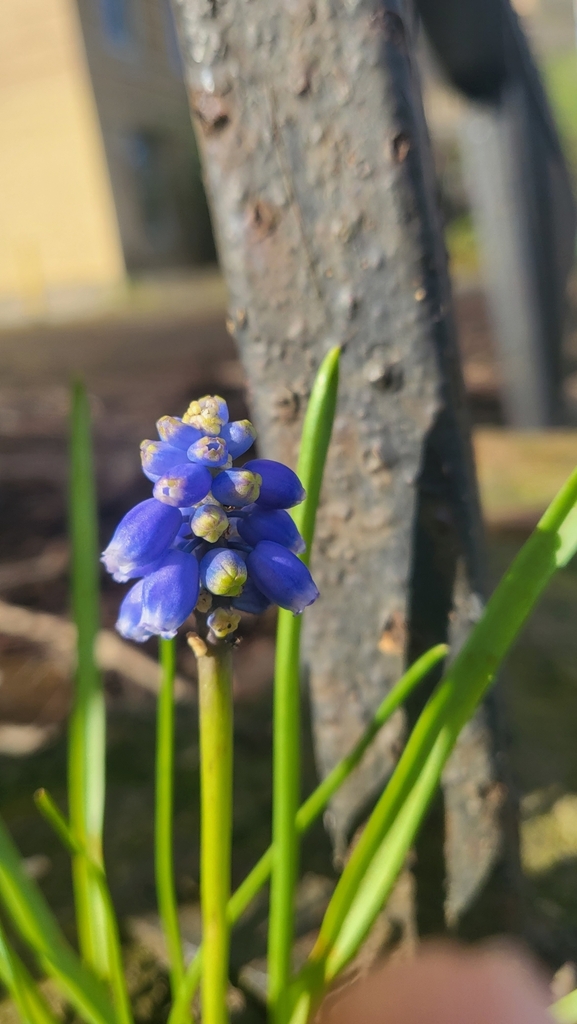
Les muscaris sont de charmantes bulbes printanières qui produisent des grappes denses de fleurs en forme de cloche. Ils se naturalisent facilement et sont plus jolis lorsqu'ils sont plantés en grandes colonies. Ces plantes rustiques sont un merveilleux ajout à tout jardin printanier.
En un coup d'œil
- Niveau d'entretien
- Facile
- Type de plante
- Vivace bulbeuse
- Lumière
- Plein soleil à mi-ombre
- Lumière en intérieur
- Lumière vive indirecte
- Arrosage
- Tous les 7 à 14 jours
- Taille adulte
- 15 à 25 cm
- Croissance
- Moyenne
- Rusticité
- USDA 4 à 8
- Floraison
- Mi à fin du printemps
Entretien
Plantez les bulbes à l'automne, l'extrémité pointue vers le haut. Assurez-vous que le sol draine bien pour éviter la pourriture pendant les mois d'été dormants. Surveillez le jaunissement du feuillage après la floraison, ce qui indique que le bulbe stocke de l'énergie pour l'année prochaine.
- Arrosage
- Gardez le sol humide pendant la saison de croissance active, mais laissez-le sécher pendant la dormance estivale.
- Engrais
- Appliquez un engrais équilibré pour bulbes au début du printemps, à l'émergence de nouvelles pousses.
- Taille
- Retirez les tiges florales fanées après la floraison, mais laissez le feuillage jusqu'à ce qu'il jaunisse et meure naturellement.
- Rempotage
- Divisez les touffes trop denses tous les quelques années pendant la saison dormante.
- Sol
- Sol bien drainant et fertile
- pH du sol
- Neutre à légèrement acide
- Température
- -20 à 30°C
- Humidité
- 40 à 60%
- Résistance à la sécheresse
- Moyenne
- Durée de vie
- Vivace, typiquement 5 à 10 ans
- Parfum
- Léger
- Résistance aux chevreuils et lapins
- Élevée
Signes qu'il faut rempoter
- Les bulbes sont serrés et sortent du sol.
- La performance de floraison a considérablement diminué.
- L'eau s'écoule trop lentement du pot.
Sécurité
- Humains
- La plante contient des cristaux d'oxalate de calcium qui peuvent provoquer une irritation en cas de manipulation ou d'ingestion.
- Animaux
- Cette plante est considérée comme légèrement toxique pour les chats et les chiens si ingérée.
- Enfants
- Tenez les bulbes à l'écart des jeunes enfants car ils peuvent présenter un risque d'étouffement et provoquer une détresse digestive s'ils sont avalés.
- Allergènes de contact
- La sève peut provoquer une irritation cutanée chez les personnes sensibles.
- Allergènes aéroportés
- Le pollen n'est généralement pas considéré comme un allergène majeur.
- Comestibilité
- Bien que non hautement toxiques, les bulbes peuvent provoquer des maux d'estomac s'ils sont ingérés.
Comment l'identifier
- Épis denses de fleurs bleu cobalt
- Petites fleurs en forme de clochettes
- Feuilles basales étroites ressemblant à de l'herbe
- Fleurs ressemblant à de petites grappes de raisins
- Hauteur
- 0,15 à 0,25m
- Envergure
- 0,05 à 0,1m
- Feuilles
- vert, caduc
- Fleurs
- bleu, violet, 0,5 à 1cm
Problèmes à surveiller
- Pourriture des bulbesCourant
- PuceronsCourant
- BotrytisPeu courant
- Pourriture des racinesPeu courant
Vérifie la santé de ta plante en photo
Pocket Botanist analyse une photo de ta plante et te dit ce qui ne va pas et quoi essayer en premier.
La cultiver
- Multiplication
- division, semis
- Quand planter
- automne
- Hivernage
- Laissez les bulbes en terre. Ils nécessitent une période de froid pour déclencher la croissance printanière.
- En pot
- Ils poussent très bien en pots, à condition que le récipient ait un excellent drainage et ait au moins 15 cm de profondeur.
Division
- 1. Attendez que le feuillage soit jauni à la fin du printemps.
- 2. Dégagez délicatement la touffe de bulbes.
- 3. Séparez doucement les petits drageons du bulbe principal.
- 4. Replantez immédiatement les drageons dans un nouvel emplacement.
Plantez-les en grandes colonies pour créer un tapis bleu saisissant sous les arbres à feuilles caduques.
Bonnes associations
- Jonquille — Ils fleurissent à peu près au même moment et créent un beau contraste de couleurs.
- Tulipa — Le bleu de la jacinthe à grappes complète les couleurs vives des tulipes.
Espèces similaires
- Muscari azureum — Il a un port similaire mais présente des fleurs d'un bleu plus clair.
Science
- Famille
- Asparagaceae
- Genre
- Muscari
- Ordre
- Asparagales
- Classe
- Liliopsida
- Région d'origine
- Sud-est de l'Europe et Turquie.
- Préservation
- Pas une préoccupation de conservation car il est largement cultivé et naturalisé.
Il prospère dans les prairies ouvertes et ensoleillées et les pentes rocheuses où il peut entrer en dormance pendant les mois secs de l'été.
- Intérêt pour la faune
- source de nectar en début de saison
- Pollinisateurs
- abeilles
- Utilisations
- jardins de rocaille, naturalisation dans les pelouses, plantation en pot, bordures
Au fil des saisons
Repères écologiques
- Salinité
- 2/9
- Réaction du sol
- 6/9
- Lumière
- 7/9
- Humidité
- 5/9
- Température
- 5/9
- Nutriments
- 4/9
Taxonomie vérifiée avec le GBIF.
Ce qu'on demande souvent
- Quand dois-je les planter ?
- Plantez les bulbes à l'automne avant que le sol ne gèle.
- Dois-je les déterrer en hiver ?
- Non, ils sont rustiques et préfèrent rester en terre toute l'année.
D'où vient le nom
Le nom du genre Muscari vient du mot grec pour musc, en référence au parfum de certaines espèces. L'épithète spécifique armeniacum fait référence à son aire de répartition native en Arménie.
Bon à savoir
- On les appelle souvent jacinthes à grappes car les inflorescences ressemblent à de minuscules grappes de raisin.
- Le parfum est souvent décrit comme légèrement musqué.
- Ils sont parfaits pour être forcés à l'intérieur pendant l'hiver.
Aussi dans
Garde ta plante en pleine forme
Cette page est un guide général. Enregistre ta plante dans Pocket Botanist et tu reçois des rappels d'entretien adaptés à cette plante, ainsi qu'un historique d'entretien qui montre ce qui a marché.
Ce guide a été généré par IA et vérifié avec la taxonomie du GBIF. Il s'agit d'informations générales, et non de conseils horticoles ou vétérinaires. Découvre comment nous concevons ces guides.