 Pocket Botanist
Plant guide
Mandevilla.
Mandevilla sanderi
Pronounced man-deh-VIL-lah SAN-der-eye
Also known as Brazilian jasmine, Brazilian-jasmine, Mexican love vine


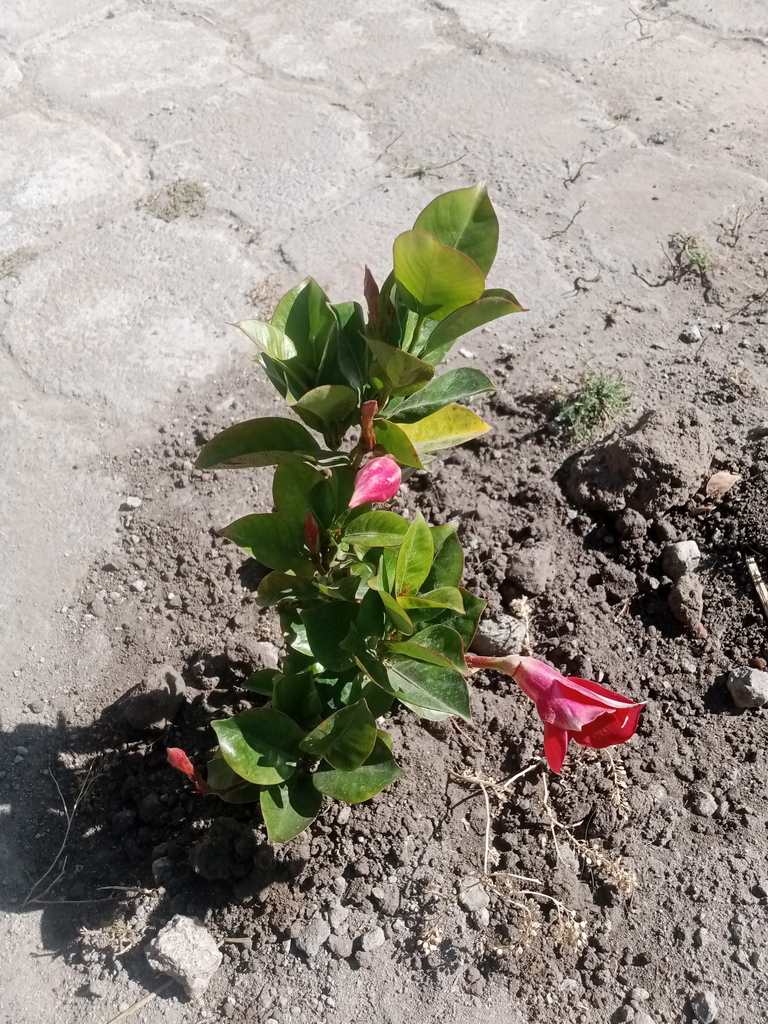
This lovely tropical vine is a favorite for its showy, trumpet shaped blooms. It loves climbing up trellises and adds a touch of the tropics to any sunny patio. You will find it thrives best when it has plenty of warmth and bright light.

At a glance
- Care level
- Moderate
- Plant type
- Tropical vine
- Light
- Full sun to partial shade
- Indoor light
- Bright indirect
- Water
- Every 3 to 7 days
- Mature size
- 3 to 5 meters
- Growth rate
- Fast
- Hardiness
- USDA 9 to 11
- Bloom time
- Late spring to early autumn
Care
Provide a sturdy trellis for support and keep the soil consistently moist but not soggy. Watch for yellowing leaves, which often signal overwatering or poor drainage. Ensure it stays away from cold drafts to keep it happy.
- Watering
- Keep the soil evenly moist during the growing season but allow the top inch to dry out slightly between waterings.
- Feeding
- Use a balanced liquid fertilizer every two weeks throughout the spring and summer.
- Pruning
- Prune back long stems in late winter to encourage bushier growth and more flowers.
- Repotting
- Repot in the spring if the roots have filled the container.
- Soil
- Well draining, peat based potting mix
- Soil pH
- Acidic to neutral
- Temperature
- 10 to 30°C
- Humidity
- 50 to 70%
- Drought tolerance
- Moderate
- Lifespan
- Perennial, typically 3 to 5 years in containers.
- Fragrance
- Light
- Deer and rabbits
- Moderate
Signs it needs repotting
- Roots growing out of the drainage holes.
- Water running straight through the pot without soaking in.
- Stunted growth during the active season.
Safety
- People
- The milky sap can cause skin irritation and the plant is poisonous if eaten.
- Pets
- The milky sap is toxic to cats and dogs if ingested.
- Children
- Keep this plant away from children as the sap is irritating and the foliage is toxic if ingested.
- Contact allergens
- The milky sap may cause contact dermatitis in sensitive individuals.
- Airborne allergens
- There are no significant reports of respiratory allergies associated with this plant.
- Edibility
- All parts of this plant are toxic if ingested and should never be consumed.
How to identify it
- Glossy, dark green oval leaves
- Large, trumpet shaped pink flowers
- Twining woody vine stems
- Milky sap when stems are cut
- Height
- 2 to 4.5m
- Spread
- 0.6 to 1.2m
- Leaves
- dark green, evergreen
- Flowers
- pink, red, white, 5 to 8cm
Problems to watch for
- MealybugsCommon
- Spider MitesCommon
- AphidsUncommon
- Root RotUncommon
- Scale InsectsUncommon
- Sooty MoldUncommon
- WhiteflyUncommon
- Leaf DropRare
By symptom
Check your mandevilla from a photo
Pocket Botanist looks at a photo of your plant and tells you what's wrong and what to try first.
Growing it
- Propagation
- cuttings
- When to plant
- spring
- Overwintering
- Bring containers indoors before the first frost. Place in a bright, cool room and reduce watering significantly until spring.
- In containers
- It grows exceptionally well in containers, provided the pot is at least 30 centimeters wide and has good drainage.
Stem cuttings
- Take a 10 centimeter cutting from a non flowering stem in summer.
- Remove the lower leaves and dip the cut end in rooting hormone.
- Plant in a moist, well draining potting mix.
- Cover with a plastic bag to maintain humidity until roots form.
Pair with other tropical plants that appreciate consistent moisture and bright light.
Grows well with
Similar species
- Dipladenia — It is a closely related species with a more shrubby growth habit.
Science
- Family
- Apocynaceae
- Genus
- Mandevilla
- Order
- Gentianales
- Class
- Magnoliopsida
- Native range
- Brazil
- Conservation
- Not of conservation concern.
It grows as a climbing vine in tropical forests, using its twining stems to reach sunlight.
- Value to wildlife
- nectar source
- Pollinators
- butterflies, hummingbirds
- Uses
- container plant, trellis climber, patio accent
Through the year
Ecological indicators
- Salinity
- 2/9
- Soil reaction
- 6/9
- Temperature
- 8/9
- Nutrients
- 6/9
- Light
- 7/9
- Moisture
- 6/9
Taxonomy resolved against GBIF.
Questions people ask
- Does it need a trellis?
- Yes, it is a twining vine that requires support to grow vertically.
- Can I grow it indoors?
- It can be grown indoors if provided with very bright light and high humidity.
Where the name comes from
The genus is named after Henry Mandeville, a British diplomat, while the species honors the German botanist Sander.
Good to know
- It is often called the Brazilian Jasmine despite not being a true jasmine.
- The flowers are trumpet shaped and very showy.
- It thrives in bright, indirect light.
Also in
Keep your mandevilla growing
This page is a general guide. Save your plant in Pocket Botanist and you get care reminders timed for this plant, plus a care history that shows what worked.
This guide was generated with AI and checked against GBIF taxonomy. It is general information, not horticultural or veterinary advice. Read about how we build these guides.