 Pocket Botanist
Guía de plantas
jazmín de Brasil.
Mandevilla sanderi
Pronunciación man-deh-VIL-lah SAN-der-eye
También se conoce como jazmín de Brasil, jazmín de Brasil, enredadera de amor mexicana


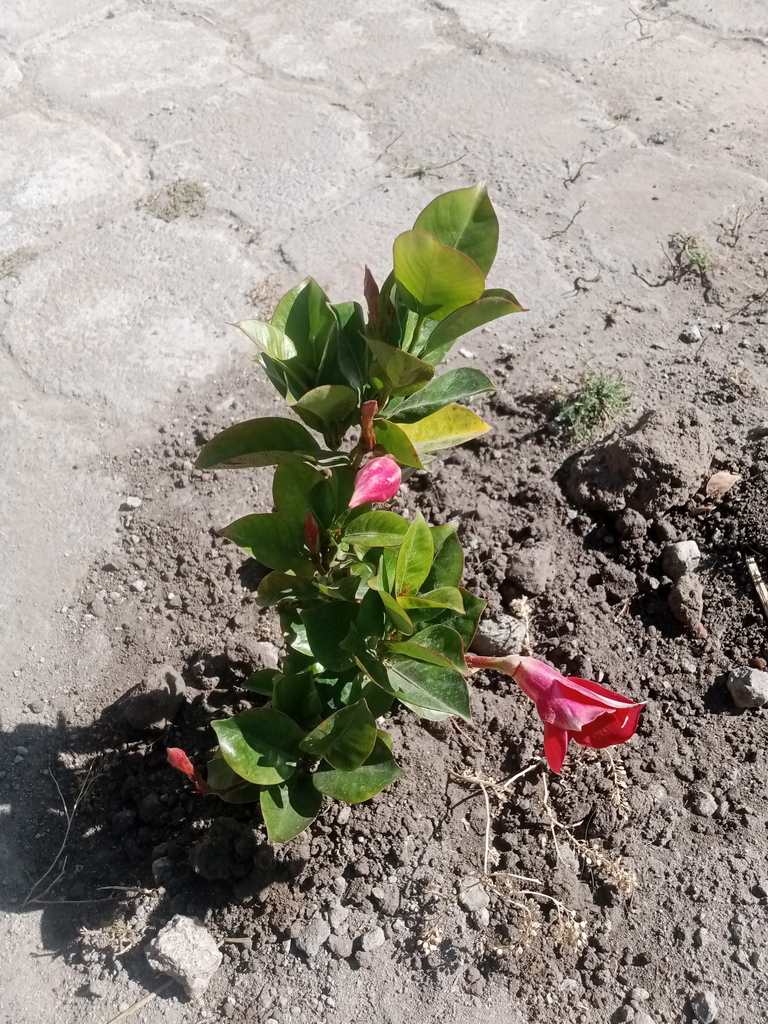
Esta encantadora enredadera tropical es una favorita por sus vistosas flores en forma de trompeta. Le encanta trepar por espalderas y añade un toque tropical a cualquier patio soleado. Encontrarás que prospera mejor cuando tiene mucha calidez y luz brillante.

De un vistazo
- Nivel de cuidados
- Media
- Tipo de planta
- Enredadera tropical
- Luz
- Pleno sol a sombra parcial
- Luz en interior
- Luz indirecta brillante
- Riego
- Cada 3 a 7 días
- Tamaño adulto
- 3 a 5 metros
- Ritmo de crecimiento
- Rápido
- Rusticidad
- USDA 9 a 11
- Floración
- Finales de primavera a principios de otoño
Cuidados
Proporciona una espaldera resistente para que se sostenga y mantén la tierra constantemente húmeda pero no encharcada. Estate atento a las hojas amarillentas, que a menudo indican exceso de riego o mal drenaje. Asegúrate de que se mantenga alejada de las corrientes de aire frío para que esté feliz.
- Riego
- Mantén la tierra uniformemente húmeda durante la temporada de crecimiento, pero permite que la pulgada superior se seque un poco entre riegos.
- Abonado
- Usa un fertilizante líquido equilibrado cada dos semanas durante la primavera y el verano.
- Poda
- Poda los tallos largos a finales del invierno para fomentar un crecimiento más frondoso y más flores.
- Trasplante
- Trasplanta en primavera si las raíces han llenado el contenedor.
- Suelo
- Mezcla para macetas a base de turba, bien drenada
- pH del suelo
- Ácido a neutro
- Temperatura
- 10 a 30°C
- Humedad
- 50 a 70%
- Tolerancia a la sequía
- Moderada
- Longevidad
- Perenne, típicamente de 3 a 5 años en contenedores.
- Fragancia
- Suave
- Resistencia a ciervos y conejos
- Moderada
Señales de que necesita trasplante
- Las raíces crecen fuera de los agujeros de drenaje.
- El agua pasa directamente a través de la maceta sin empaparse.
- Crecimiento atrofiado durante la temporada activa.
Seguridad
- Personas
- La savia lechosa puede causar irritación en la piel y la planta es venenosa si se ingiere.
- Mascotas
- La savia lechosa es tóxica para gatos y perros si se ingiere.
- Niños
- Mantenga esta planta alejada de los niños, ya que la savia es irritante y el follaje es tóxico si se ingiere.
- Alérgenos por contacto
- La savia lechosa puede causar dermatitis de contacto en personas sensibles.
- Alérgenos en el aire
- No hay informes significativos de alergias respiratorias asociadas con esta planta.
- Comestibilidad
- Todas las partes de esta planta son tóxicas si se ingieren y nunca deben consumirse.
Cómo identificarla
- Hojas ovaladas de color verde oscuro y brillante
- Flores grandes en forma de trompeta de color rosa
- Tallos leñosos de enredadera retorcidos
- Savía lechosa cuando se cortan los tallos
- Altura
- 2 a 4,5m
- Anchura
- 0,6 a 1,2m
- Hojas
- verde oscuro, perenne
- Flores
- rosa, rojo, blanco, 5 a 8cm
Problemas a vigilar
- Araña rojaComún
- Cochinillas algodonosasComún
- CochinillasPoco común
- Mosca blancaPoco común
- NegrillaPoco común
- Podredumbre radicularPoco común
- PulgonesPoco común
- Caída de hojasRara
- Ácaros araña — Pequeñas plagas que causan picaduras en las hojas durante el clima cálido y seco.
Por síntoma
Revisa tu jazmín de brasil con una foto
Pocket Botanist mira una foto de tu planta y te dice qué le pasa y qué probar primero.
Cómo cultivarla
- Propagación
- esquejes
- Cuándo plantar
- primavera
- Cuidados en invierno
- Traiga los contenedores al interior antes de la primera helada. Colóquelos en una habitación brillante y fresca y reduzca significativamente el riego hasta la primavera.
- En maceta
- Crece excepcionalmente bien en contenedores, siempre que la maceta tenga al menos 30 centímetros de ancho y un buen drenaje.
Esquejes de tallo
- Toma un esqueje de 10 centímetros de un tallo no florecido en verano.
- Retira las hojas inferiores y sumerge el extremo cortado en hormona de enraizamiento.
- Planta en una mezcla de tierra húmeda y bien drenada.
- Cubre con una bolsa de plástico para mantener la humedad hasta que se formen las raíces.
Combínala con otras plantas tropicales que aprecien la humedad constante y la luz brillante.
Buenas compañeras
- Lantana — Comparten requisitos similares de luz y agua para una exhibición tropical.
- hibisco chino — Estas plantas proporcionan un hermoso contraste en textura y forma de flor.
Especies parecidas
- Mandevilla boliviensis — Es una especie estrechamente relacionada con un hábito de crecimiento más arbustivo.
Ciencia
- Familia
- Apocynaceae
- Género
- Mandevilla
- Orden
- Gentianales
- Clase
- Magnoliopsida
- Distribución natural
- Brasil
- Conservación
- No es de preocupación para la conservación.
Crece como una enredadera trepadora en bosques tropicales, utilizando sus tallos trepadores para alcanzar la luz solar.
- Valor para la fauna
- fuente de néctar
- Polinizadores
- mariposas, colibríes
- Usos
- planta de contenedor, trepadora de espaldera, acento de patio
A lo largo del año
Indicadores ecológicos
- Salinidad
- 2/9
- Reacción del suelo
- 6/9
- Temperatura
- 8/9
- Nutrientes
- 6/9
- Luz
- 7/9
- Humedad
- 6/9
Taxonomía cotejada con GBIF.
Lo que más preguntan
- ¿Necesita una espaldera?
- Sí, es una enredadera trepadora que requiere soporte para crecer verticalmente.
- ¿Puedo cultivarla en interiores?
- Se puede cultivar en interiores si se le proporciona luz muy brillante y alta humedad.
De dónde viene el nombre
El género lleva el nombre de Henry Mandeville, un diplomático británico, mientras que la especie honra al botánico alemán Sander.
Bueno saberlo
- A menudo se le llama Jazmín de Brasil a pesar de no ser un jazmín verdadero.
- Las flores tienen forma de trompeta y son muy vistosas.
- Prospera con luz brillante e indirecta.
También en
Que tu jazmín de brasil siga creciendo
Esta página es una guía general. Guarda tu planta en Pocket Botanist y tendrás recordatorios de cuidado pensados para esta planta, además de un historial de cuidados que muestra qué ha funcionado.
Esta guía se ha generado con IA y se ha cotejado con la taxonomía de GBIF. Es información general, no asesoramiento botánico ni veterinario. Descubre cómo elaboramos estas guías.