 Pocket Botanist
Plant guide
Oregon Grape.
Mahonia aquifolium (Pursh) Nutt.
Pronounced ma-HOH-nee-uh ah-kwee-FOH-lee-um
Also known as Hollyleaved Barberry, Oregon Grape, Oregon Grapeholly, Oregon Holly, Oregon Holly Grape, Oregon-grape, Piper's Oregon-grape


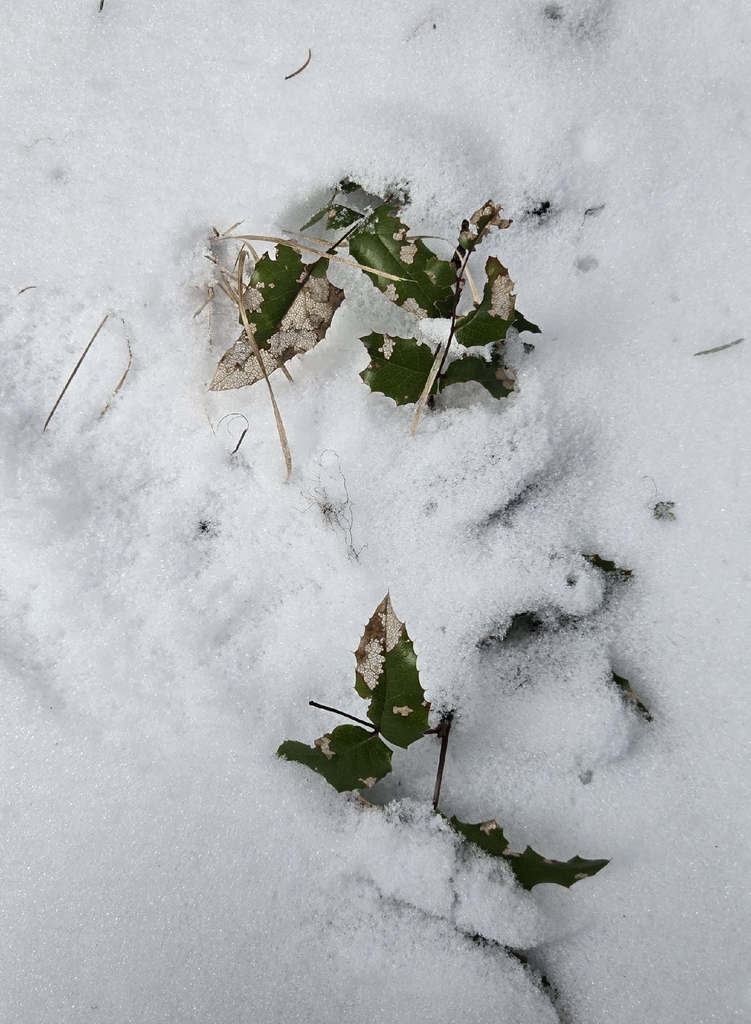
Oregon Grape is a lovely evergreen shrub native to the Pacific Northwest. It features glossy, holly-like leaves and produces bright yellow flowers followed by clusters of dark blue berries. This plant is a fantastic choice for adding year-round interest to your garden.
At a glance
- Care level
- Easy
- Plant type
- Evergreen shrub
- Light
- Partial shade to full sun
- Indoor light
- Bright indirect
- Water
- Every 7 to 14 days
- Mature size
- 3 to 6 feet tall
- Growth rate
- Medium
- Hardiness
- USDA 5 to 9
- Bloom time
- Early to mid spring
Care
Plant this shrub in well-draining soil and provide consistent moisture while it gets established. Watch for leaf scorch if it gets too much direct afternoon sun. It is quite hardy and rarely needs much fuss once it takes root.
- Watering
- Keep the soil consistently moist but not waterlogged, especially during the first year.
- Feeding
- Apply a balanced, slow-release fertilizer in early spring to support new growth.
- Pruning
- Prune lightly after flowering to maintain shape and encourage bushier growth.
- Repotting
- Repot only if the plant becomes root-bound, though it prefers to stay in the ground.
- Soil
- Well-draining, acidic, loamy soil
- Soil pH
- 5.0 to 7.0
- Temperature
- -25 to 35°C
- Humidity
- 40 to 70%
- Drought tolerance
- Moderate
- Lifespan
- Perennial, typically 20 to 50 years
- Fragrance
- Light
- Deer and rabbits
- High
Signs it needs repotting
- Roots growing out of the drainage holes
- Water running straight through the pot without soaking in
Safety
- People
- The plant is generally non-toxic, but the berries contain alkaloids that may cause mild stomach upset if eaten in large quantities.
- Pets
- The berries are generally considered non-toxic, but the plant contains alkaloids that may cause mild stomach upset if ingested by pets.
- Children
- The sharp, spiny leaves pose a physical hazard to small children who might try to handle the plant.
- Contact allergens
- The holly-like leaves have sharp, spiny margins that can scratch or irritate sensitive skin.
- Airborne allergens
- The pollen can trigger mild seasonal allergies in sensitive individuals.
- Edibility
- The berries are tart and contain seeds that should be removed before consumption, though they are generally considered safe when cooked.
How to identify it
- Glossy, leathery, holly-like evergreen leaves
- Bright yellow, fragrant spring flowers
- Clusters of dark blue, waxy berries
- New foliage often has reddish tint
- Height
- 0.9 to 1.8m
- Spread
- 0.9 to 1.5m
- Leaves
- dark green, bronze, reddish purple, evergreen
- Flowers
- bright yellow, 0.5 to 1cm
- Fruit
- dark blue, black, Late summer
Problems to watch for
- Powdery MildewCommon
- RustCommon
- AphidsUncommon
- ChlorosisUncommon
- Leaf ScorchUncommon
- Leaf SpotUncommon
- Root RotUncommon
- Scale InsectsUncommon
By symptom
Check your oregon grape from a photo
Pocket Botanist looks at a photo of your plant and tells you what's wrong and what to try first.
Growing it
- Propagation
- seed, cuttings, division
- When to plant
- spring, autumn
- Overwintering
- It is very hardy and requires no special winter protection in most climates. Just ensure the soil remains well-drained to prevent root rot during wet winters.
- In containers
- It grows well in large containers, provided they have excellent drainage and are at least 40 centimeters in diameter.
Semi-hardwood cuttings
- Take 10 centimeter cuttings in late summer.
- Remove the lower leaves and dip the base in rooting hormone.
- Plant in a well-draining potting mix.
- Keep in a humid environment until roots form.
Plant in groups with other shade-loving woodland perennials to create a layered, naturalistic look.
Grows well with
- Hellebore — They share similar shade and moisture requirements.
- Coral Bells — The foliage contrast between the two plants is quite striking.
Similar species
- Creeping Mahonia — It is a lower-growing, spreading relative that works well as a groundcover.
Science
- Family
- Berberidaceae
- Genus
- Mahonia
- Order
- Ranunculales
- Class
- Magnoliopsida
- Native range
- Western North America
- Conservation
- This species is common and not of conservation concern.
It spreads by underground rhizomes, allowing it to form dense thickets that provide cover for small wildlife.
- Value to wildlife
- nectar source, winter bird food
- Pollinators
- bees, butterflies, hummingbirds
- Uses
- ornamental shrub, wildlife garden, jelly making
Through the year
Ecological indicators
- Salinity
- 2/9
- Temperature
- 5/9
- Nutrients
- 4/9
- Soil reaction
- 5/9
- Light
- 4/9
- Moisture
- 5/9
Taxonomy resolved against GBIF.
Questions people ask
- Does it need pruning?
- Pruning is rarely needed, but you can trim it back after flowering to keep it compact.
- Can I grow it in full sun?
- It prefers partial shade, especially in hotter climates where full sun can scorch the leaves.
Where the name comes from
The genus honors Bernard McMahon, an early American horticulturist, while the species name aquifolium refers to the leaf shape resembling holly.
Good to know
- The berries are often called Oregon grapes.
- The inner bark contains berberine, which has been used as a yellow dye.
- It is a tough, reliable shrub that thrives in shade.
- The leaves often turn a beautiful bronze or purple color in winter.
Also in
Keep your oregon grape growing
This page is a general guide. Save your plant in Pocket Botanist and you get care reminders timed for this plant, plus a care history that shows what worked.
This guide was generated with AI and checked against GBIF taxonomy. It is general information, not horticultural or veterinary advice. Read about how we build these guides.