 Pocket Botanist
Guide botanique
Épine-vinette de l'Oregon.
Mahonia aquifolium (Pursh) Nutt.
Prononciation ma-HOH-nee-uh ah-kwee-FOH-lee-um
Aussi appelée Épine-vinette de l'Oregon, Mahonia fascicularis, Oregon Grape, Mahonia aquifolium


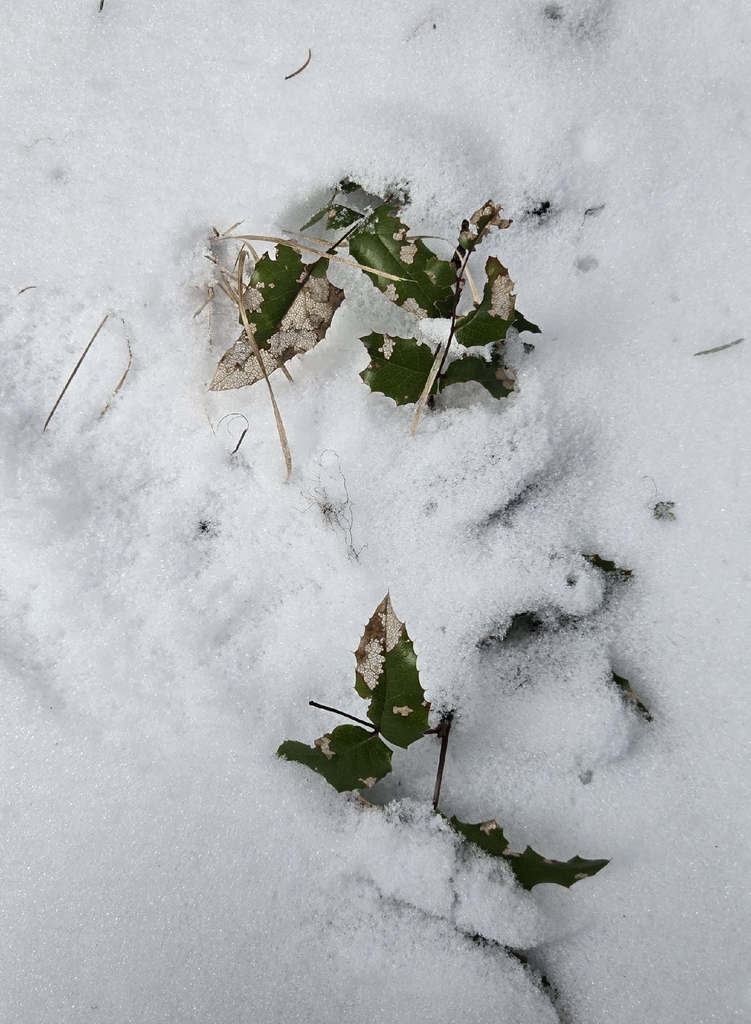
L'Épine-vinette de l'Oregon est un charmant arbuste à feuilles persistantes originaire du Pacifique Nord-Ouest. Il présente des feuilles brillantes, semblables à celles du houx, et produit de jolies fleurs d'un jaune vif suivies de grappes de baies d'un bleu foncé. Cette plante est un excellent choix pour ajouter de l'intérêt à votre jardin toute l'année.
En un coup d'œil
- Niveau d'entretien
- Facile
- Type de plante
- Arbuste à feuilles persistantes
- Lumière
- Mi-ombre à plein soleil
- Lumière en intérieur
- Lumière vive indirecte
- Arrosage
- Tous les 7 à 14 jours
- Taille adulte
- 3 à 6 pieds de hauteur
- Croissance
- Moyenne
- Rusticité
- USDA 5 à 9
- Floraison
- Début à mi-printemps
Entretien
Plantez cet arbuste dans un sol bien drainé et assurez-lui une humidité constante pendant sa période d'établissement. Surveillez les brûlures sur les feuilles si l'exposition au soleil direct de l'après-midi est trop forte. Il est assez rustique et nécessite rarement beaucoup de soins une fois qu'il est bien enraciné.
- Arrosage
- Maintenez le sol constamment humide mais pas gorgé d'eau, surtout pendant la première année.
- Engrais
- Appliquez un engrais équilibré à libération lente au début du printemps pour favoriser la nouvelle croissance.
- Taille
- Taillez légèrement après la floraison pour maintenir la forme et encourager une croissance plus touffue.
- Rempotage
- Rempotez uniquement si la plante devient à l'étroit dans son pot, bien qu'elle préfère rester en pleine terre.
- Sol
- Sol bien drainé, acide et limoneux
- pH du sol
- 5.0 à 7.0
- Température
- -25 à 35°C
- Humidité
- 40 à 70%
- Résistance à la sécheresse
- Moyenne
- Durée de vie
- Vivace, généralement de 20 à 50 ans
- Parfum
- Léger
- Résistance aux chevreuils et lapins
- Élevée
Signes qu'il faut rempoter
- Les racines sortent des trous de drainage
- L'eau traverse directement le pot sans s'infiltrer
Sécurité
- Humains
- La plante est généralement non toxique, mais les baies contiennent des alcaloïdes qui peuvent provoquer de légers maux d'estomac si consommés en grande quantité.
- Animaux
- Les baies sont généralement considérées comme non toxiques, mais la plante contient des alcaloïdes qui peuvent provoquer de légers maux d'estomac si ingérés par les animaux de compagnie.
- Enfants
- Les feuilles tranchantes et épineuses représentent un danger physique pour les jeunes enfants qui pourraient essayer de manipuler la plante.
- Allergènes de contact
- Les feuilles ressemblant à du houx ont des bords tranchants et épineux qui peuvent égratigner ou irriter les peaux sensibles.
- Allergènes aéroportés
- Le pollen peut déclencher de légères allergies saisonnières chez les personnes sensibles.
- Comestibilité
- Les baies sont acidulées et contiennent des pépins qui doivent être retirés avant la consommation, bien qu'elles soient généralement considérées comme sûres lorsqu'elles sont cuites.
Comment l'identifier
- Feuilles persistantes brillantes, coriaces, ressemblant à celles du houx
- Fleurs printanières parfumées d'un jaune vif
- Grappes de baies cireuses, d'un bleu foncé
- Nouveau feuillage souvent teinté de rouge
- Hauteur
- 0,9 à 1,8m
- Envergure
- 0,9 à 1,5m
- Feuilles
- vert foncé, bronze, violet rougeâtre, persistant
- Fleurs
- jaune vif, 0,5 à 1cm
- Fruits
- bleu foncé, noir, Fin d'été
Problèmes à surveiller
- OïdiumCourant
- RouilleCourant
- Brûlures du feuillagePeu courant
- ChlorosePeu courant
- CochenillesPeu courant
- Pourriture des racinesPeu courant
- PuceronsPeu courant
- Taches foliairesPeu courant
- Mildiou poudreux — Croissance fongique blanche sur la surface des feuilles due à une mauvaise circulation de l'air.
Par symptôme
Vérifie la santé de ta plante en photo
Pocket Botanist analyse une photo de ta plante et te dit ce qui ne va pas et quoi essayer en premier.
La cultiver
- Multiplication
- semis, boutures, division
- Quand planter
- printemps, automne
- Hivernage
- Il est très rustique et ne nécessite aucune protection hivernale spéciale dans la plupart des climats. Assurez-vous simplement que le sol reste bien drainé pour éviter le pourrissement des racines pendant les hivers humides.
- En pot
- Il pousse bien dans de grands conteneurs, à condition qu'ils aient un excellent drainage et qu'ils aient au moins 40 centimètres de diamètre.
Boutures semi-aoûtées
- Prenez des boutures de 10 centimètres à la fin de l'été.
- Retirez les feuilles inférieures et trempez la base dans de l'hormone d'enracinement.
- Plantez dans un mélange de terreau bien drainant.
- Conservez dans un environnement humide jusqu'à la formation des racines.
Plantez en groupes avec d'autres vivaces de sous-bois aimant l'ombre pour créer un aspect stratifié et naturaliste.
Bonnes associations
- Helleborus orientalis — Ils partagent des exigences similaires en matière d'ombre et d'humidité.
- Heuchère — Le contraste du feuillage entre les deux plantes est assez frappant.
Espèces similaires
- Mahonia repens — C'est une parente rampante et plus basse qui convient bien comme couvre-sol.
Science
- Famille
- Berberidaceae
- Genre
- Mahonia
- Ordre
- Ranunculales
- Classe
- Magnoliopsida
- Région d'origine
- Ouest de l'Amérique du Nord
- Préservation
- Cette espèce est commune et ne fait pas l'objet de préoccupations en matière de conservation.
Il se propage par des rhizomes souterrains, ce qui lui permet de former des fourrés denses qui abritent la petite faune.
- Intérêt pour la faune
- source de nectar, nourriture pour oiseaux en hiver
- Pollinisateurs
- abeilles, papillons, colibris
- Utilisations
- arbuste d'ornement, jardin pour la faune, fabrication de gelées
Au fil des saisons
Repères écologiques
- Salinité
- 2/9
- Température
- 5/9
- Nutriments
- 4/9
- Réaction du sol
- 5/9
- Lumière
- 4/9
- Humidité
- 5/9
Taxonomie vérifiée avec le GBIF.
Ce qu'on demande souvent
- A-t-il besoin d'être taillé ?
- La taille est rarement nécessaire, mais vous pouvez le tailler après la floraison pour le maintenir compact.
- Puis-je le cultiver en plein soleil ?
- Il préfère l'ombre partielle, surtout dans les climats plus chauds où le plein soleil peut brûler les feuilles.
D'où vient le nom
Le genre honore Bernard McMahon, un horticulteur américain de premier plan, tandis que le nom d'espèce aquifolium fait référence à la forme des feuilles ressemblant à celle du houx.
Bon à savoir
- Les baies sont souvent appelées raisins de l'Oregon.
- L'écorce interne contient de la berbérine, qui a été utilisée comme teinture jaune.
- C'est un arbuste robuste et fiable qui prospère à l'ombre.
- Les feuilles prennent souvent une belle couleur bronze ou violette en hiver.
Aussi dans
Garde ta plante en pleine forme
Cette page est un guide général. Enregistre ta plante dans Pocket Botanist et tu reçois des rappels d'entretien adaptés à cette plante, ainsi qu'un historique d'entretien qui montre ce qui a marché.
Ce guide a été généré par IA et vérifié avec la taxonomie du GBIF. Il s'agit d'informations générales, et non de conseils horticoles ou vétérinaires. Découvre comment nous concevons ces guides.