 Pocket Botanist
Plant guide
Jasmine.
Jasminum sambac
Pronounced jaz-MIH-num SAM-bak
Also known as Arabian Jasmine, Mogra, Sambac jasmine, arabian-jasmine


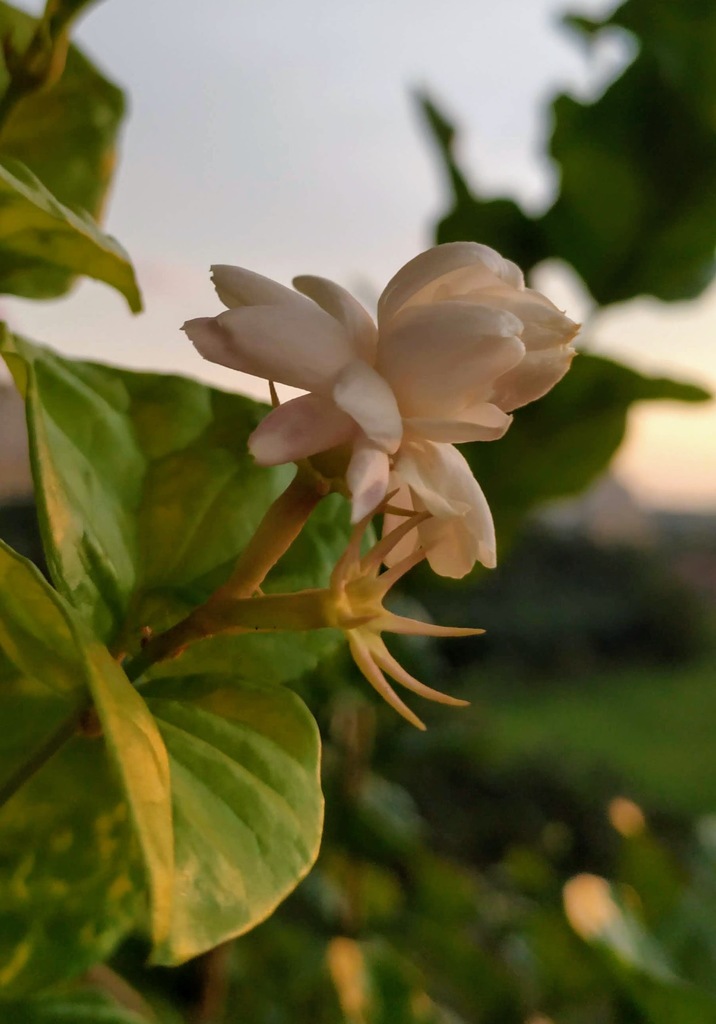
Arabian jasmine is a beloved, fragrant shrub known for its stunning white blooms. It thrives in warm climates and makes a wonderful addition to any sunny indoor or outdoor space. You will love how its sweet scent fills the air during the warmer months.
At a glance
- Care level
- Moderate
- Plant type
- Evergreen shrub
- Light
- Full sun to partial shade
- Indoor light
- bright-indirect
- Water
- Every 3 to 7 days
- Mature size
- 1 to 3 meters
- Growth rate
- medium
- Hardiness
- USDA 9 to 11
- Bloom time
- Spring to autumn
Care
Keep the soil consistently moist but never soggy to ensure your plant stays happy. Watch for yellowing leaves, which often signal overwatering or poor drainage. Provide plenty of bright light to encourage those beautiful, fragrant blooms.
- Watering
- Water when the top inch of soil feels dry to the touch.
- Feeding
- Feed with a balanced liquid fertilizer during the active growing season.
- Pruning
- Trim back after flowering to maintain shape and encourage bushier growth.
- Repotting
- Repot in spring when the roots begin to crowd the container.
- Soil
- Well draining, rich potting mix
- Soil pH
- 6.0 to 7.5
- Temperature
- 15 to 30°C
- Humidity
- 50 to 80%
- Drought tolerance
- low
- Lifespan
- Perennial, typically 10 to 20 years with proper care.
- Fragrance
- strong
- Deer and rabbits
- moderate
Signs it needs repotting
- Roots growing out of the drainage holes.
- Water running straight through the pot without soaking in.
- Stunted growth despite regular feeding.
Safety
- People
- This plant is generally considered non toxic to humans.
- Pets
- This plant is generally considered non toxic to cats and dogs.
- Children
- The small flowers could pose a choking hazard if ingested by very young children.
- Contact allergens
- Some people may experience mild skin irritation from handling the sap.
- Airborne allergens
- The strong scent can sometimes trigger headaches or respiratory sensitivity in those prone to fragrance allergies.
- Edibility
- While the flowers are often used to scent tea, you should never consume plant material from nurseries as it may contain systemic pesticides.
How to identify it
- Glossy dark green oval leaves
- Fragrant white star shaped flowers
- Vining or shrubby growth habit
- Flowers turn pinkish as they age
- Height
- 1 to 3m
- Spread
- 0.6 to 1.5m
- Leaves
- dark green, evergreen
- Flowers
- white, 2 to 4cm
Common problems
- Spider mites — These tiny pests thrive in dry conditions and cause stippling on the leaves.
- Root rot — Overwatering leads to fungal decay in the root system.
- Chlorosis — Yellowing leaves often indicate a lack of iron or other micronutrients in the soil.
Growing it
- Propagation
- cuttings, layering
- When to plant
- spring
- Overwintering
- Bring the plant indoors before the first frost. Place it in a bright window and reduce watering significantly during the cooler months.
- In containers
- It grows very well in containers, provided you use a pot at least 12 inches wide with excellent drainage.
Stem Cuttings
- Take a 4 to 6 inch cutting from a healthy stem.
- Remove the lower leaves and dip the cut end in rooting hormone.
- Place the cutting in a moist, well draining potting mix.
- Cover with a plastic bag to maintain humidity until roots form.
Group plants with similar water needs together to maintain consistent humidity levels.
Grows well with
- Gardenia — They share similar requirements for high humidity and acidic soil.
- Hibiscus — Both plants thrive in warm, tropical conditions and provide a lush look.
Similar species
- Star Jasmine — It is a much hardier vine that offers a similar fragrance.
- Common Jasmine — This species is more cold tolerant and has a different leaf structure.
Science
- Family
- Oleaceae
- Genus
- Jasminum
- Order
- Lamiales
- Class
- Magnoliopsida
- Native range
- Tropical Asia, specifically parts of India and Southeast Asia.
- Conservation
- It is not currently listed as a species of conservation concern.
It grows as a scrambling shrub in tropical forests where it relies on its scent to attract nocturnal pollinators.
- Value to wildlife
- nectar source
- Pollinators
- bees, moths
- Uses
- scented tea, perfumery, ornamental vine, essential oil production
Through the year
Ecological indicators
- Salinity
- 2/9
- Soil reaction
- 6/9
- Light
- 7/9
- Temperature
- 8/9
- Moisture
- 6/9
- Nutrients
- 6/9
Taxonomy resolved against GBIF.
Questions people ask
- Why is my jasmine not blooming?
- It likely needs more direct sunlight or a period of cooler temperatures to trigger bud formation.
- How often should I prune it?
- Prune lightly after each flowering cycle to encourage bushier growth and more blooms.
Where the name comes from
The name Jasminum comes from the Persian word yasmin, while sambac is derived from the Arabic word zanbaq, which refers to the fragrant oil.
Good to know
- It is the national flower of the Philippines.
- The flowers open at night and close during the day.
- It is a primary ingredient in traditional jasmine tea.
- The blooms are harvested in the morning when they are still tightly closed.
Is your jasmine looking unwell?
This page is a general guide. Pocket Botanist diagnoses problems from a photo of your actual plant, works out watering for your light and conditions, and reminds you when care is due.
This guide was generated with AI and checked against GBIF taxonomy. It is general information, not horticultural or veterinary advice. Read about how we build these guides.