 Pocket Botanist
Plant guide
Jungle Geranium.
Ixora coccinea
Pronounced ik-SOR-uh kok-SIN-ee-uh



Scan with your phone's camera to get the app
Or go to pocketbotanist.app/get on your phone
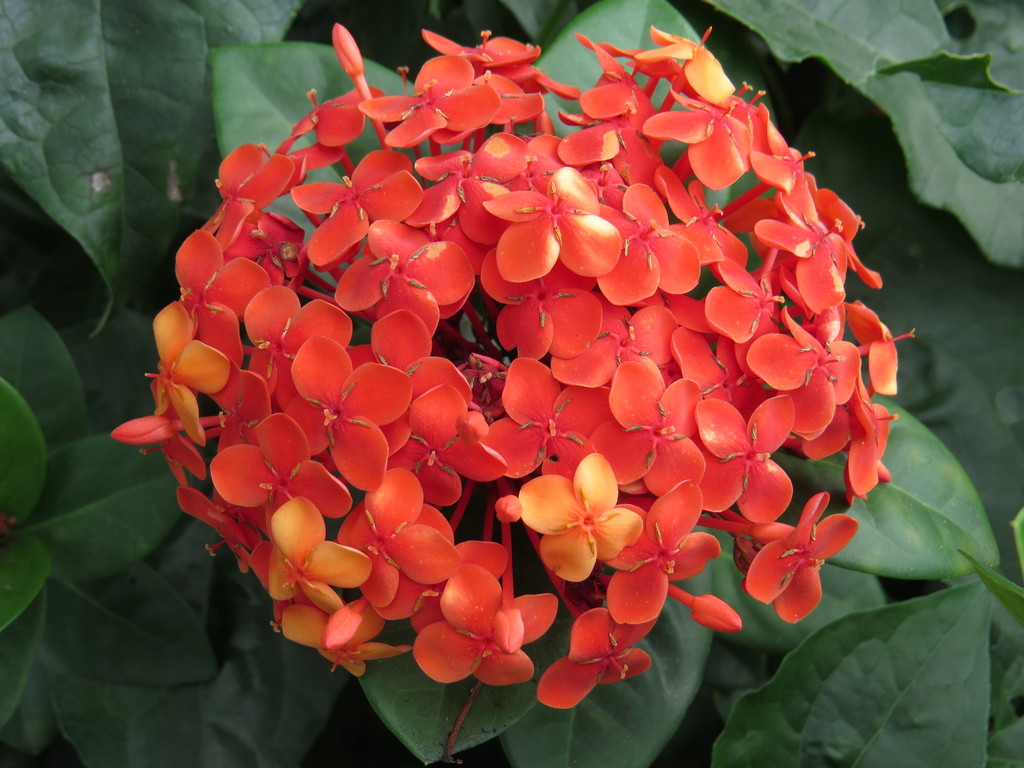
The jungle geranium is a beautiful tropical shrub known for its dense clusters of vibrant, star shaped flowers. It thrives in warm, humid climates and makes a stunning addition to any sunny garden. You'll love how it brings a pop of color to your outdoor space.
At a glance
- Care level
- Moderate
- Plant type
- Shrub
- Light
- Full sun to partial shade
- Indoor light
- Bright indirect
- Water
- Every 3 to 7 days
- Mature size
- 4 to 6 feet
- Growth rate
- Medium
- Hardiness
- USDA 10 to 12
- Bloom time
- Year round in warm climates
Care
Keep the soil consistently moist but never soggy to ensure your plant stays happy. Watch for yellowing leaves, which often signal that the soil is too alkaline or lacks proper drainage. Providing plenty of humidity will help your shrub bloom its best.
- Watering
- Water whenever the top inch of soil feels dry to the touch.
- Feeding
- Use a balanced, acidic fertilizer during the active growing season.
- Pruning
- Lightly trim after flowering to maintain a nice, bushy shape.
- Repotting
- Move to a slightly larger container once the roots begin to fill the current pot.
- Soil
- Acidic, well draining soil
- Soil pH
- 5.5 to 6.5
- Temperature
- 15 to 35°C
- Humidity
- 60 to 90%
- Drought tolerance
- Moderate
- Lifespan
- Perennial, typically 10 to 20 years
- Deer and rabbits
- Moderate
Signs it needs repotting
- Roots growing out of the drainage holes.
- Water running straight through the pot without soaking in.
- Stunted growth despite regular feeding.
Safety
- People
- The plant is not considered toxic to humans.
- Children
- The dense, woody stems may pose a minor scratching risk if children play near the hedge.
- Contact allergens
- The sap may cause mild skin irritation in sensitive individuals.
- Airborne allergens
- There are no notable airborne allergens associated with this plant.
- Edibility
- The fruit is edible but generally considered flavorless and not commonly consumed.
How to identify it
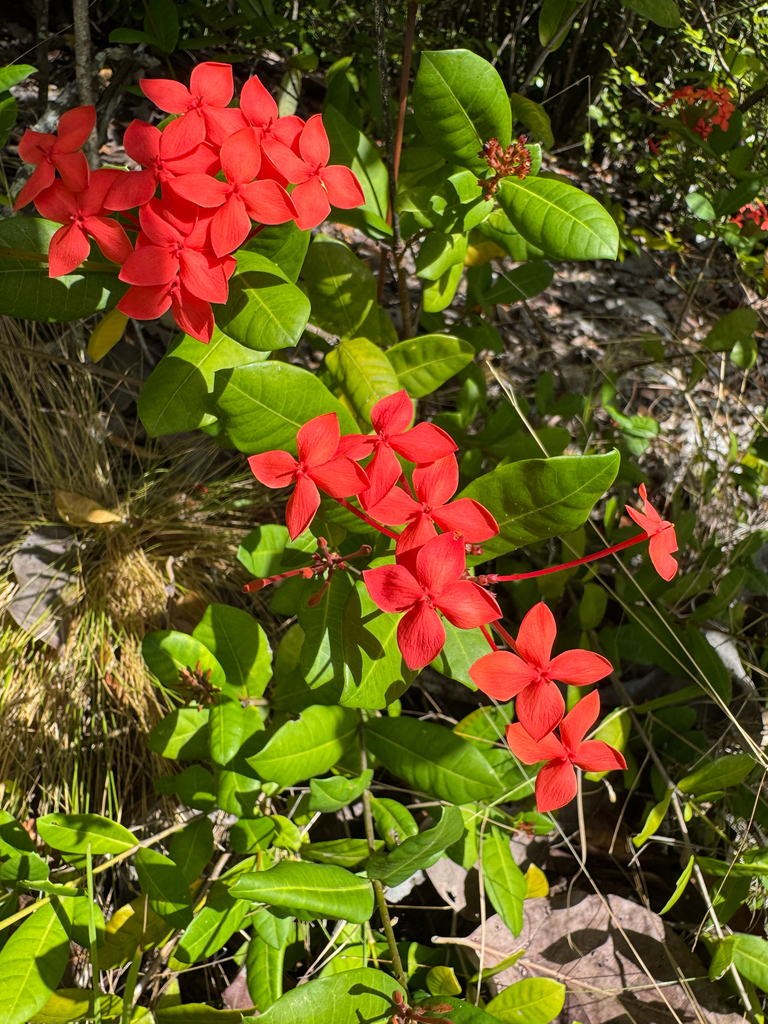
- Clusters of bright red flowers
- Leathery, dark green oval leaves
- Opposite leaf arrangement on stems
- Compact and rounded shrub habit
- Height
- 1.2 to 2m
- Spread
- 0.9 to 1.5m
- Leaves
- deep green, evergreen
- Flowers
- red, orange, yellow, 1cm
- Fruit
- purple, black, Late summer to autumn
Problems to watch for
- AphidsCommon
- ChlorosisCommon
- Scale InsectsUncommon
- Sooty MoldUncommon
Check your jungle geranium from a photo
Pocket Botanist looks at a photo of your plant and tells you what's wrong and what to try first.
Scan with your phone's camera to get the app
Or go to pocketbotanist.app/get on your phone
Growing it
- Propagation
- cuttings, seed
- When to plant
- spring, summer
- Overwintering
- Move containers indoors before temperatures drop below 15 degrees Celsius. Provide bright light and reduce watering during the cooler months.
- In containers
- It grows well in containers if provided with acidic potting mix and a pot at least 30 cm wide.
Stem Cuttings
- Take a 10 cm cutting from a healthy stem.
- Remove the lower leaves.
- Dip in rooting hormone and place in moist perlite.
- Cover with a plastic bag to maintain high humidity.
- Keep in bright, indirect light until roots form.
Group with other acid-loving tropical shrubs to make soil management easier.
Grows well with
Similar species
- Dwarf Ixora · It has a more compact growth habit suitable for smaller spaces.
Science
- Family
- Rubiaceae
- Genus
- Ixora
- Order
- Gentianales
- Class
- Magnoliopsida
- Native range
- Southern India and Sri Lanka
- Conservation
- This species is not of conservation concern and is widely cultivated.
It grows as an understory shrub in tropical forests, relying on pollinators to navigate its dense clusters.
- Value to wildlife
- nectar source
- Pollinators
- butterflies, hummingbirds
- Uses
- ornamental hedge, container plant, tropical garden accent
Through the year
Ecological indicators
- Salinity
- 3/9
- Soil reaction
- 4/9
- Light
- 7/9
- Temperature
- 8/9
- Moisture
- 6/9
- Nutrients
- 5/9
Taxonomy resolved against GBIF.
Questions people ask
- Why are my leaves turning yellow?
- This is usually a sign of iron deficiency caused by soil that is not acidic enough.
- Can I grow this indoors?
- It is difficult to keep happy indoors because it requires very high humidity and bright light.
Where the name comes from
The genus name comes from the Hindu deity Iswara, while the species name means scarlet.
Good to know
- Ixora is often called Jungle Geranium.
- The flowers are used in traditional religious ceremonies in parts of Asia.
- It thrives in acidic soil conditions.
- The plant has low salt tolerance, so keep it away from salt spray and salty soils in coastal areas.
Keep your jungle geranium growing
This page is a general guide. Save your plant in Pocket Botanist and you get care reminders timed for this plant, plus a care history that shows what worked.
Scan with your phone's camera to get the app
Or go to pocketbotanist.app/get on your phone
This guide was generated with AI on and checked against GBIF taxonomy. It is general information, not horticultural or veterinary advice. Read about how we build these guides.