 Pocket Botanist
Pflanzenratgeber
Jungle Geranium.
Ixora coccinea
Aussprache ik-SOR-uh kok-SIN-ee-uh


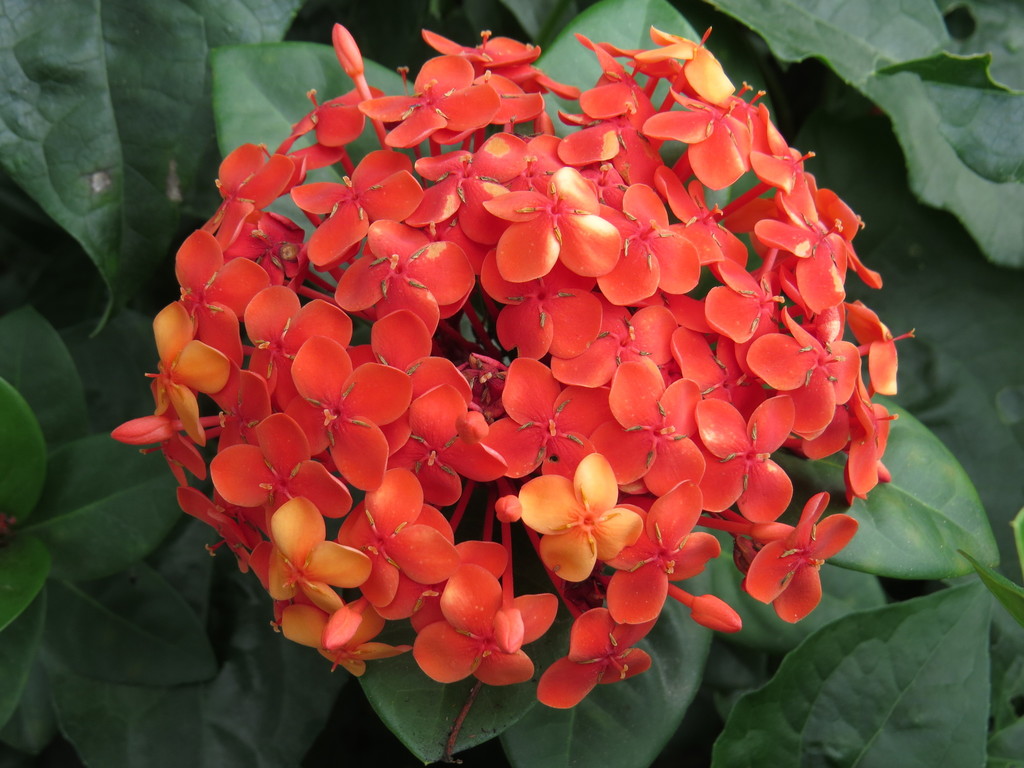
The jungle geranium is a beautiful tropical shrub known for its dense clusters of vibrant, star shaped flowers. It thrives in warm, humid climates and makes a stunning addition to any sunny garden. You'll love how it brings a pop of color to your outdoor space.
Auf einen Blick
- Pflegestufe
- Mittel
- Pflanzenart
- Shrub
- Licht
- Full sun to partial shade
- Licht im Innenraum
- Hell, indirekt
- Gießen
- Alle 3 bis 7 Tage
- Endgröße
- 4 to 6 feet
- Wachstum
- Mittel
- Winterhärte
- USDA 10 bis 12
- Blütezeit
- Year round in warm climates
Pflege
Keep the soil consistently moist but never soggy to ensure your plant stays happy. Watch for yellowing leaves, which often signal that the soil is too alkaline or lacks proper drainage. Providing plenty of humidity will help your shrub bloom its best.
- Gießen
- Water whenever the top inch of soil feels dry to the touch.
- Düngen
- Use a balanced, acidic fertilizer during the active growing season.
- Schneiden
- Lightly trim after flowering to maintain a nice, bushy shape.
- Umtopfen
- Move to a slightly larger container once the roots begin to fill the current pot.
- Boden
- Acidic, well draining soil
- Boden-pH
- 5.5 to 6.5
- Temperatur
- 15 bis 35°C
- Luftfeuchtigkeit
- 60 bis 90%
- Trockenheitstoleranz
- Mittel
- Lebensdauer
- Perennial, typically 10 to 20 years
- Wildverbiss-Resistenz
- Mittel
Anzeichen fürs Umtopfen
- Roots growing out of the drainage holes.
- Water running straight through the pot without soaking in.
- Stunted growth despite regular feeding.
Sicherheit
- Menschen
- The plant is not considered toxic to humans.
- Kinder
- The dense, woody stems may pose a minor scratching risk if children play near the hedge.
- Kontaktallergene
- The sap may cause mild skin irritation in sensitive individuals.
- Allergene in der Luft
- There are no notable airborne allergens associated with this plant.
- Essbarkeit
- The fruit is edible but generally considered flavorless and not commonly consumed.
So erkennst du die Pflanze
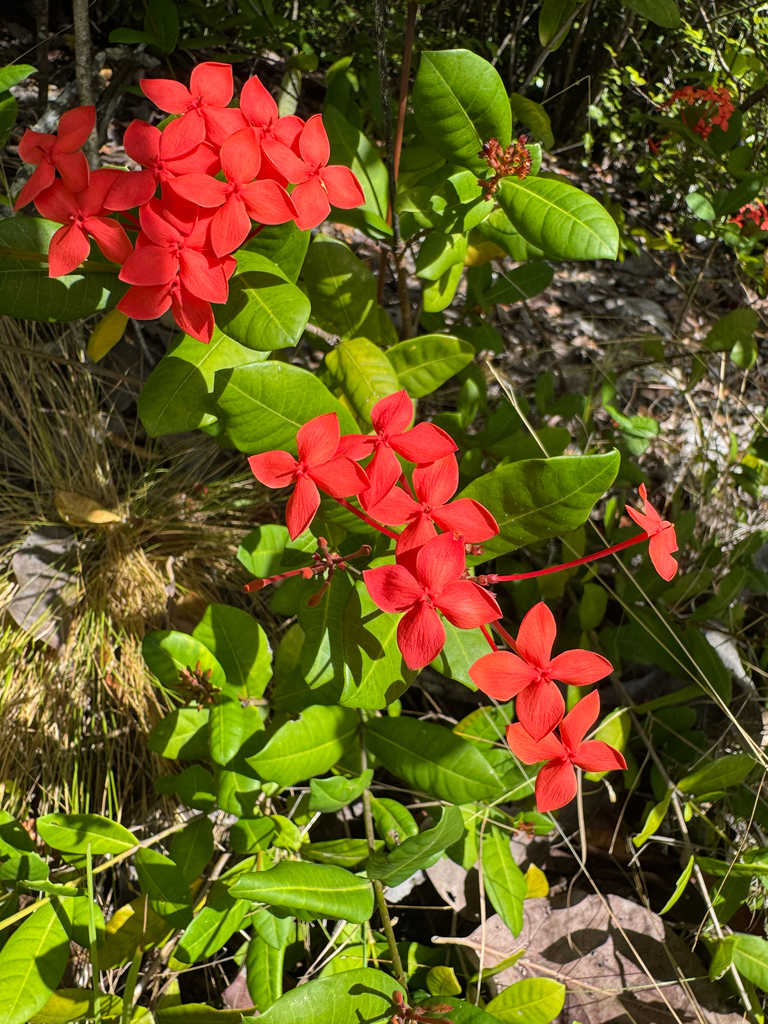
- Clusters of bright red flowers
- Leathery, dark green oval leaves
- Opposite leaf arrangement on stems
- Compact and rounded shrub habit
- Höhe
- 1,2 bis 2m
- Breite
- 0,9 bis 1,5m
- Blätter
- deep green, evergreen
- Blüten
- red, orange, yellow, 1cm
- Früchte
- purple, black, Late summer to autumn
Häufige Probleme
- Aphids — Small insects that cluster on new growth and suck plant juices.
- Iron chlorosis — Yellowing leaves caused by high soil pH preventing iron uptake.
Standort und Pflege
- Vermehrung
- cuttings, seed
- Pflanzzeit
- spring, summer
- Überwinterung
- Move containers indoors before temperatures drop below 15 degrees Celsius. Provide bright light and reduce watering during the cooler months.
- Im Kübel
- It grows well in containers if provided with acidic potting mix and a pot at least 30 cm wide.
Stem Cuttings
- Take a 10 cm cutting from a healthy stem.
- Remove the lower leaves.
- Dip in rooting hormone and place in moist perlite.
- Cover with a plastic bag to maintain high humidity.
- Keep in bright, indirect light until roots form.
Group with other acid-loving tropical shrubs to make soil management easier.
Gute Pflanzpartner
- Chinese hibiscus — They share similar tropical water and light requirements.
- Wandelröschen — Both plants attract butterflies and thrive in full sun.
Ähnliche Arten
- Ixora chinensis — It has a more compact growth habit suitable for smaller spaces.
Botanisches
- Familie
- Rubiaceae
- Gattung
- Ixora
- Ordnung
- Gentianales
- Klasse
- Magnoliopsida
- Ursprüngliche Heimat
- Southern India and Sri Lanka
- Artenschutz
- This species is not of conservation concern and is widely cultivated.
It grows as an understory shrub in tropical forests, relying on pollinators to navigate its dense clusters.
- Nutzen für Wildtiere
- nectar source
- Bestäuber
- Schmetterlinge, Kolibris
- Verwendung
- ornamental hedge, container plant, tropical garden accent
Im Jahresverlauf
Ökologische Zeigerwerte
- Salzgehalt
- 3/9
- Bodenreaktion
- 4/9
- Licht
- 7/9
- Temperatur
- 8/9
- Feuchtigkeit
- 6/9
- Nährstoffe
- 5/9
Taxonomie abgeglichen mit GBIF.
Häufige Fragen
- Why are my leaves turning yellow?
- This is usually a sign of iron deficiency caused by soil that is not acidic enough.
- Can I grow this indoors?
- It is difficult to keep happy indoors because it requires very high humidity and bright light.
Woher der Name kommt
The genus name comes from the Hindu deity Iswara, while the species name means scarlet.
Gut zu wissen
- Ixora is often called Jungle Geranium.
- The flowers are used in traditional religious ceremonies in parts of Asia.
- It thrives in acidic soil conditions.
- The plant is highly salt tolerant, making it great for coastal areas.
Probleme mit Jungle Geranium?
Diese Seite bietet allgemeine Infos. Pocket Botanist erkennt Probleme anhand eines Fotos deiner echten Pflanze, passt das Gießen an dein Licht und deinen Standort an und erinnert dich an die Pflege.
Dieser Ratgeber wurde mit KI erstellt und mit der GBIF-Taxonomie abgeglichen. Er dient zur allgemeinen Information und ersetzt keine gärtnerische oder tierärztliche Beratung. Hier erfährst du, wie wir diese Ratgeber erstellen.