 Pocket Botanist
Plant guide
Siberian iris.
Iris sibirica
Pronounced EYE-ris sy-BEER-ih-kuh
Also known as German Iris, Siberian Iris, Sibirian Flag, Turkish Iris


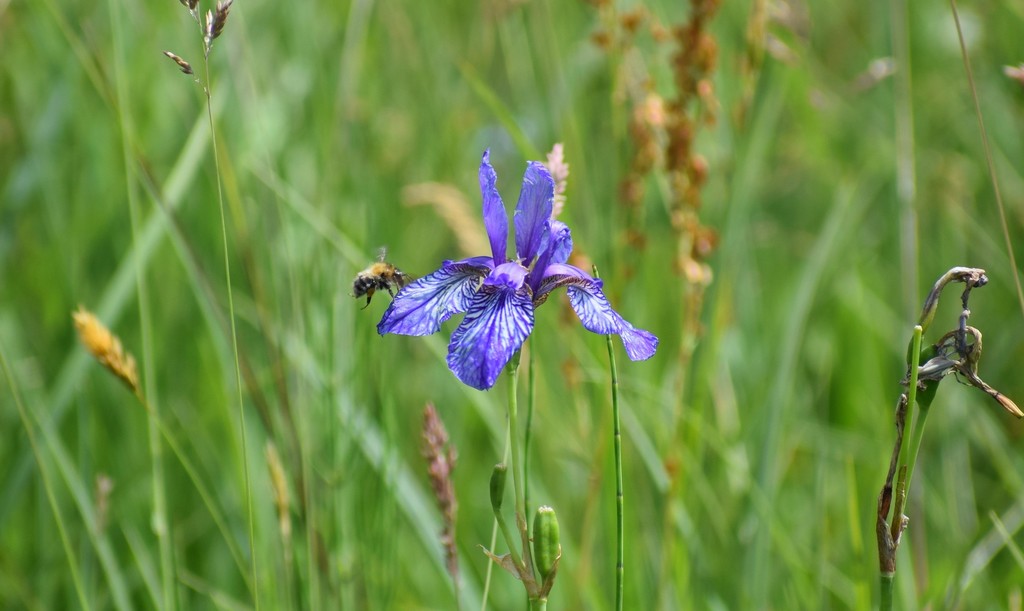
The Siberian iris is a hardy perennial that brings elegant, grass-like foliage and delicate blooms to your garden. It thrives in moist, well-draining soil and is quite adaptable to various climates. You will love how these plants add vertical interest to your flower beds.

At a glance
- Care level
- Easy
- Plant type
- Perennial
- Light
- Full sun to partial shade
- Indoor light
- Bright indirect
- Water
- Every 3 to 7 days
- Mature size
- 2 to 4 feet
- Growth rate
- Medium
- Hardiness
- USDA 3 to 9
- Bloom time
- Late spring to early summer
Care
Keep the soil consistently moist, especially during the growing season. Watch for yellowing leaves which may indicate poor drainage or nutrient issues. Deadhead spent flowers to keep the plant looking tidy and encourage potential repeat blooms.
- Watering
- Keep the soil evenly moist but not waterlogged.
- Feeding
- Apply a balanced fertilizer once in early spring as new growth appears.
- Pruning
- Cut back the foliage to the ground in late autumn after the first frost.
- Repotting
- Divide the clumps every few years to maintain vigor and prevent overcrowding.
- Soil
- Moist, fertile, slightly acidic soil
- Soil pH
- 5.5 to 7.0
- Temperature
- -35 to 30°C
- Humidity
- 40 to 70%
- Drought tolerance
- Low
- Lifespan
- Perennial, typically 10 plus years
- Deer and rabbits
- High
Signs it needs repotting
- Roots growing out of drainage holes
- Water running straight through the pot
- Reduced flowering
Safety
- People
- The rhizomes and leaves contain irisin, which can cause skin irritation and stomach upset if eaten.
- Pets
- This plant is considered toxic to cats and dogs if ingested.
- Children
- Keep children away from the rhizomes as they are toxic if ingested.
- Contact allergens
- Handling the foliage may cause mild skin irritation in sensitive individuals.
- Airborne allergens
- The pollen is generally not considered a significant airborne allergen.
- Edibility
- This plant is not intended for consumption and can cause digestive distress if ingested.
How to identify it
- Slender, grass-like green foliage
- Beardless flowers with three petals
- Sturdy, upright flower stalks
- Deep blue to violet blooms
- Clump-forming growth habit
- Height
- 0.6 to 1m
- Spread
- 0.45 to 0.6m
- Leaves
- green, deciduous
- Flowers
- blue, violet, white, yellow, 5 to 8cm
- Fruit
- brown, late summer
Problems to watch for
- Iris BorerCommon
- Leaf SpotCommon
- Root RotUncommon
- Slugs and SnailsUncommon
- Soft RotUncommon
- AphidsRare
By symptom
Check your siberian iris from a photo
Pocket Botanist looks at a photo of your plant and tells you what's wrong and what to try first.
Growing it
- Propagation
- division, seed
- When to plant
- spring, autumn
- Overwintering
- Cut back the foliage to the ground in late autumn after it has turned brown. No special protection is needed as they are very cold hardy.
- In containers
- They grow well in large containers, provided you keep the soil consistently moist.
Division
- 1. Dig up the clump in early autumn.
- 2. Use a sharp spade or knife to cut the rhizomes into sections.
- 3. Ensure each section has healthy roots and foliage.
- 4. Replant immediately at the same depth as before.
Pair these with moisture loving perennials to create a lush, low maintenance garden bed.
Grows well with
- Daylily — They share similar moisture needs and provide a nice contrast in leaf texture.
- Lady's Mantle — The soft, scalloped leaves of lady's mantle look lovely against the upright, grass like iris foliage.
Similar species
- Bearded Iris — Both are popular garden irises but have different soil and moisture requirements.
Science
- Family
- Iridaceae
- Genus
- Iris
- Order
- Asparagales
- Class
- Liliopsida
- Native range
- Central and Eastern Europe to Central Asia.
- Conservation
- This species is not currently of conservation concern.
It thrives in damp meadows and along stream banks where it can access reliable moisture throughout the growing season.
- Value to wildlife
- nectar source
- Pollinators
- bees, butterflies, hummingbirds
- Uses
- border planting, rain gardens, cut flowers, mass planting
Through the year
Ecological indicators
- Light
- 7/9
- Nutrients
- 5/9
- Salinity
- 2/9
- Soil reaction
- 5/9
- Temperature
- 4/9
- Moisture
- 7/9
Taxonomy resolved against GBIF.
Questions people ask
- Do they need lots of water?
- They prefer consistently moist soil but do not need to be submerged like water irises.
- When should I divide them?
- Divide them in early autumn or early spring when the plant is not actively blooming.
Where the name comes from
The genus name honors Iris, the Greek goddess of the rainbow, while the specific epithet sibirica refers to the region where it was once thought to originate.
Good to know
- Despite the name, they are native to central and eastern Europe rather than Siberia.
- They are much more resistant to iris borer than bearded irises.
- The flowers are held well above the foliage on slender, wiry stems.
Also in
Keep your siberian iris growing
This page is a general guide. Save your plant in Pocket Botanist and you get care reminders timed for this plant, plus a care history that shows what worked.
This guide was generated with AI and checked against GBIF taxonomy. It is general information, not horticultural or veterinary advice. Read about how we build these guides.