 Pocket Botanist
Plant guide
Mexican fleabane.
Erigeron karvinskianus
Pronounced eh-RIJ-er-on kar-vin-SKEE-ah-nus
Also known as Karwinsky's fleabane, Latin American Fleabane, Mexican Fleabane, Mexican daisy, Santa Barbara daisy, Santa Barbera daisy, St Peter Port Daisy



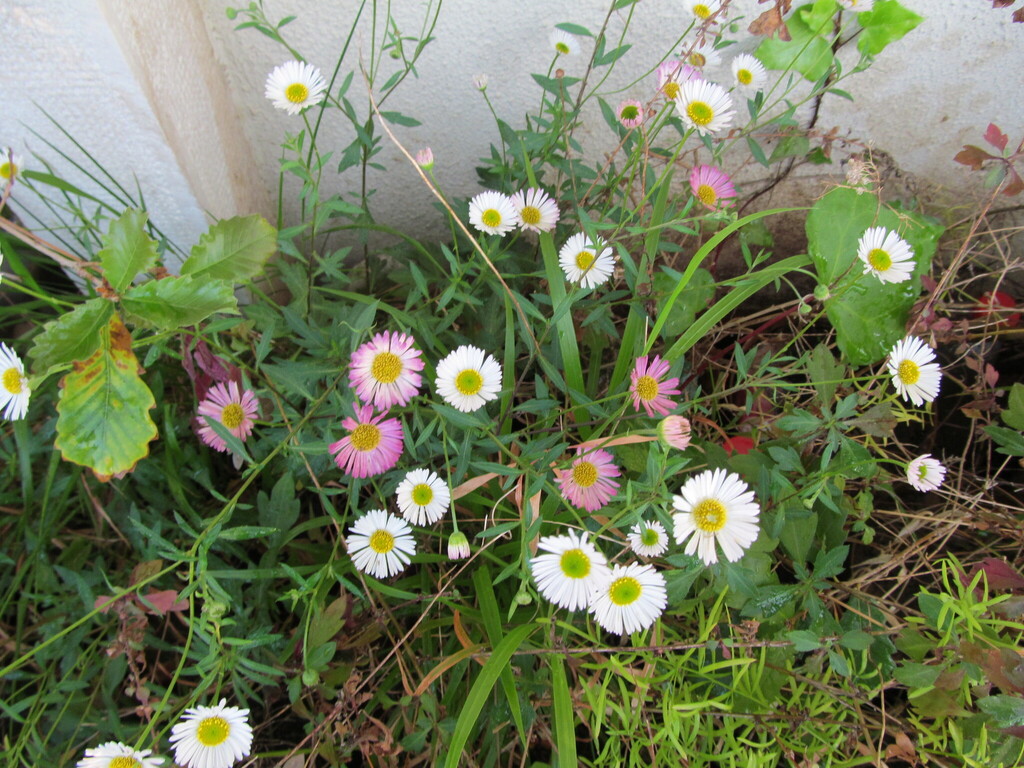
This charming plant is a wonderful addition to rock gardens or stone walls. It produces a profusion of daisy like flowers that shift from white to pink as they age. You will love how it softens hard edges with its delicate, trailing habit.
At a glance
- Care level
- Easy
- Plant type
- Perennial
- Light
- Full sun to partial shade
- Indoor light
- Bright indirect
- Water
- Every 3 to 7 days
- Mature size
- 12 to 18 inches
- Growth rate
- Fast
- Hardiness
- USDA 7 to 9
- Bloom time
- Late spring to late autumn
Care
Plant in well draining soil to prevent root rot. Keep an eye out for wilting if the soil dries out too much during hot spells. Deadhead spent blooms to encourage a longer flowering season.
- Watering
- Water when the top inch of soil feels dry to the touch.
- Feeding
- Apply a balanced liquid fertilizer during the active growing season.
- Pruning
- Trim back after the first flush of flowers to promote fresh growth.
- Repotting
- Repot when the plant becomes root bound or outgrows its container.
- Soil
- Well draining, gritty soil
- Soil pH
- Neutral to slightly alkaline
- Temperature
- -10 to 35°C
- Humidity
- 40 to 70%
- Drought tolerance
- High
- Lifespan
- Short-lived perennial, often treated as an annual.
- Deer and rabbits
- Moderate
Signs it needs repotting
- Roots growing out of the drainage holes.
- Water draining through the pot too quickly.
- Stunted growth during the active season.
Safety
- People
- There is no significant toxicity reported, but ingestion is not recommended.
- Pets
- This plant is generally considered non toxic to cats and dogs.
- Children
- Keep away from small children to prevent accidental ingestion of plant parts.
- Contact allergens
- Handling the foliage may cause mild skin irritation in sensitive individuals.
- Airborne allergens
- The pollen may trigger mild reactions in those with seasonal allergies.
- Edibility
- This plant is not considered edible and should not be consumed.
How to identify it
- Small daisy like white flowers
- Flowers fade to pinkish purple
- Fine, hairy, lance shaped leaves
- Trailing or spreading growth habit
- Height
- 0.15 to 0.4m
- Spread
- 0.3 to 0.6m
- Leaves
- green, semi-evergreen
- Flowers
- white, pink, 1 to 2cm
Problems to watch for
- Powdery MildewCommon
- AphidsUncommon
- Slugs and SnailsUncommon
- Root RotRare
By symptom
Check your mexican fleabane from a photo
Pocket Botanist looks at a photo of your plant and tells you what's wrong and what to try first.
Growing it
- Propagation
- seed, division, cuttings
- When to plant
- spring, autumn
- Overwintering
- In colder climates, provide a light mulch around the base to protect the roots. It may die back significantly in freezing temperatures.
- In containers
- Excellent for containers, especially in hanging baskets or wall planters, provided the pot has good drainage.
Seed
- 1. Sow seeds on the surface of moist, well-draining soil in spring.
- 2. Do not cover the seeds as they need light to germinate.
- 3. Keep the soil consistently moist until seedlings appear.
Plant in wall crevices or between paving stones to create a natural, informal look.
Grows well with
Similar species
- Daisy fleabane — It shares the classic daisy-like flower structure.
Science
- Family
- Asteraceae
- Genus
- Erigeron
- Order
- Asterales
- Class
- Magnoliopsida
- Native range
- Mexico and Central America.
- Conservation
- Not of conservation concern, though it is considered invasive in some regions outside its native range.
It naturally colonizes rocky slopes and cliff faces where it can find small pockets of soil.
- Value to wildlife
- nectar source
- Pollinators
- bees, butterflies
- Uses
- rock gardens, wall crevices, container filler, ground cover
Through the year
Ecological indicators
- Salinity
- 2/9
- Soil reaction
- 6/9
- Light
- 7/9
- Temperature
- 6/9
- Moisture
- 4/9
- Nutrients
- 3/9
Taxonomy resolved against GBIF.
Questions people ask
- Does it need deadheading?
- Deadheading helps encourage a longer bloom period, but it is not strictly necessary.
- Can it grow in full shade?
- It prefers full sun to partial shade for the best flowering performance.
Where the name comes from
The genus name Erigeron comes from the Greek words for early and old man, referring to the hairy appearance of some species. The species name honors Wilhelm von Karwinski, a German naturalist.
Good to know
- It is commonly known as Mexican fleabane.
- It thrives in the cracks of stone walls.
- It self-seeds very readily in garden settings.
Also in
Keep your mexican fleabane growing
This page is a general guide. Save your plant in Pocket Botanist and you get care reminders timed for this plant, plus a care history that shows what worked.
This guide was generated with AI and checked against GBIF taxonomy. It is general information, not horticultural or veterinary advice. Read about how we build these guides.