 Pocket Botanist
Guide botanique
Erigeron de Karwinski.
Erigeron karvinskianus
Prononciation eh-RIJ-er-on kar-vin-SKEE-ah-nus
Aussi appelée Erigeron de Karwinski, Erigeron de Karwinski, Erigeron de Karwinski, Marguerite du Mexique, Marguerite de Santa Barbara, Marguerite de Santa Barbara, Marguerite de Santa Barbara



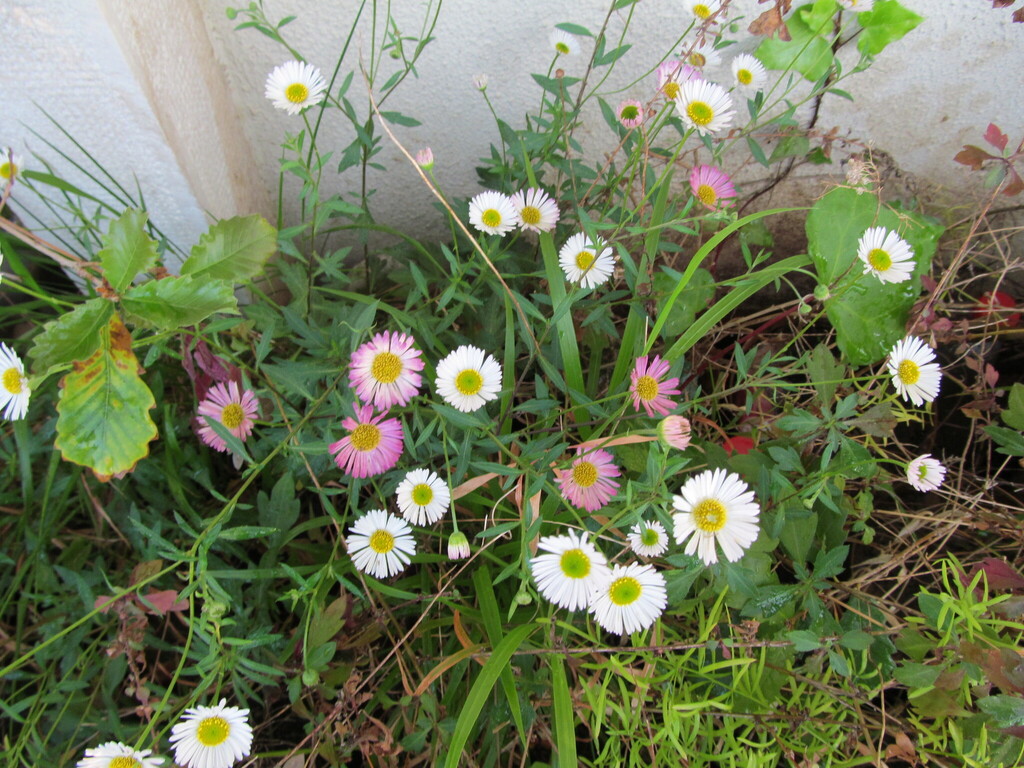
Cette charmante plante est un ajout merveilleux aux jardins de rocaille ou aux murs de pierre. Elle produit une profusion de fleurs semblables à des margées qui passent du blanc au rose en vieillissant. Vous aimerez la façon dont elle adoucit les bords durs avec son port délicat et retombant.
En un coup d'œil
- Niveau d'entretien
- Facile
- Type de plante
- Vivace
- Lumière
- Plein soleil à ombre partielle
- Lumière en intérieur
- Lumière vive indirecte
- Arrosage
- Tous les 3 à 7 jours
- Taille adulte
- 30 à 45 cm
- Croissance
- Rapide
- Rusticité
- USDA 7 à 9
- Floraison
- Fin du printemps à fin de l'automne
Entretien
Plantez dans un sol bien drainé pour éviter la pourriture des racines. Gardez un œil sur le flétrissement si le sol se dessèche trop pendant les périodes chaudes. Pincez les fleurs fanées pour encourager une plus longue période de floraison.
- Arrosage
- Arrosez lorsque le premier centimètre de sol est sec au toucher.
- Engrais
- Appliquez un engrais liquide équilibré pendant la saison de croissance active.
- Taille
- Taille après la première floraison pour favoriser une nouvelle croissance.
- Rempotage
- Rempotez lorsque la plante devient à l'étroit dans son pot ou dépasse son contenant.
- Sol
- Sol bien drainant, granuleux
- pH du sol
- Neutre à légèrement alcalin
- Température
- -10 à 35°C
- Humidité
- 40 à 70%
- Résistance à la sécheresse
- Élevée
- Durée de vie
- Vivace de courte durée, souvent traitée comme une annuelle.
- Résistance aux chevreuils et lapins
- Moyenne
Signes qu'il faut rempoter
- Les racines sortent des trous de drainage.
- L'eau s'écoule trop rapidement du pot.
- Croissance ralentie pendant la saison active.
Sécurité
- Humains
- Aucune toxicité significative n'est signalée, mais l'ingestion n'est pas recommandée.
- Animaux
- Cette plante est généralement considérée comme non toxique pour les chats et les chiens.
- Enfants
- Tenir à l'écart des jeunes enfants pour éviter l'ingestion accidentelle de parties de la plante.
- Allergènes de contact
- La manipulation du feuillage peut provoquer une légère irritation cutanée chez les personnes sensibles.
- Allergènes aéroportés
- Le pollen peut déclencher des réactions légères chez les personnes souffrant d'allergies saisonnières.
- Comestibilité
- Cette plante n'est pas considérée comme comestible et ne doit pas être consommée.
Comment l'identifier
- Petites fleurs blanches semblables à des marguerites
- Les fleurs passent au violet rougeâtre
- Feuilles fines, poilues, en forme de lance
- Port retombant ou rampant
- Hauteur
- 0,15 à 0,4m
- Envergure
- 0,3 à 0,6m
- Feuilles
- vert, semi-persistant
- Fleurs
- blanc, rose, 1 à 2cm
Problèmes à surveiller
- OïdiumCourant
- Limaces et escargotsPeu courant
- PuceronsPeu courant
- Pourriture des racinesRare
Vérifie la santé de ta plante en photo
Pocket Botanist analyse une photo de ta plante et te dit ce qui ne va pas et quoi essayer en premier.
La cultiver
- Multiplication
- semis, division, bouturage
- Quand planter
- printemps, automne
- Hivernage
- Dans les climats plus froids, fournissez un léger paillis autour de la base pour protéger les racines. Elle peut dépérir considérablement par temps de gel.
- En pot
- Excellente pour les conteneurs, en particulier dans les paniers suspendus ou les jardinières murales, à condition que le pot ait un bon drainage.
Semis
- 1. Semez les graines à la surface d'un sol humide et bien drainé au printemps.
- 2. Ne couvrez pas les graines car elles ont besoin de lumière pour germer.
- 3. Maintenez le sol constamment humide jusqu'à l'apparition des plantules.
Plantez dans les crevasses des murs ou entre les dalles pour créer un aspect naturel et informel.
Bonnes associations
- lavande anglaise — Elles partagent des exigences similaires en matière de soleil et de drainage.
- Thyme — Les deux plantes prospèrent dans des conditions de sol rocailleux et bien drainé.
Espèces similaires
- Erigeron annuus — Elle partage la structure classique de fleur ressemblant à une marguerite.
Science
- Famille
- Asteraceae
- Genre
- Erigeron
- Ordre
- Asterales
- Classe
- Magnoliopsida
- Région d'origine
- Mexique et Amérique centrale.
- Préservation
- Pas de préoccupation pour la conservation, bien qu'elle soit considérée comme envahissante dans certaines régions en dehors de son aire de répartition d'origine.
Elle colonise naturellement les pentes rocheuses et les falaises où elle peut trouver de petites poches de terre.
- Intérêt pour la faune
- source de nectar
- Pollinisateurs
- abeilles, papillons
- Utilisations
- jardins de rocaille, crevasses de murs, remplissage de pots, couvre-sol
Au fil des saisons
Repères écologiques
- Salinité
- 2/9
- Réaction du sol
- 6/9
- Lumière
- 7/9
- Température
- 6/9
- Humidité
- 4/9
- Nutriments
- 3/9
Taxonomie vérifiée avec le GBIF.
Ce qu'on demande souvent
- Faut-il la tailler après la floraison ?
- La taille après floraison aide à prolonger la période de floraison, mais ce n'est pas strictement nécessaire.
- Peut-elle pousser à l'ombre totale ?
- Elle préfère le plein soleil à la mi-ombre pour une meilleure performance florale.
D'où vient le nom
Le nom du genre Erigeron vient des mots grecs pour 'tôt' et 'vieux homme', faisant référence à l'apparence poilue de certaines espèces. Le nom d'espèce honore Wilhelm von Karwinski, un naturaliste allemand.
Bon à savoir
- Elle est communément appelée marguerite du Mexique.
- Elle prospère dans les fissures des murs en pierre.
- Elle se ressème très facilement dans le jardin.
Aussi dans
Garde ta plante en pleine forme
Cette page est un guide général. Enregistre ta plante dans Pocket Botanist et tu reçois des rappels d'entretien adaptés à cette plante, ainsi qu'un historique d'entretien qui montre ce qui a marché.
Ce guide a été généré par IA et vérifié avec la taxonomie du GBIF. Il s'agit d'informations générales, et non de conseils horticoles ou vétérinaires. Découvre comment nous concevons ces guides.