 Pocket Botanist
Guía de plantas
Margarita silvestre.
Erigeron karvinskianus
Pronunciación eh-RIJ-er-on kar-vin-SKEE-ah-nus
También se conoce como Karwinsky's fleabane, Latin American Fleabane, Margarita mexicana, Mexican daisy, Santa Barbara daisy, Santa Barbera daisy, St Peter Port Daisy



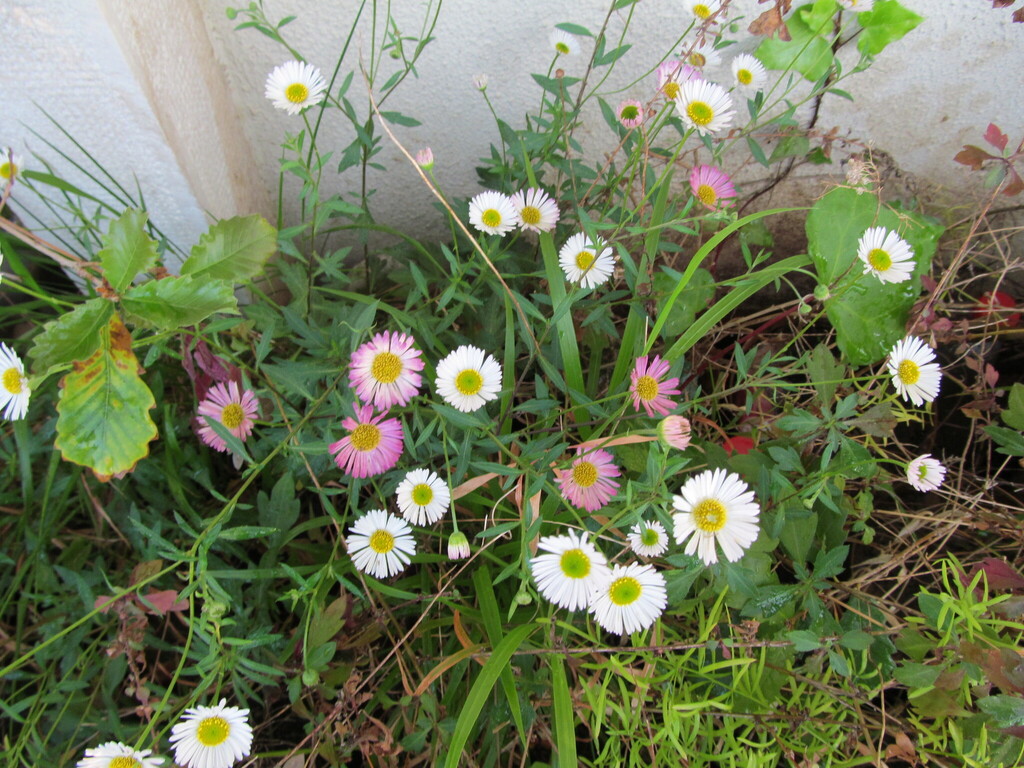
Esta encantadora planta es una maravillosa adición a los jardines de rocas o muros de piedra. Produce una gran cantidad de flores parecidas a margaritas que cambian de blanco a rosa a medida que envejecen. Te encantará cómo suaviza los bordes duros con su delicado hábito de arrastre.
De un vistazo
- Nivel de cuidados
- Fácil
- Tipo de planta
- Perenne
- Luz
- Sol pleno a sombra parcial
- Luz en interior
- Luz indirecta brillante
- Riego
- Cada 3 a 7 días
- Tamaño adulto
- 12 a 18 pulgadas
- Ritmo de crecimiento
- Rápido
- Rusticidad
- USDA 7 a 9
- Floración
- Finales de primavera a finales de otoño
Cuidados
Planta en tierra que drene bien para prevenir la pudrición de la raíz. Estate atento a la marchitez si la tierra se seca demasiado durante las olas de calor. Elimina las flores marchitas para fomentar una temporada de floración más larga.
- Riego
- Riega cuando la pulgada superior de la tierra se sienta seca al tacto.
- Abonado
- Aplica un fertilizante líquido equilibrado durante la temporada de crecimiento activo.
- Poda
- Poda después del primer brote de flores para promover un crecimiento fresco.
- Trasplante
- Trasplanta cuando la planta esté enraizada o supere su contenedor.
- Suelo
- Tierra bien drenada y arenosa
- pH del suelo
- De neutro a ligeramente alcalino
- Temperatura
- -10 a 35°C
- Humedad
- 40 a 70%
- Tolerancia a la sequía
- Alta
- Longevidad
- Perenne de corta duración, a menudo tratada como anual.
- Resistencia a ciervos y conejos
- Moderada
Señales de que necesita trasplante
- Raíces que crecen fuera de los agujeros de drenaje.
- El agua drena demasiado rápido a través de la maceta.
- Crecimiento atrofiado durante la temporada activa.
Seguridad
- Personas
- No se reporta toxicidad significativa, pero no se recomienda su ingestión.
- Mascotas
- Esta planta generalmente se considera no tóxica para gatos y perros.
- Niños
- Mantener alejada de niños pequeños para evitar la ingestión accidental de partes de la planta.
- Alérgenos por contacto
- El manejo del follaje puede causar una leve irritación en la piel en personas sensibles.
- Alérgenos en el aire
- El polen puede desencadenar reacciones leves en personas con alergias estacionales.
- Comestibilidad
- Esta planta no se considera comestible y no debe consumirse.
Cómo identificarla
- Pequeñas flores blancas parecidas a margaritas
- Las flores se desvanecen a púrpura rosado
- Hojas finas, peludas y en forma de lanza
- Hábito de crecimiento rastrero o extendido
- Altura
- 0,15 a 0,4m
- Anchura
- 0,3 a 0,6m
- Hojas
- verde, semi-perenne
- Flores
- blanco, rosa, 1 a 2cm
Problemas a vigilar
- OídioComún
- Babosas y caracolesPoco común
- PulgonesPoco común
- Podredumbre radicularRara
Revisa tu margarita silvestre con una foto
Pocket Botanist mira una foto de tu planta y te dice qué le pasa y qué probar primero.
Cómo cultivarla
- Propagación
- semilla, división, esquejes
- Cuándo plantar
- primavera, otoño
- Cuidados en invierno
- En climas más fríos, proporciona una ligera capa de mantillo alrededor de la base para proteger las raíces. Puede marchitarse significativamente con temperaturas de congelación.
- En maceta
- Excelente para contenedores, especialmente en cestas colgantes o jardineras de pared, siempre que la maceta tenga buen drenaje.
Semilla
- 1. Siembra las semillas en la superficie de tierra húmeda y bien drenada en primavera.
- 2. No cubras las semillas ya que necesitan luz para germinar.
- 3. Mantén la tierra consistentemente húmeda hasta que aparezcan las plántulas.
Plantar en grietas de muros o entre adoquines para crear un aspecto natural e informal.
Buenas compañeras
- Lavanda inglesa — Comparten requisitos similares de sol y drenaje.
- Thyme — Ambas plantas prosperan en condiciones de suelo rocoso y bien drenado.
Especies parecidas
- Erigeron annuus — Comparte la clásica estructura de flor similar a una margarita.
Ciencia
- Familia
- Asteraceae
- Género
- Erigeron
- Orden
- Asterales
- Clase
- Magnoliopsida
- Distribución natural
- México y América Central.
- Conservación
- No es de preocupación para la conservación, aunque se considera invasora en algunas regiones fuera de su área de distribución nativa.
Coloniza naturalmente laderas rocosas y paredes de acantilados donde puede encontrar pequeños bolsillos de tierra.
- Valor para la fauna
- fuente de néctar
- Polinizadores
- abejas, mariposas
- Usos
- jardines de rocas, grietas de muros, relleno de macetas, cubresuelos
A lo largo del año
Indicadores ecológicos
- Salinidad
- 2/9
- Reacción del suelo
- 6/9
- Luz
- 7/9
- Temperatura
- 6/9
- Humedad
- 4/9
- Nutrientes
- 3/9
Taxonomía cotejada con GBIF.
Lo que más preguntan
- ¿Necesita que se le quiten las flores marchitas?
- Quitar las flores marchitas ayuda a fomentar un período de floración más largo, pero no es estrictamente necesario.
- ¿Puede crecer a pleno sol?
- Prefiere pleno sol a sombra parcial para un mejor rendimiento de floración.
De dónde viene el nombre
El nombre del género Erigeron proviene de las palabras griegas para temprano y anciano, refiriéndose a la apariencia peluda de algunas especies. El nombre de la especie honra a Wilhelm von Karwinski, un naturalista alemán.
Bueno saberlo
- Comúnmente se le conoce como hierba del espanto mexicana.
- Prospera en las grietas de los muros de piedra.
- Se auto siembra muy fácilmente en entornos de jardín.
También en
Que tu margarita silvestre siga creciendo
Esta página es una guía general. Guarda tu planta en Pocket Botanist y tendrás recordatorios de cuidado pensados para esta planta, además de un historial de cuidados que muestra qué ha funcionado.
Esta guía se ha generado con IA y se ha cotejado con la taxonomía de GBIF. Es información general, no asesoramiento botánico ni veterinario. Descubre cómo elaboramos estas guías.