 Pocket Botanist
Plant guide
Winter Heath.
Erica carnea
Pronounced EH-rih-kuh KAR-nee-uh
Also known as Heath, Spring Heath, Winter Heath



Scan with your phone's camera to get the app
Or go to pocketbotanist.app/get on your phone
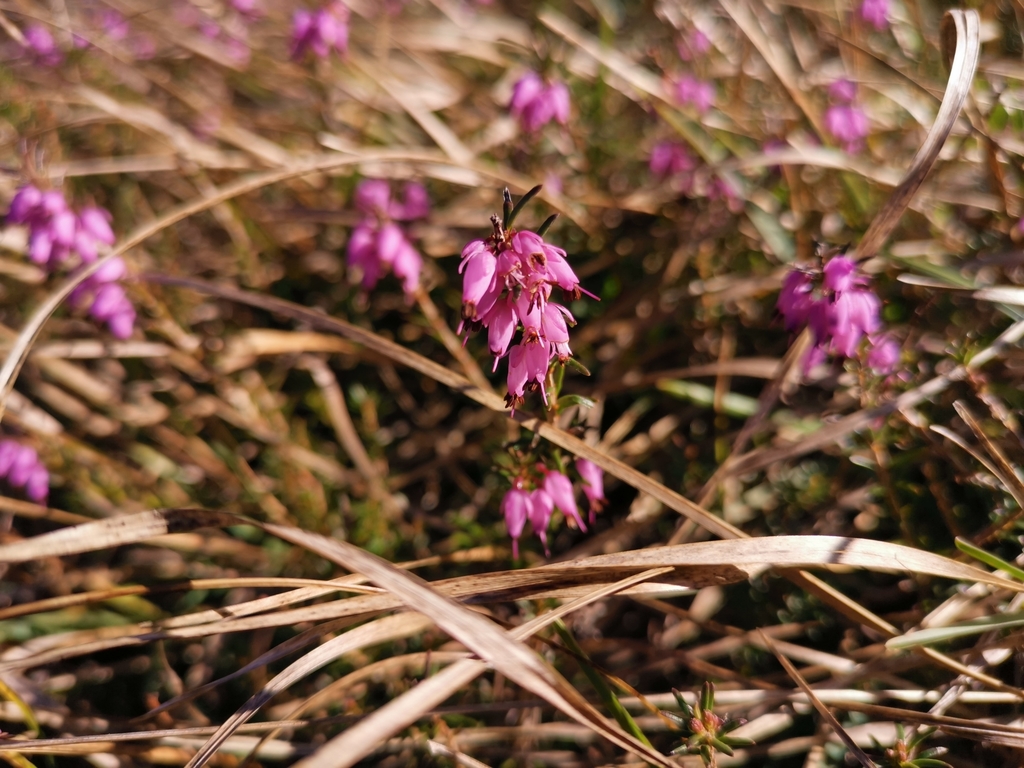
Winter heath is a lovely low growing shrub that brings color to your garden during the coldest months. It forms a dense mat of evergreen foliage that stays green all year long. You will love how its tiny bell shaped flowers brighten up a winter landscape.
At a glance
- Care level
- Easy
- Plant type
- Evergreen shrub
- Light
- Full sun to partial shade
- Indoor light
- Direct sun
- Water
- Every 7 to 14 days
- Mature size
- 6 to 12 inches tall
- Growth rate
- Medium
- Hardiness
- USDA 5 to 7
- Bloom time
- Late winter to mid spring
Care
Plant this heath in acidic soil and make sure it has good drainage to keep the roots happy. Watch for browning foliage which often signals the soil is too dry or not acidic enough. A light trim after flowering helps keep the plant compact and tidy.
- Watering
- Keep the soil consistently moist but never waterlogged.
- Feeding
- Apply a slow release acid loving fertilizer once in early spring.
- Pruning
- Prune lightly immediately after the flowers fade to maintain shape.
- Repotting
- Only repot if the plant becomes root bound in its container.
- Soil
- Acidic, well draining soil
- Soil pH
- 4.5 to 7.5
- Temperature
- -20 to 30°C
- Humidity
- 40 to 70%
- Drought tolerance
- Moderate
- Lifespan
- Perennial, typically 10 to 15 years
- Fragrance
- Light
- Deer and rabbits
- Moderate
Signs it needs repotting
- Roots growing out of the drainage holes
- Water sitting on the surface for too long
- Stunted growth during the spring
Safety
- People
- The plant is generally considered non-toxic, though it is not meant for consumption.
- Children
- The small, needle-like leaves may pose a minor choking hazard if ingested by small children.
- Contact allergens
- The foliage can cause mild skin irritation in sensitive individuals due to fine hairs.
- Airborne allergens
- Pollen is generally heavy and not a major cause of airborne allergies.
- Edibility
- This plant is not considered edible and should not be consumed.
How to identify it
- Needle like evergreen leaves
- Small bell shaped pink flowers
- Low growing spreading habit
- Whorled leaf arrangement on stems
- Height
- 0.15 to 0.3m
- Spread
- 0.3 to 0.6m
- Leaves
- dark green, bronze, evergreen
- Flowers
- pink, white, purple, 0.5 to 1cm
Problems to watch for
- Powdery MildewCommon
- Root RotCommon
- ChlorosisUncommon
- Heather BeetleUncommon
Check your winter heath from a photo
Pocket Botanist looks at a photo of your plant and tells you what's wrong and what to try first.
Scan with your phone's camera to get the app
Or go to pocketbotanist.app/get on your phone
Growing it
- Propagation
- cuttings, division
- When to plant
- spring, autumn
- Overwintering
- This plant is very hardy and requires no special winter protection in most climates. Ensure the soil remains well-drained to prevent root damage during freeze-thaw cycles.
- In containers
- It performs beautifully in containers, provided you use an ericaceous potting mix and a pot at least 30 cm wide.
Semi-ripe cuttings
- 1. Take 5 cm cuttings in late summer.
- 2. Remove lower leaves.
- 3. Dip in rooting hormone.
- 4. Place in a sandy, acidic medium.
- 5. Keep moist until rooted.
Pair this with other acid-loving plants to ensure all members of the bed thrive in the same soil pH.
Grows well with
- Rhododendron · They share similar requirements for acidic, well-draining soil.
- Japanese Pieris · Both plants thrive in acidic conditions and provide contrasting textures.
Similar species
- Calluna vulgaris · Often confused with Erica, but has flatter, scale-like leaves.
Science
- Family
- Ericaceae
- Genus
- Erica
- Order
- Ericales
- Class
- Magnoliopsida
- Native range
- Central and Southern Europe
- Conservation
- This species is common in its native range and is not currently threatened.
It thrives in open, acidic woodlands and heathlands where it can access sufficient light.
- Value to wildlife
- early season nectar source
- Pollinators
- bees
- Uses
- groundcover, rock gardens, winter interest, container gardening
Through the year
Ecological indicators
- Salinity
- 1/9
- Soil reaction
- 3/9
- Light
- 7/9
- Temperature
- 3/9
- Moisture
- 4/9
- Nutrients
- 2/9
Taxonomy resolved against GBIF.
Questions people ask
- Does it need pruning?
- Yes, trim back the flower stems after they fade to keep the plant compact.
- Can I grow this in a pot?
- It grows very well in containers as long as the soil is acidic and well-drained.
Where the name comes from
The genus name Erica comes from the Greek word ereike, meaning to break, while the species name carnea refers to the flesh-colored flowers.
Good to know
- It is often called winter heath because it blooms while snow is still on the ground.
- The flowers are technically urn-shaped and hang in clusters.
- Unlike most heaths, it tolerates lime and can grow in neutral to alkaline soil.
- The foliage often turns a bronze color during the winter months.
Keep your winter heath growing
This page is a general guide. Save your plant in Pocket Botanist and you get care reminders timed for this plant, plus a care history that shows what worked.
Scan with your phone's camera to get the app
Or go to pocketbotanist.app/get on your phone
This guide was generated with AI on and checked against GBIF taxonomy. It is general information, not horticultural or veterinary advice. Read about how we build these guides.