 Pocket Botanist
Guide botanique
Winter Heath.
Erica carnea
Prononciation EH-rih-kuh KAR-nee-uh
Aussi appelée Heath, Spring Heath, Winter Heath


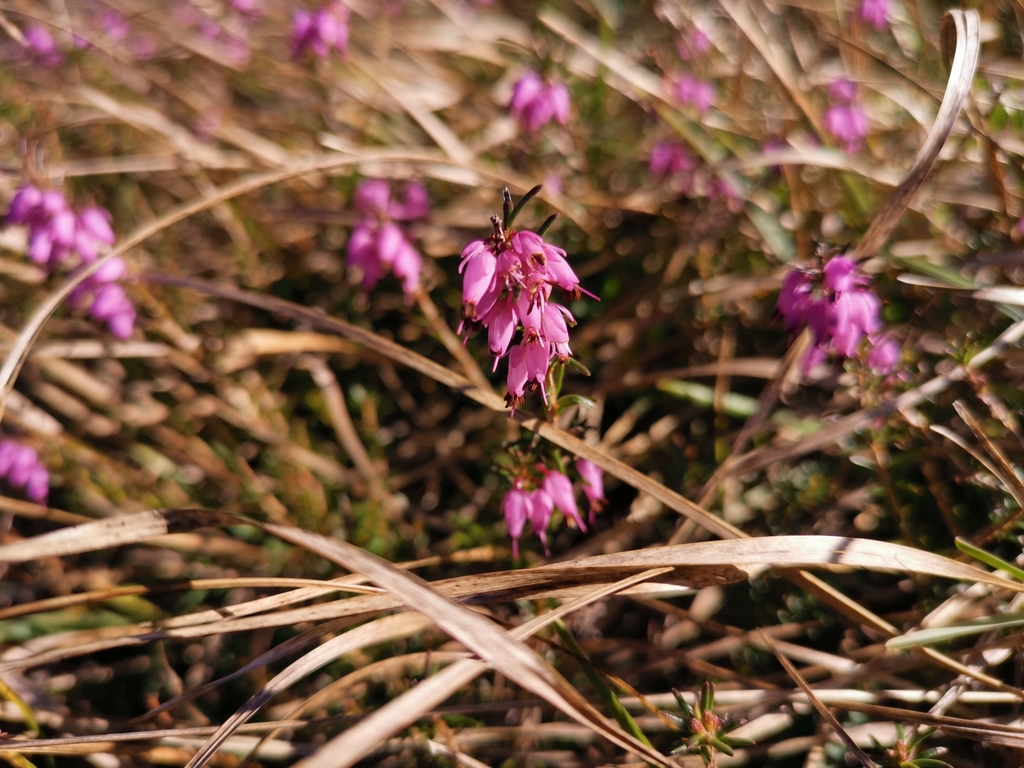
Winter heath is a lovely low growing shrub that brings color to your garden during the coldest months. It forms a dense mat of evergreen foliage that stays green all year long. You will love how its tiny bell shaped flowers brighten up a winter landscape.
En un coup d'œil
- Niveau d'entretien
- Facile
- Type de plante
- Evergreen shrub
- Lumière
- Full sun to partial shade
- Lumière en intérieur
- Soleil direct
- Arrosage
- Tous les 7 à 14 jours
- Taille adulte
- 6 to 12 inches tall
- Croissance
- Moyenne
- Rusticité
- USDA 5 à 7
- Floraison
- Late winter to mid spring
Entretien
Plant this heath in acidic soil and make sure it has good drainage to keep the roots happy. Watch for browning foliage which often signals the soil is too dry or not acidic enough. A light trim after flowering helps keep the plant compact and tidy.
- Arrosage
- Keep the soil consistently moist but never waterlogged.
- Engrais
- Apply a slow release acid loving fertilizer once in early spring.
- Taille
- Prune lightly immediately after the flowers fade to maintain shape.
- Rempotage
- Only repot if the plant becomes root bound in its container.
- Sol
- Acidic, well draining soil
- pH du sol
- 4.5 to 6.0
- Température
- -20 à 30°C
- Humidité
- 40 à 70%
- Résistance à la sécheresse
- Moyenne
- Durée de vie
- Perennial, typically 10 to 15 years
- Parfum
- Léger
- Résistance aux chevreuils et lapins
- Moyenne
Signes qu'il faut rempoter
- Roots growing out of the drainage holes
- Water sitting on the surface for too long
- Stunted growth during the spring
Sécurité
- Humains
- The plant is generally considered non-toxic, though it is not meant for consumption.
- Enfants
- The small, needle-like leaves may pose a minor choking hazard if ingested by small children.
- Allergènes de contact
- The foliage can cause mild skin irritation in sensitive individuals due to fine hairs.
- Allergènes aéroportés
- Pollen is generally heavy and not a major cause of airborne allergies.
- Comestibilité
- This plant is not considered edible and should not be consumed.
Comment l'identifier
- Needle like evergreen leaves
- Small bell shaped pink flowers
- Low growing spreading habit
- Whorled leaf arrangement on stems
- Hauteur
- 0,15 à 0,3m
- Envergure
- 0,3 à 0,6m
- Feuilles
- dark green, bronze, evergreen
- Fleurs
- pink, white, purple, 0,5 à 1cm
Problèmes courants
- Root rot — Occurs when soil remains waterlogged for extended periods.
- Powdery mildew — A fungal growth appearing as white dust on foliage during humid conditions.
La cultiver
- Multiplication
- cuttings, division
- Quand planter
- spring, autumn
- Hivernage
- This plant is very hardy and requires no special winter protection in most climates. Ensure the soil remains well-drained to prevent root damage during freeze-thaw cycles.
- En pot
- It performs beautifully in containers, provided you use an ericaceous potting mix and a pot at least 30 cm wide.
Semi-ripe cuttings
- 1. Take 5 cm cuttings in late summer.
- 2. Remove lower leaves.
- 3. Dip in rooting hormone.
- 4. Place in a sandy, acidic medium.
- 5. Keep moist until rooted.
Pair this with other acid-loving plants to ensure all members of the bed thrive in the same soil pH.
Bonnes associations
- Rhododendron — They share similar requirements for acidic, well-draining soil.
- Pieris japonica — Both plants thrive in acidic conditions and provide contrasting textures.
Espèces similaires
- Bruyère — Often confused with Erica, but has flatter, scale-like leaves.
Science
- Famille
- Ericaceae
- Genre
- Erica
- Ordre
- Ericales
- Classe
- Magnoliopsida
- Région d'origine
- Central and Southern Europe
- Préservation
- This species is common in its native range and is not currently threatened.
It thrives in open, acidic woodlands and heathlands where it can access sufficient light.
- Intérêt pour la faune
- early season nectar source
- Pollinisateurs
- abeilles
- Utilisations
- groundcover, rock gardens, winter interest, container gardening
Au fil des saisons
Repères écologiques
- Salinité
- 1/9
- Réaction du sol
- 3/9
- Lumière
- 7/9
- Température
- 3/9
- Humidité
- 4/9
- Nutriments
- 2/9
Taxonomie vérifiée avec le GBIF.
Ce qu'on demande souvent
- Does it need pruning?
- Yes, trim back the flower stems after they fade to keep the plant compact.
- Can I grow this in a pot?
- It grows very well in containers as long as the soil is acidic and well-drained.
D'où vient le nom
The genus name Erica comes from the Greek word ereike, meaning to break, while the species name carnea refers to the flesh-colored flowers.
Bon à savoir
- It is often called winter heath because it blooms while snow is still on the ground.
- The flowers are technically urn-shaped and hang in clusters.
- It is a calcifuge, meaning it prefers acidic soil and dislikes lime.
- The foliage often turns a bronze color during the winter months.
Ta plante a mauvaise mine ?
Cette page est un guide général. Pocket Botanist diagnostique les problèmes directement à partir d'une photo de ta plante, adapte l'arrosage à sa luminosité et te prévient quand il faut t'en occuper.
Ce guide a été généré par IA et vérifié avec la taxonomie du GBIF. Il s'agit d'informations générales, et non de conseils horticoles ou vétérinaires. Découvre comment nous concevons ces guides.