 Pocket Botanist
Guide botanique
Bruyère.
Calluna vulgaris
Prononciation kuh-LOO-nuh vul-GAIR-iss
Aussi appelée Bruyère commune, Bruyère, Bruyère, Callune


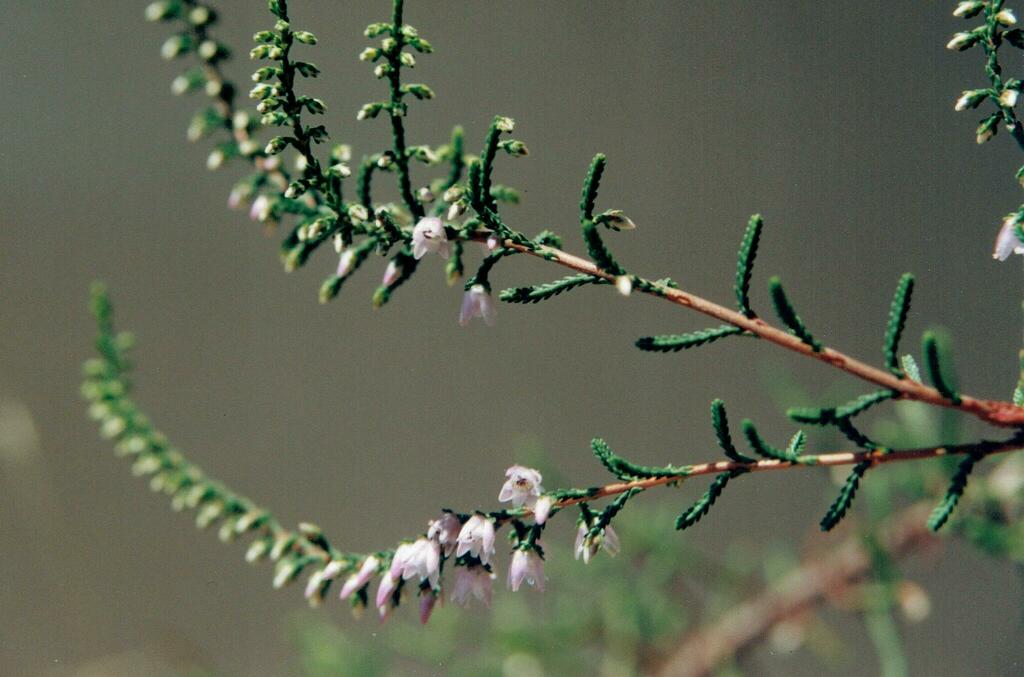
La bruyère est un charmant arbuste à croissance lente qui apporte une touche de lande sauvage à votre jardin. Elle prospère dans un sol acide et adore un endroit ensoleillé. Vous apprécierez ses minuscules fleurs en forme de clochettes qui fleurissent à la fin de l'été.
En un coup d'œil
- Niveau d'entretien
- Moyenne
- Type de plante
- Arbuste persistant
- Lumière
- Plein soleil
- Lumière en intérieur
- Soleil direct
- Arrosage
- Tous les 3 à 7 jours
- Taille adulte
- 60 cm de haut et 80 cm de large
- Croissance
- Lente
- Rusticité
- USDA 4 à 7
- Floraison
- Fin de l'été à mi-automne
Entretien
Gardez le sol constamment humide mais jamais détrempé pour éviter la pourriture des racines. Taillez les épis floraux fanés après la floraison pour garder la plante nette et encourager une nouvelle croissance. Surveillez le jaunissement des feuilles, ce qui signale souvent que le pH du sol est trop élevé.
- Arrosage
- Arrosez lorsque le pouce de terre supérieur est sec au toucher.
- Engrais
- Appliquez un engrais à libération lente pour plantes acidophiles au début du printemps.
- Taille
- Taille les anciennes têtes de fleurs à la fin de l'automne ou au début du printemps.
- Rempotage
- Rempotez uniquement lorsque la plante est à l'étroit dans son conteneur.
- Sol
- Sableux, acide, bien drainé
- pH du sol
- Acide
- Température
- -25 à 30°C
- Humidité
- 40 à 70%
- Résistance à la sécheresse
- Moyenne
- Durée de vie
- Vivace, généralement de 10 à 15 ans
- Parfum
- Léger
- Résistance aux chevreuils et lapins
- Moyenne
Signes qu'il faut rempoter
- Les racines sortent des trous de drainage
- L'eau traverse directement le pot
- Croissance ralentie pendant la saison active
Sécurité
- Humains
- La plante est généralement considérée comme non toxique pour l'homme.
- Enfants
- La plante est sans danger pour les enfants, bien que les tiges puissent être légèrement rêches au toucher.
- Allergènes de contact
- Le feuillage peut provoquer une légère irritation cutanée chez les personnes sensibles en raison des poils fins.
- Allergènes aéroportés
- Le pollen peut déclencher des symptômes de rhume des foins chez les personnes sensibles pendant la période de floraison de fin d'été.
- Comestibilité
- Bien que non toxique, elle n'est pas considérée comme une source alimentaire et peut causer des troubles digestifs si elle est consommée.
Comment l'identifier
- Minuscules feuilles persistantes semblables à des écailles
- Denses épis de fleurs en forme de clochettes
- Port d'arbuste ligneux à croissance lente
- Petites feuilles disposées par paires opposées
- Hauteur
- 0,2 à 0,6m
- Envergure
- 0,3 à 0,7m
- Feuilles
- vert foncé, vert gris, bronze, evergreen
- Fleurs
- rose, violet, blanc, 0,3 à 0,5cm
Problèmes à surveiller
- Galéruque de la bruyèreCourant
- PhytophthoraCourant
- Brûlures du feuillagePeu courant
- Pourriture des racinesPeu courant
- Fonte des semis due au Phytophthora — Un pathogène présent dans le sol qui provoque un flétrissement soudain et la mort dans les sols mal drainés.
- Punaise de la bruyère — Les larves se nourrissent du feuillage, provoquant souvent un brunissement important et un dépérissement.
Par symptôme
Vérifie la santé de ta plante en photo
Pocket Botanist analyse une photo de ta plante et te dit ce qui ne va pas et quoi essayer en premier.
La cultiver
- Multiplication
- bouturage, division, semis
- Quand planter
- printemps, automne
- Hivernage
- Dans les régions plus froides, appliquez une couche de paillis autour de la base pour protéger les racines des fortes gelées. Assurez-vous que le sol ne soit pas détrempé pendant les cycles de dégel hivernal.
- En pot
- La bruyère pousse bien en pots d'au moins 20 cm de large, à condition d'utiliser un terreau pour ericacées.
Boutures herbacées
- Prenez des boutures de 5 cm à la fin de l'été.
- Retirez les feuilles inférieures.
- Trempez dans de l'hormone de bouturage.
- Placez dans un substrat sableux et acide.
- Gardez humide jusqu'à l'enracinement.
Regroupez les plantes ayant des besoins similaires en sol acide pour vous assurer qu'elles prospèrent toutes sans concurrence pour les nutriments.
Bonnes associations
- Erica — Ils partagent des exigences culturelles similaires et fleurissent à des moments différents pour prolonger la saison.
- Picea glauca 'Conica' — Ils offrent un beau contraste structurel persistant à la bruyère de faible croissance.
- Fétuque bleue — Le feuillage bleu complète les tons roses et violets des fleurs de bruyère.
Espèces similaires
- Bruyère d'hiver — C'est une plante apparentée qui fleurit en hiver plutôt qu'à la fin de l'été.
Science
- Famille
- Ericaceae
- Genre
- Calluna
- Ordre
- Ericales
- Classe
- Magnoliopsida
- Région d'origine
- Europe, Asie occidentale et Afrique du Nord.
- Préservation
- Elle est répandue et ne suscite pas de préoccupation en matière de conservation.
Elle domine les landes acides et pauvres en nutriments où elle survit en formant des relations symbiotiques avec des champignons mycorhiziens.
- Intérêt pour la faune
- source de nectar, abri hivernal pour les insectes
- Pollinisateurs
- abeilles, papillons
- Utilisations
- couvre-sol, jardins de rocaille, massifs de bruyère, bacs et jardinières
Au fil des saisons
Repères écologiques
- Réaction du sol
- 3/9
- Humidité
- 4/9
- Nutriments
- 2/9
- Salinité
- 2/9
- Lumière
- 8/9
- Température
- 4/9
Taxonomie vérifiée avec le GBIF.
Ce qu'on demande souvent
- La bruyère a-t-elle besoin d'être taillée ?
- Oui, une légère taille après la floraison maintient la plante compacte et l'empêche de devenir ligneuse.
- Puis-je cultiver de la bruyère en pot ?
- Absolument, tant que vous utilisez un terreau acide et assurez un excellent drainage.
D'où vient le nom
Le nom du genre Calluna vient du mot grec kalluno, signifiant balayer, faisant référence à son utilisation historique dans la fabrication de balais. L'épithète spécifique vulgaris signifie simplement commun.
Bon à savoir
- La bruyère est traditionnellement utilisée pour fabriquer des balais dans certaines régions d'Écosse.
- Elle est un symbole de chance dans de nombreuses cultures.
- La plante prospère dans les sols acides et pauvres en nutriments où beaucoup d'autres peinent.
- C'est la fleur nationale de la Norvège.
Garde ta plante en pleine forme
Cette page est un guide général. Enregistre ta plante dans Pocket Botanist et tu reçois des rappels d'entretien adaptés à cette plante, ainsi qu'un historique d'entretien qui montre ce qui a marché.
Ce guide a été généré par IA et vérifié avec la taxonomie du GBIF. Il s'agit d'informations générales, et non de conseils horticoles ou vétérinaires. Découvre comment nous concevons ces guides.