 Pocket Botanist
Plant guide
Great Willowherb.
Epilobium hirsutum
Pronounced eh-pi-LOH-bee-um HER-soo-tum
Also known as Codlins And Cream, Great Hairy Willowherb, Great Willowherb, hairy willowherb


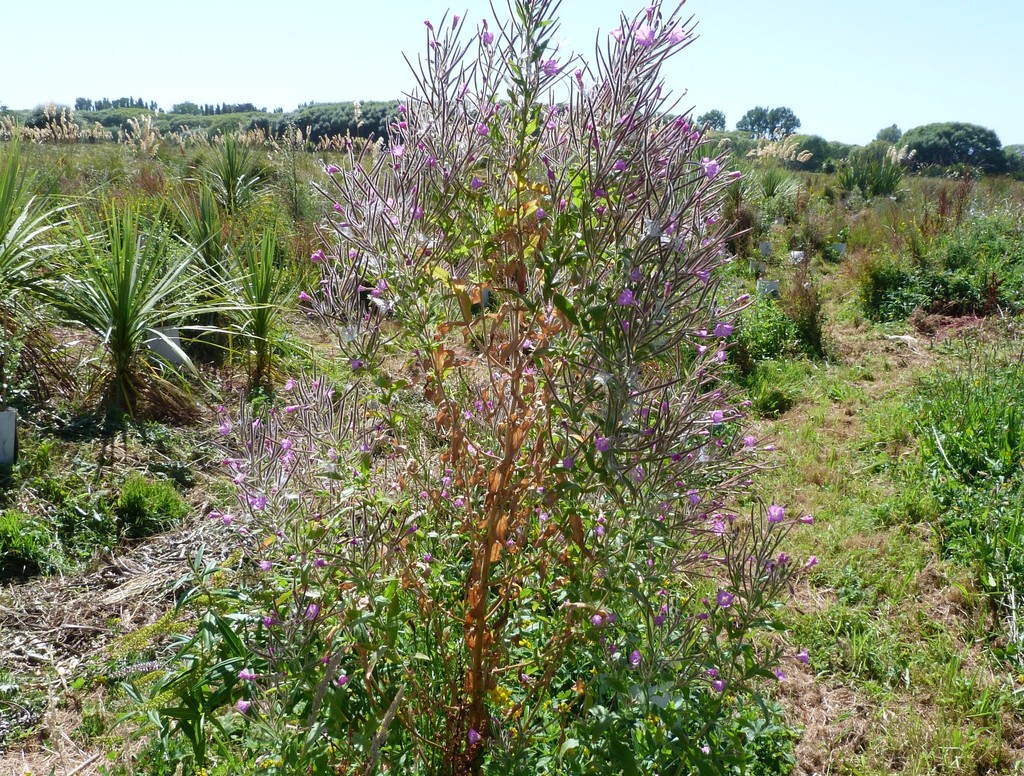
The Great Willowherb is a vigorous perennial often found near water. It produces tall, hairy stems topped with vibrant pink flowers. It is a fantastic choice for naturalizing in damp areas of your garden.
At a glance
- Care level
- Easy
- Plant type
- Perennial
- Light
- Full sun to partial shade
- Indoor light
- Bright indirect
- Water
- Every 1 to 3 days
- Mature size
- Up to 150 cm tall
- Growth rate
- Fast
- Hardiness
- USDA 4 to 9
- Bloom time
- Mid to late summer
Care
Keep the soil consistently moist as this plant thrives in wet conditions. Watch for aphids during the growing season and prune back dead stems in late autumn. It spreads readily, so consider its location carefully to prevent it from taking over.
- Watering
- Keep the soil constantly damp, never allowing it to dry out completely.
- Feeding
- Apply a balanced liquid fertilizer once during the spring if the soil is poor.
- Pruning
- Cut the plant back to the ground in late autumn after the foliage dies off.
- Repotting
- Repot only if the plant becomes root bound in a container.
- Soil
- Moist, heavy, or boggy soil
- Soil pH
- Neutral to slightly alkaline
- Temperature
- -20 to 30°C
- Humidity
- 60 to 90%
- Drought tolerance
- Low
- Lifespan
- Perennial, typically 5 to 10 years
- Deer and rabbits
- Moderate
Signs it needs repotting
- Roots growing out of the drainage holes.
- Stunted growth despite adequate moisture.
Safety
- People
- The plant is generally considered non-toxic but is not meant for human consumption.
- Pets
- This plant is not known to be toxic to cats or dogs.
- Children
- The plant is not dangerous, but the fine hairs may cause minor itching if handled by children.
- Contact allergens
- The fine hairs on the foliage can cause mild skin irritation in sensitive individuals.
- Airborne allergens
- The wind dispersed seeds have fine white tufts that may cause minor respiratory irritation if inhaled in large quantities.
- Edibility
- While not highly toxic, it is not considered a standard food source and should be avoided.
How to identify it
- Tall, hairy, branched stems
- Opposite, lance shaped, serrated leaves
- Large, four petaled pink flowers
- Long, slender, pod like seed capsules
- Height
- 1 to 2m
- Spread
- 0.6 to 1.2m
- Leaves
- green, deciduous
- Flowers
- pink, magenta, 2 to 3cm
- Fruit
- brown, Autumn
Problems to watch for
- Powdery MildewCommon
- RustCommon
- AphidsUncommon
- Root RotUncommon
Check your great willowherb from a photo
Pocket Botanist looks at a photo of your plant and tells you what's wrong and what to try first.
Growing it
- Propagation
- division, seed
- When to plant
- Spring, Autumn
- Overwintering
- The foliage will die back completely in winter. Simply cut the dead stems to the ground in late autumn or early spring.
- In containers
- It is not well suited for containers due to its aggressive rhizomatous growth habit.
Division
- 1. Dig up the clump in early spring.
- 2. Use a sharp spade to divide the rhizomes.
- 3. Replant sections immediately in moist soil.
Seed
- 1. Collect seeds in late autumn.
- 2. Sow directly into damp soil outdoors.
- 3. Keep the area consistently moist until germination.
Group this plant with other moisture loving species to create a balanced wetland border.
Grows well with
- Purple Loosestrife — They share similar moisture requirements and bloom times in wetland settings.
- Marsh Marigold — This plant provides early season color before the willowherb takes over the space.
Similar species
- Rosebay Willowherb — It is a related species that also produces showy pink flowers but prefers drier sites.
Science
- Family
- Onagraceae
- Genus
- Epilobium
- Order
- Myrtales
- Class
- Magnoliopsida
- Native range
- Europe, Asia, and parts of North Africa.
- Conservation
- It is a common and widespread species not currently under conservation concern.
It naturally colonizes stream banks, marshes, and damp ditches where it competes well in wet, open habitats.
- Value to wildlife
- nectar source, larval host plant
- Pollinators
- bees, butterflies, moths
- Uses
- wetland restoration, pollinator gardens, wildlife habitat
Through the year
Ecological indicators
- Soil reaction
- 6/9
- Light
- 7/9
- Temperature
- 5/9
- Moisture
- 8/9
- Nutrients
- 6/9
- Salinity
- 1/9
Taxonomy resolved against GBIF.
Questions people ask
- Is it invasive?
- It can be quite vigorous and spread rapidly in moist garden conditions.
- Does it need a lot of water?
- Yes, it thrives in consistently moist or boggy soil.
Where the name comes from
The name Epilobium comes from the Greek words epi meaning upon and lobos meaning pod, referring to the flower sitting on top of the seed pod. Hirsutum refers to the hairy texture of the plant.
Good to know
- It spreads aggressively via underground rhizomes and wind blown seeds.
- It is a classic colonizer of damp, disturbed ground.
- The flowers are perfectly adapted for pollination by bees and moths.
Keep your great willowherb growing
This page is a general guide. Save your plant in Pocket Botanist and you get care reminders timed for this plant, plus a care history that shows what worked.
This guide was generated with AI and checked against GBIF taxonomy. It is general information, not horticultural or veterinary advice. Read about how we build these guides.