 Pocket Botanist
Plant guide
purple loosestrife.
Lythrum salicaria L.
Pronounced LITH-rum sal-ih-KAIR-ee-uh
Also known as Hairy Purple Loosestrife, Purple Loosestrife, Purple Lythrum, Purple-Loosestrife, Rainbow Weed, Rainbow Weed, Spiked Loosestrife, Purple-loosestrife



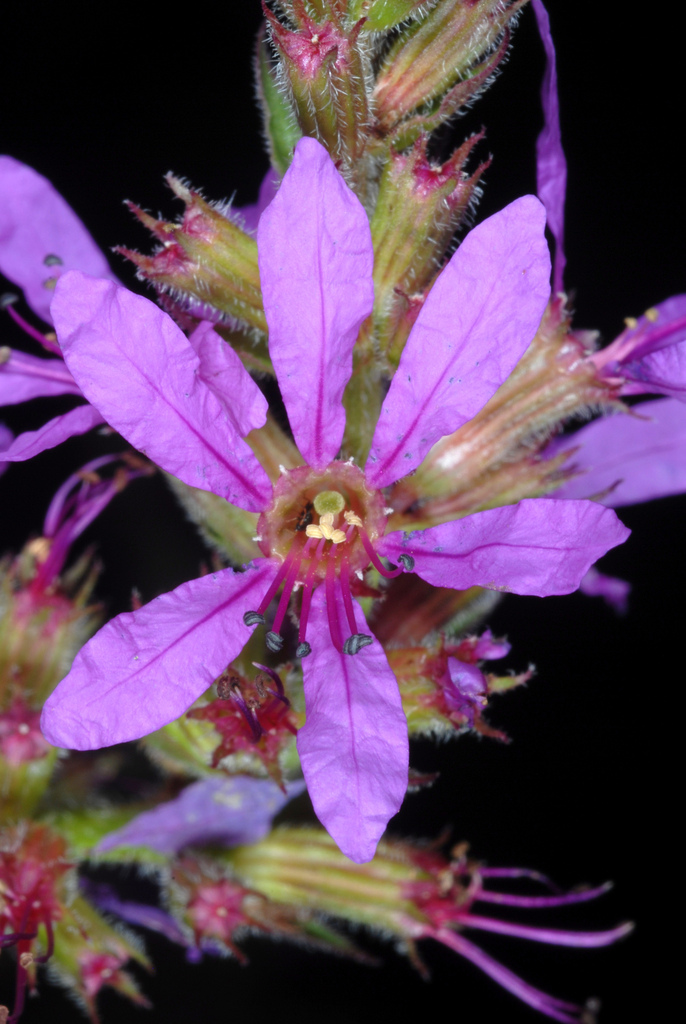
This hardy perennial is known for its tall, vibrant spikes of magenta flowers that bloom throughout the summer. It thrives in damp areas and is often found near wetlands or ponds. Please be aware that it is considered invasive in many regions of North America.
At a glance
- Care level
- Easy
- Plant type
- Perennial
- Light
- Full sun
- Indoor light
- Direct sun
- Water
- Every 1 to 3 days
- Mature size
- 5 to 8 feet
- Growth rate
- Fast
- Hardiness
- USDA 3 to 9
- Bloom time
- Early to late summer
Care
Keep the soil consistently moist to mimic its natural wetland habitat. Watch for rapid spread, as this plant can easily overtake garden beds and local waterways. Deadhead the flowers before they go to seed to help manage its growth.
- Watering
- Keep the soil very damp at all times.
- Feeding
- Apply a balanced liquid fertilizer during the active growing season.
- Pruning
- Remove spent flower spikes to prevent unwanted seed dispersal.
- Repotting
- Repot only if the plant becomes root bound in a container.
- Soil
- Moist, nutrient rich soil
- Soil pH
- 6.0 to 7.5
- Temperature
- -35 to 35°C
- Humidity
- 40 to 80%
- Drought tolerance
- Low
- Lifespan
- Perennial, typically 5 to 10 years.
- Deer and rabbits
- Moderate
Signs it needs repotting
- Roots growing out of the drainage holes.
- The plant dries out very quickly between waterings.
Safety
- People
- It is generally considered non-toxic, but ingestion is not recommended.
- Children
- The plant is not inherently dangerous, but it is best to keep children from eating wild plants.
- Contact allergens
- The stems can be slightly rough, but there is no significant contact allergen.
- Airborne allergens
- The pollen can be a minor irritant for those with severe hay fever.
- Edibility
- While young leaves are sometimes consumed in traditional medicine, this plant is not considered a standard food source and should be avoided.
How to identify it
- Tall spikes of magenta flowers
- Lance shaped opposite leaves
- Square stems with fine hairs
- Grows in dense clusters
- Height
- 0.6 to 2m
- Spread
- 0.3 to 1m
- Leaves
- green, deciduous
- Flowers
- purple, pink, 1 to 2cm
- Fruit
- brown, Autumn
Problems to watch for
- Loosestrife BeetleCommon
- Leaf SpotUncommon
- RustUncommon
- Root RotRare
By symptom
Check your purple loosestrife from a photo
Pocket Botanist looks at a photo of your plant and tells you what's wrong and what to try first.
Growing it
- Propagation
- division, seed
- When to plant
- spring, autumn
- Overwintering
- The foliage will die back naturally in winter. Cut the stems to the ground after the first frost to keep the area tidy.
- In containers
- It grows well in containers, but the pot must be kept consistently moist.
Division
- 1. Dig up the plant in early spring.
- 2. Use a sharp spade to divide the root clump.
- 3. Replant the sections immediately in moist soil.
Because this plant is invasive, it is best to avoid planting it entirely and choose native wetland alternatives instead.
Grows well with
- Joe Pye Weed — They both thrive in similar moist, sunny conditions.
- Swamp Milkweed — This native species also enjoys wet soil and attracts similar pollinators.
Similar species
- Fireweed — It shares a similar flower color and spike-like growth habit.
Science
- Family
- Lythraceae
- Genus
- Lythrum
- Order
- Myrtales
- Class
- Magnoliopsida
- Native range
- Europe, Asia, and parts of North Africa.
- Conservation
- It is listed as a noxious weed in many regions and should not be planted in the wild.
It spreads rapidly through prolific seed production and rhizomes, allowing it to dominate wetland margins.
- Value to wildlife
- nectar source
- Pollinators
- bees, butterflies
- Uses
- ornamental, traditional medicine
Through the year
Ecological indicators
- Light
- 7/9
- Moisture
- 8/9
- Salinity
- 2/9
- Soil reaction
- 5/9
- Temperature
- 5/9
- Nutrients
- 5/9
Taxonomy resolved against GBIF.
Questions people ask
- Is it safe to grow in my garden?
- It is strongly discouraged due to its invasive nature in many parts of the world.
- How do I get rid of it?
- Manual removal of the root system is effective for small patches, but it requires persistence.
Where the name comes from
The name Lythrum comes from the Greek word for blood, referring to the color of the flowers, while salicaria refers to the willow-like leaves.
Good to know
- It produces millions of seeds per plant annually.
- It was introduced to North America in the 1800s.
- It thrives in disturbed soil and wet areas.
Keep your purple loosestrife growing
This page is a general guide. Save your plant in Pocket Botanist and you get care reminders timed for this plant, plus a care history that shows what worked.
This guide was generated with AI and checked against GBIF taxonomy. It is general information, not horticultural or veterinary advice. Read about how we build these guides.