 Pocket Botanist
Guide botanique
salicaire pourpre.
Lythrum salicaria L.
Prononciation LITH-rum sal-ih-KAIR-ee-uh
Aussi appelée Lysimaque pourpre hirsute, Lysimaque pourpre, Lythrum pourpre, Purple Loosestrife, Rainbow Weed, Rainbow Weed, Spiked Loosestrife, Purple-loosestrife



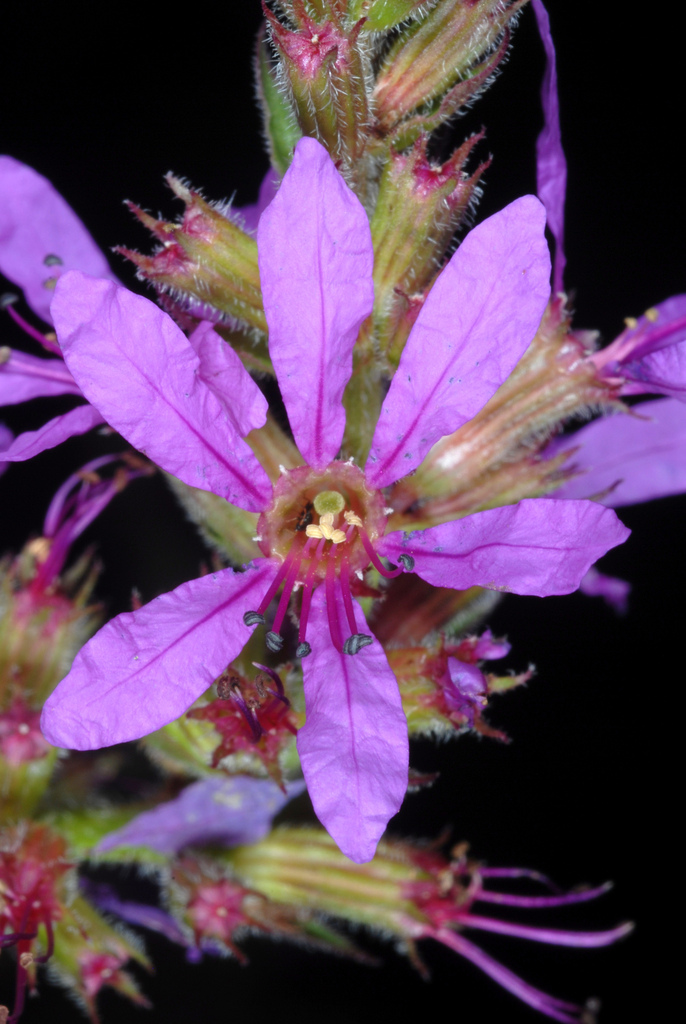
Cette plante vivace robuste est connue pour ses hautes tiges aux épis de fleurs d'un magenta éclatant qui fleurissent tout au long de l'été. Elle prospère dans les endroits humides et se trouve souvent près des zones humides ou des étangs. Veuillez noter qu'elle est considérée comme envahissante dans de nombreuses régions d'Amérique du Nord.
En un coup d'œil
- Niveau d'entretien
- Facile
- Type de plante
- Vivace
- Lumière
- Plein soleil
- Lumière en intérieur
- Soleil direct
- Arrosage
- Tous les 1 à 3 jours
- Taille adulte
- 1,5 à 2,5 mètres
- Croissance
- Rapide
- Rusticité
- USDA 3 à 9
- Floraison
- Début à fin d'été
Entretien
Gardez le sol constamment humide pour imiter son habitat naturel de zone humide. Surveillez sa propagation rapide, car cette plante peut facilement envahir les parterres de jardin et les cours d'eau locaux. Coupez les fleurs fanées avant qu'elles ne produisent des graines pour aider à gérer sa croissance.
- Arrosage
- Gardez le sol très humide en tout temps.
- Engrais
- Appliquez un engrais liquide équilibré pendant la saison de croissance active.
- Taille
- Retirez les épis floraux fanés pour éviter la dispersion indésirable des graines.
- Rempotage
- Rempotez uniquement si la plante est à l'étroit dans son pot.
- Sol
- Sol humide et riche en nutriments
- pH du sol
- 6,0 à 7,5
- Température
- -35 à 35°C
- Humidité
- 40 à 80%
- Résistance à la sécheresse
- Faible
- Durée de vie
- Vivace, généralement de 5 à 10 ans.
- Résistance aux chevreuils et lapins
- Moyenne
Signes qu'il faut rempoter
- Les racines sortent des trous de drainage.
- La plante se dessèche très rapidement entre deux arrosages.
Sécurité
- Humains
- Il est généralement considéré comme non toxique, mais l'ingestion n'est pas recommandée.
- Animaux
- Non toxique pour les chats et les chiens.
- Enfants
- La plante n'est pas intrinsèquement dangereuse, mais il est préférable d'empêcher les enfants de manger des plantes sauvages.
- Allergènes de contact
- Les tiges peuvent être légèrement rugueuses, mais il n'y a pas d'allergène de contact significatif.
- Allergènes aéroportés
- Le pollen peut être un léger irritant pour les personnes souffrant de rhume des foins sévère.
- Comestibilité
- Bien que les jeunes feuilles soient parfois consommées en médecine traditionnelle, cette plante n'est pas considérée comme une source alimentaire standard et doit être évitée.
Comment l'identifier
- Hauts épis de fleurs magenta
- Feuilles lancéolées opposées
- Tiges carrées avec de fins poils
- Pousse en touffes denses
- Hauteur
- 0,6 à 2m
- Envergure
- 0,3 à 1m
- Feuilles
- vert, caduc
- Fleurs
- violet, rose, 1 à 2cm
- Fruits
- brun, Automne
Problèmes à surveiller
- Galéruque de la salicaireCourant
- RouillePeu courant
- Taches foliairesPeu courant
- Pourriture des racinesRare
- Le criocère des marais — Ces coléoptères sont souvent introduits comme moyen de lutte biologique pour contrôler les populations.
Par symptôme
Vérifie la santé de ta plante en photo
Pocket Botanist analyse une photo de ta plante et te dit ce qui ne va pas et quoi essayer en premier.
La cultiver
- Multiplication
- division, semis
- Quand planter
- printemps, automne
- Hivernage
- Le feuillage mourra naturellement en hiver. Coupez les tiges au ras du sol après le premier gel pour garder la zone propre.
- En pot
- Elle pousse bien en conteneur, mais le pot doit être maintenu constamment humide.
Division
- 1. Dégagez la plante au début du printemps.
- 2. Utilisez une bêche tranchante pour diviser la motte de racines.
- 3. Replantez immédiatement les sections dans un sol humide.
Étant donné que cette plante est envahissante, il est préférable de ne pas la planter du tout et de choisir plutôt des alternatives indigènes aux zones humides.
Bonnes associations
- Eutrochium purpureum — Ils prospèrent tous deux dans des conditions similaires, humides et ensoleillées.
- Asclépiade des marais — Cette espèce indigène apprécie également les sols humides et attire des pollinisateurs similaires.
Espèces similaires
- Fireweed — Il partage une couleur de fleur et un port en épi similaires.
Science
- Famille
- Lythraceae
- Genre
- Lythrum
- Ordre
- Myrtales
- Classe
- Magnoliopsida
- Région d'origine
- Europe, Asie et certaines parties de l'Afrique du Nord.
- Préservation
- Il est classé comme mauvaise herbe nuisible dans de nombreuses régions et ne doit pas être planté dans la nature.
Il se propage rapidement grâce à une production prolifique de graines et à ses rhizomes, ce qui lui permet de dominer les bords des zones humides.
- Intérêt pour la faune
- source de nectar
- Pollinisateurs
- abeilles, papillons
- Utilisations
- ornemental, médecine traditionnelle
Au fil des saisons
Repères écologiques
- Lumière
- 7/9
- Humidité
- 8/9
- Salinité
- 2/9
- Réaction du sol
- 5/9
- Température
- 5/9
- Nutriments
- 5/9
Taxonomie vérifiée avec le GBIF.
Ce qu'on demande souvent
- Est-il sûr de le cultiver dans mon jardin ?
- C'est fortement déconseillé en raison de sa nature envahissante dans de nombreuses régions du monde.
- Comment s'en débarrasser ?
- L'élimination manuelle du système racinaire est efficace pour les petites zones, mais elle demande de la persévérance.
D'où vient le nom
Le nom Lythrum vient du mot grec pour sang, faisant référence à la couleur des fleurs, tandis que salicaria fait référence aux feuilles semblables à celles du saule.
Bon à savoir
- Il produit des millions de graines par plante et par an.
- Il a été introduit en Amérique du Nord dans les années 1800.
- Il prospère dans les sols perturbés et les zones humides.
Garde ta plante en pleine forme
Cette page est un guide général. Enregistre ta plante dans Pocket Botanist et tu reçois des rappels d'entretien adaptés à cette plante, ainsi qu'un historique d'entretien qui montre ce qui a marché.
Ce guide a été généré par IA et vérifié avec la taxonomie du GBIF. Il s'agit d'informations générales, et non de conseils horticoles ou vétérinaires. Découvre comment nous concevons ces guides.