 Pocket Botanist
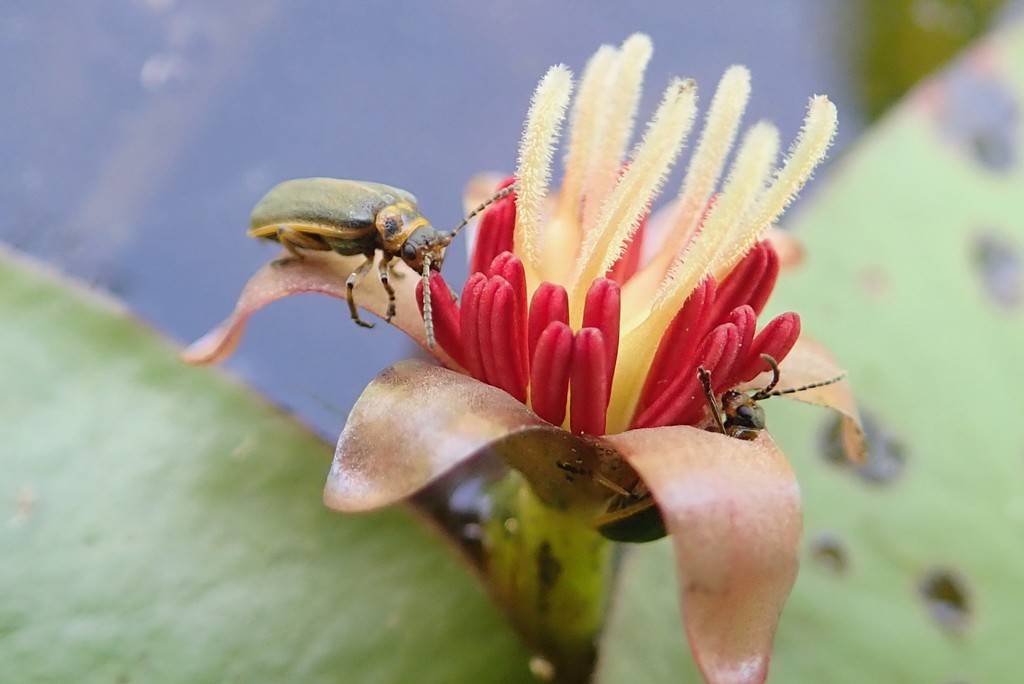
Symptoms by part
Leaves
You will see small, circular holes or skeletonized patches where the tissue between the veins has been eaten away.
Causes
- The presence of purple loosestrife in the landscape provides the specific food source these beetles require to thrive and reproduce.
Could be confused with
- Japanese beetle · Japanese beetles leave a more jagged, lace like pattern on leaves and are larger with a metallic green and copper appearance.
- Flea beetle · Flea beetles create tiny pinprick holes and jump quickly when disturbed, unlike the slower moving loosestrife beetle.
Find out what's really wrong with your plant
Problems that look alike are easy to mix up. Pocket Botanist looks at a photo of your actual plant and tells you what's going on, how serious it is, and what to try first. Identification and a health check are free.



Scan with your phone's camera to get the app
Or go to pocketbotanist.app/get on your phone
Treatment
- 1. Hand pick the adult beetles off the leaves during the early morning when they are less active.
- 2. Shake the plant stems over a bucket of soapy water to dislodge and collect larvae and adults.
- 3. Prune away heavily infested foliage to reduce the local population density.
Without chemicals
- Hand picking adults and larvae.
- Pruning and disposing of infested plant material in sealed bags.
- Encouraging natural predators like birds and spiders in the garden.
Chemical options
- Spinosad, apply as a spray to the foliage, follow the label.
Preventing it
- Remove purple loosestrife plants from your garden to eliminate the host plant.
- Maintain a diverse garden to support natural predators that feed on the beetles.
Season
The warm growing season.
Spread risk
High
Severity
Moderate
When to act
Act as soon as you notice feeding damage on the leaves to prevent the population from exploding. If the plant is severely defoliated and failing to recover, remove the entire plant.
Keep your plants healthy from here
Save your plants in Pocket Botanist and you get care reminders timed for each one, plus a care history that shows what worked. Identification and a health check are free.
Questions people ask
- Are these beetles harmful to other garden plants?
- No, they are highly host specific and focus almost exclusively on purple loosestrife.
- Will the beetles kill my purple loosestrife?
- They can significantly weaken and stunt the growth of the plant, but they rarely kill it outright on their own.
Plants it affects
This guide was generated with AI on and is general information, not horticultural advice. Read about how we build these guides.