 Pocket Botanist
Guide botanique
Epilobe hirsute.
Epilobium hirsutum
Prononciation eh-pi-LOH-bee-um HER-soo-tum
Aussi appelée Codlins And Cream, Epilobe hirsute, Epilobe hirsute, épilobe poilu


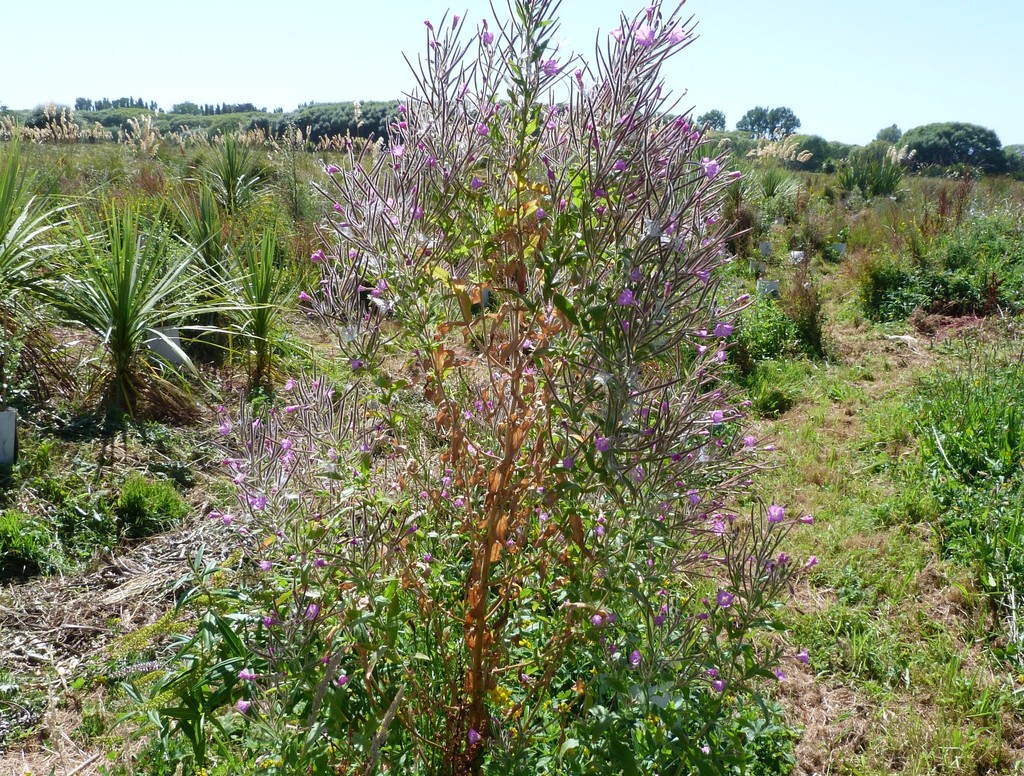
L'épilobe hirsute est une plante vivace vigoureuse que l'on trouve souvent près de l'eau. Elle produit de hautes tiges poilues surmontées de fleurs d'un rose vibrant. C'est un excellent choix pour naturaliser dans les zones humides de votre jardin.
En un coup d'œil
- Niveau d'entretien
- Facile
- Type de plante
- Vivace
- Lumière
- Plein soleil à ombre partielle
- Lumière en intérieur
- Lumière vive indirecte
- Arrosage
- Tous les 1 à 3 jours
- Taille adulte
- Jusqu'à 150 cm de haut
- Croissance
- Rapide
- Rusticité
- USDA 4 à 9
- Floraison
- Milieu à fin de l'été
Entretien
Gardez le sol constamment humide car cette plante prospère dans les conditions humides. Surveillez les pucerons pendant la saison de croissance et taillez les tiges mortes à la fin de l'automne. Elle se propage facilement, alors réfléchissez bien à son emplacement pour éviter qu'elle ne prenne le dessus.
- Arrosage
- Gardez le sol constamment humide, ne le laissez jamais sécher complètement.
- Engrais
- Appliquez un engrais liquide équilibré une fois au printemps si le sol est pauvre.
- Taille
- Taillez la plante au ras du sol à la fin de l'automne, une fois que le feuillage est mort.
- Rempotage
- Rempotez uniquement si la plante est à l'étroit dans son conteneur.
- Sol
- Sol humide, lourd ou marécageux
- pH du sol
- Neutre à légèrement alcalin
- Température
- -20 à 30°C
- Humidité
- 60 à 90%
- Résistance à la sécheresse
- Faible
- Durée de vie
- Vivace, généralement de 5 à 10 ans
- Résistance aux chevreuils et lapins
- Moyenne
Signes qu'il faut rempoter
- Les racines sortent des trous de drainage.
- Croissance ralentie malgré une humidité adéquate.
Sécurité
- Humains
- La plante est généralement considérée comme non toxique, mais elle n'est pas destinée à la consommation humaine.
- Animaux
- Cette plante n'est pas connue pour être toxique pour les chats ou les chiens.
- Enfants
- La plante n'est pas dangereuse, mais les fins poils peuvent provoquer de légères démangeaisons si les enfants la manipulent.
- Allergènes de contact
- Les fins poils du feuillage peuvent provoquer une légère irritation cutanée chez les personnes sensibles.
- Allergènes aéroportés
- Les graines dispersées par le vent ont de fins touffes blanches qui peuvent causer une légère irritation respiratoire si elles sont inhalées en grande quantité.
- Comestibilité
- Bien que peu toxique, elle n'est pas considérée comme une source alimentaire courante et doit être évitée.
Comment l'identifier
- Tiges hautes, poilues et ramifiées
- Feuilles opposées, lancéolées et dentées
- Grandes fleurs roses à quatre pétales
- Longues capsules de graines fines et en forme de cosse
- Hauteur
- 1 à 2m
- Envergure
- 0,6 à 1,2m
- Feuilles
- vert, caduc
- Fleurs
- rose, magenta, 2 à 3cm
- Fruits
- brun, Automne
Problèmes à surveiller
- OïdiumCourant
- RouilleCourant
- Pourriture des racinesPeu courant
- PuceronsPeu courant
Par symptôme
Vérifie la santé de ta plante en photo
Pocket Botanist analyse une photo de ta plante et te dit ce qui ne va pas et quoi essayer en premier.
La cultiver
- Multiplication
- division, semis
- Quand planter
- Printemps, Automne
- Hivernage
- Le feuillage disparaîtra complètement en hiver. Il suffit de couper les tiges mortes au ras du sol à la fin de l'automne ou au début du printemps.
- En pot
- Il ne convient pas aux conteneurs en raison de son caractère rhizomateux envahissant.
Division
- 1. Dégagez la motte au début du printemps.
- 2. Utilisez une bêche tranchante pour diviser les rhizomes.
- 3. Replantez immédiatement les sections dans un sol humide.
Semis
- 1. Récoltez les graines à la fin de l'automne.
- 2. Semez directement en pleine terre humide.
- 3. Gardez la zone constamment humide jusqu'à la germination.
Associez cette plante à d'autres espèces aimant l'humidité pour créer une bordure de zone humide équilibrée.
Bonnes associations
- salicaire pourpre — Ils partagent des exigences d'humidité et des périodes de floraison similaires dans les milieux humides.
- Caltha des marais — Cette plante offre une couleur de début de saison avant que l'épilobe n'envahisse l'espace.
Espèces similaires
- Fireweed — C'est une espèce apparentée qui produit également de jolies fleurs roses mais préfère les sites plus secs.
Science
- Famille
- Onagraceae
- Genre
- Epilobium
- Ordre
- Myrtales
- Classe
- Magnoliopsida
- Région d'origine
- Europe, Asie et parties de l'Afrique du Nord.
- Préservation
- C'est une espèce commune et répandue qui ne fait actuellement pas l'objet de préoccupations de conservation.
Il colonise naturellement les berges des cours d'eau, les marais et les fossés humides où il se développe bien dans les habitats ouverts et mouillés.
- Intérêt pour la faune
- source de nectar, plante hôte larvaire
- Pollinisateurs
- abeilles, papillons, papillons de nuit
- Utilisations
- restauration des zones humides, jardins pour pollinisateurs, habitat pour la faune
Au fil des saisons
Repères écologiques
- Réaction du sol
- 6/9
- Lumière
- 7/9
- Température
- 5/9
- Humidité
- 8/9
- Nutriments
- 6/9
- Salinité
- 1/9
Taxonomie vérifiée avec le GBIF.
Ce qu'on demande souvent
- Est-ce envahissant ?
- Il peut être très vigoureux et se propager rapidement dans les jardins humides.
- A-t-il besoin de beaucoup d'eau ?
- Oui, il prospère dans les sols constamment humides, voire marécageux.
D'où vient le nom
Le nom Epilobium vient des mots grecs epi signifiant sur et lobos signifiant gousse, faisant référence à la fleur qui se trouve sur la gousse de graines. Hirsutum fait référence à la texture poilue de la plante.
Bon à savoir
- Il se propage agressivement par ses rhizomes souterrains et ses graines dispersées par le vent.
- C'est un colonisateur classique des sols humides et perturbés.
- Les fleurs sont parfaitement adaptées à la pollinisation par les abeilles et les papillons de nuit.
Garde ta plante en pleine forme
Cette page est un guide général. Enregistre ta plante dans Pocket Botanist et tu reçois des rappels d'entretien adaptés à cette plante, ainsi qu'un historique d'entretien qui montre ce qui a marché.
Ce guide a été généré par IA et vérifié avec la taxonomie du GBIF. Il s'agit d'informations générales, et non de conseils horticoles ou vétérinaires. Découvre comment nous concevons ces guides.