 Pocket Botanist
Plant guide
Echeveria.
Echeveria
Pronounced ek-eh-VEER-ee-uh
Also known as echeveria


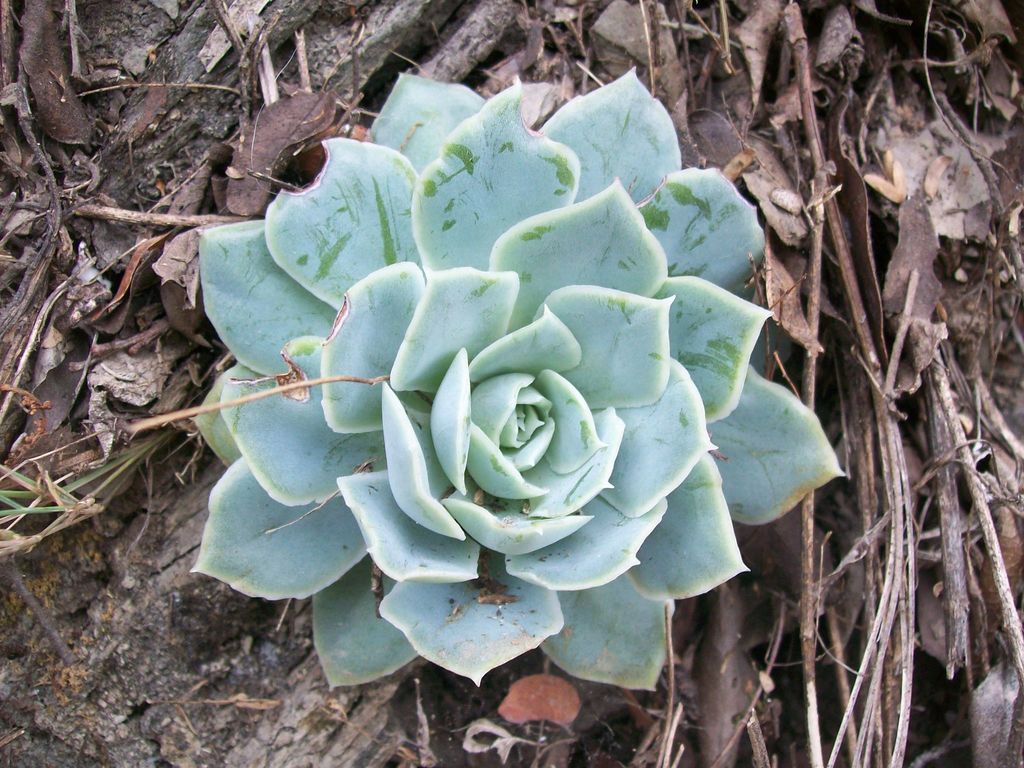
Echeverias are beautiful, rosette forming succulents that thrive in sunny spots. They store water in their fleshy leaves, making them quite drought tolerant. These plants are perfect for adding a touch of architectural charm to your home.
At a glance
- Care level
- Easy
- Plant type
- Succulent
- Light
- Full sun to partial shade
- Indoor light
- Direct sun
- Water
- Every 10 to 21 days
- Mature size
- 15 to 30 cm
- Growth rate
- Slow
- Hardiness
- USDA 9 to 12
- Bloom time
- Late winter to summer
Care
Provide plenty of bright light to keep the rosettes tight and compact. Allow the soil to dry out completely between waterings to prevent root rot. Watch for mushy leaves, which often signal that the plant is sitting in too much moisture.
- Watering
- Water deeply only when the soil has completely dried out.
- Feeding
- Use a balanced liquid fertilizer diluted to half strength during the growing season.
- Pruning
- Remove dead or shriveled lower leaves and spent flower stalks.
- Repotting
- Repot when the plant outgrows its container or the soil becomes depleted.
- Soil
- Well-draining cactus or succulent mix
- Soil pH
- 6.0 to 7.0
- Temperature
- 5 to 30°C
- Humidity
- 20 to 50%
- Drought tolerance
- High
- Lifespan
- Perennial, typically 3 to 5 years with proper care.
- Deer and rabbits
- Moderate
Signs it needs repotting
- Roots growing out of the drainage hole.
- The plant has become top-heavy and unstable.
- Soil no longer absorbs water effectively.
Safety
- People
- The plant is generally considered non-toxic to humans.
- Pets
- Echeveria is generally considered non-toxic to cats and dogs.
- Children
- The leaves are somewhat fragile and can be a choking hazard if broken into small pieces by young children.
- Contact allergens
- Some individuals may experience mild skin irritation from the powdery coating on the leaves.
- Airborne allergens
- There are no significant reports of respiratory allergies associated with this plant.
- Edibility
- Echeveria is not considered a food plant and should not be consumed.
How to identify it
- Symmetrical, rose-like leaf rosettes
- Fleshy, succulent leaves
- Often covered in powdery farina
- Bell-shaped flowers on tall stalks
- Height
- 0.05 to 0.3m
- Spread
- 0.05 to 0.3m
- Leaves
- green, blue, purple, pink, evergreen
- Flowers
- pink, orange, yellow, red, 1 to 2cm
Problems to watch for
- MealybugsCommon
- Root RotCommon
- Fungus GnatsUncommon
- Spider MitesUncommon
By symptom
Check your echeveria from a photo
Pocket Botanist looks at a photo of your plant and tells you what's wrong and what to try first.
Growing it
- Propagation
- cuttings, division, seed
- When to plant
- spring, summer
- Overwintering
- Move to a frost-free location and keep the soil very dry throughout the winter months.
- In containers
- They thrive in containers with excellent drainage, a 10 cm pot is usually sufficient for a single plant.
Leaf Cuttings
- 1. Gently pull a healthy leaf from the stem.
- 2. Let the leaf callous for 2 to 3 days.
- 3. Place the leaf on top of well-draining soil.
- 4. Mist lightly until roots appear.
Group succulents with similar water needs to avoid overwatering the Echeveria.
Grows well with
- Sedum — They share similar water and light requirements.
- Aloe — They create a visually pleasing contrast in succulent arrangements.
Similar species
- Graptopetalum — They have a similar rosette growth habit.
- Sempervivum — They are also known as hens and chicks and share a similar appearance.
Science
- Family
- Crassulaceae
- Genus
- Echeveria
- Order
- Saxifragales
- Class
- Magnoliopsida
- Native range
- Semi-desert areas of Central and South America.
- Conservation
- Most species are not currently threatened, but some rare varieties are protected in their native habitats.
They grow in rocky, well-drained soils where they store water in their thick leaves to survive long dry spells.
- Value to wildlife
- nectar source
- Pollinators
- bees, hummingbirds
- Uses
- ornamental, container gardening, rock gardens
Through the year
Ecological indicators
- Soil reaction
- 6/9
- Light
- 8/9
- Temperature
- 7/9
- Moisture
- 2/9
- Salinity
- 2/9
- Nutrients
- 2/9
Taxonomy resolved against GBIF.
Questions people ask
- Why is my Echeveria stretching?
- It is likely not getting enough direct sunlight and is reaching for more light.
- How often should I water?
- Water only when the soil is completely dry to the touch.
Where the name comes from
The genus is named after Atanasio Echeverría y Godoy, a Mexican botanical artist who illustrated many plants.
Good to know
- Echeveria are often called hens and chicks because of how they produce offsets.
- The powdery coating on leaves is called farina and helps protect the plant from sun.
- They are highly drought tolerant due to their succulent leaves.
- They need bright light to maintain their compact shape.
Also in
Keep your echeveria growing
This page is a general guide. Save your plant in Pocket Botanist and you get care reminders timed for this plant, plus a care history that shows what worked.
This guide was generated with AI and checked against GBIF taxonomy. It is general information, not horticultural or veterinary advice. Read about how we build these guides.