 Pocket Botanist
Guide botanique
Echeveria.
Echeveria
Prononciation ek-eh-VEER-ee-uh
Aussi appelée echeveria


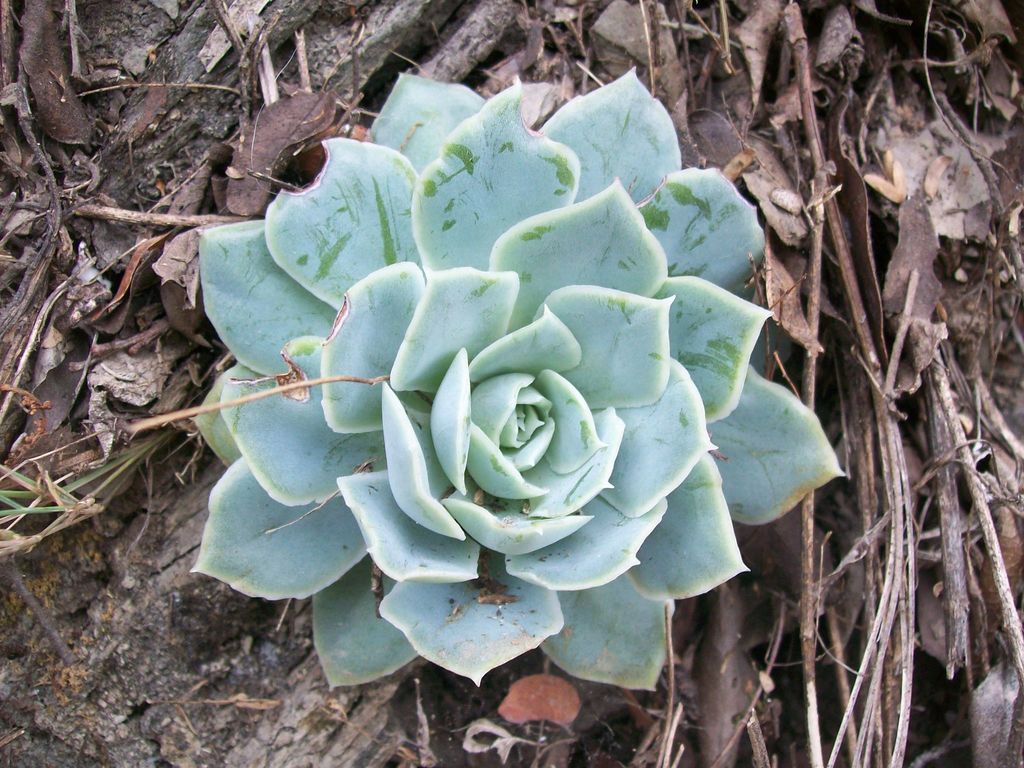
Les echeverias sont de magnifiques plantes succulentes formant des rosettes qui prospèrent dans les endroits ensoleillés. Elles stockent l'eau dans leurs feuilles charnues, ce qui les rend assez tolérantes à la sécheresse. Ces plantes sont parfaites pour ajouter une touche de charme architectural à votre maison.
En un coup d'œil
- Niveau d'entretien
- Facile
- Type de plante
- Succulent
- Lumière
- Plein soleil à mi-ombre
- Lumière en intérieur
- Soleil direct
- Arrosage
- Tous les 10 à 21 jours
- Taille adulte
- 15 to 30 cm
- Croissance
- Lente
- Rusticité
- USDA 9 à 12
- Floraison
- Fin de l'hiver à l'été
Entretien
Fournissez beaucoup de lumière vive pour que les rosettes restent serrées et compactes. Laissez le sol se dessécher complètement entre les arrosages pour éviter la pourriture des racines. Surveillez les feuilles molles, qui signalent souvent que la plante est trop humide.
- Arrosage
- Arrosez abondamment seulement lorsque le sol a complètement séché.
- Engrais
- Utilisez un engrais liquide équilibré dilué à moitié pendant la saison de croissance.
- Taille
- Retirez les feuilles inférieures mortes ou ratatinées et les tiges florales fanées.
- Rempotage
- Rempotez lorsque la plante dépasse son contenant ou que le sol s'épuise.
- Sol
- Mélange bien drainant pour cactus ou succulentes
- pH du sol
- 6.0 to 7.0
- Température
- 5 à 30°C
- Humidité
- 20 à 50%
- Résistance à la sécheresse
- Élevée
- Durée de vie
- Vivace, généralement 3 à 5 ans avec des soins appropriés.
- Résistance aux chevreuils et lapins
- Moyenne
Signes qu'il faut rempoter
- Des racines sortent du trou de drainage.
- La plante est devenue trop lourde et instable.
- Le sol n'absorbe plus l'eau efficacement.
Sécurité
- Humains
- La plante est généralement considérée comme non toxique pour l'homme.
- Animaux
- L'Echeveria est généralement considérée comme non toxique pour les chats et les chiens.
- Enfants
- Les feuilles sont quelque peu fragiles et peuvent présenter un risque d'étouffement si elles sont brisées en petits morceaux par de jeunes enfants.
- Allergènes de contact
- Certaines personnes peuvent ressentir une légère irritation cutanée due au revêtement poudreux sur les feuilles.
- Allergènes aéroportés
- Il n'y a pas de rapports significatifs d'allergies respiratoires associées à cette plante.
- Comestibilité
- L'Echeveria n'est pas considérée comme une plante alimentaire et ne doit pas être consommée.
Comment l'identifier
- Rosettes de feuilles symétriques, semblables à des roses
- Feuilles charnues et succulentes
- Souvent recouvertes d'une poudre farineuse
- Fleurs en forme de cloche sur de hautes tiges
- Hauteur
- 0,05 à 0,3m
- Envergure
- 0,05 à 0,3m
- Feuilles
- vert, bleu, violet, rose, evergreen
- Fleurs
- rose, orange, jaune, rouge, 1 à 2cm
Problèmes à surveiller
- Cochenilles farineusesCourant
- Pourriture des racinesCourant
- Mouches du terreauPeu courant
- TétranyquesPeu courant
- Cochenilles — Petits insectes blancs cotonneux qui se nourrissent de la sève de la plante.
Vérifie la santé de ta plante en photo
Pocket Botanist analyse une photo de ta plante et te dit ce qui ne va pas et quoi essayer en premier.
La cultiver
- Multiplication
- boutures, division, semis
- Quand planter
- printemps, été
- Hivernage
- Déplacez-la dans un endroit à l'abri du gel et gardez le sol très sec pendant les mois d'hiver.
- En pot
- Ils prospèrent dans des conteneurs avec un excellent drainage, un pot de 10 cm est généralement suffisant pour une seule plante.
Boutures de feuilles
- 1. Détachez délicatement une feuille saine de la tige.
- 2. Laissez la feuille sécher pendant 2 à 3 jours.
- 3. Placez la feuille sur un sol bien drainant.
- 4. Brumisez légèrement jusqu'à l'apparition des racines.
Regroupez les succulentes ayant des besoins en eau similaires pour éviter de trop arroser l'Echeveria.
Bonnes associations
- Orpin — Ils partagent des besoins similaires en eau et en lumière.
- Aloe — Ils créent un contraste visuellement attrayant dans les arrangements de succulentes.
Espèces similaires
- Graptopetalum — Ils ont une habitude de croissance en rosette similaire.
- Hens and Chicks — Ils sont également connus sous le nom de poules et poussins et partagent une apparence similaire.
Science
- Famille
- Crassulaceae
- Genre
- Echeveria
- Ordre
- Saxifragales
- Classe
- Magnoliopsida
- Région d'origine
- Zones semi-désertiques d'Amérique centrale et du Sud.
- Préservation
- La plupart des espèces ne sont actuellement pas menacées, mais certaines variétés rares sont protégées dans leurs habitats naturels.
Ils poussent dans des sols rocheux bien drainés où ils stockent de l'eau dans leurs feuilles épaisses pour survivre aux longues périodes de sécheresse.
- Intérêt pour la faune
- source de nectar
- Pollinisateurs
- abeilles, colibris
- Utilisations
- ornemental, jardinière, jardins de rocaille
Au fil des saisons
Repères écologiques
- Réaction du sol
- 6/9
- Lumière
- 8/9
- Température
- 7/9
- Humidité
- 2/9
- Salinité
- 2/9
- Nutriments
- 2/9
Taxonomie vérifiée avec le GBIF.
Ce qu'on demande souvent
- Pourquoi mon Echeveria s'étire-t-il ?
- Il ne reçoit probablement pas assez de lumière directe du soleil et cherche plus de lumière.
- À quelle fréquence dois-je arroser ?
- Arrosez uniquement lorsque le sol est complètement sec au toucher.
D'où vient le nom
Le genre est nommé d'après Atanasio Echeverría y Godoy, un artiste botanique mexicain qui a illustré de nombreuses plantes.
Bon à savoir
- Les Echeveria sont souvent appelés poules et poussins en raison de la façon dont ils produisent des rejets.
- Le revêtement poudreux sur les feuilles s'appelle la farine et aide à protéger la plante du soleil.
- Ils sont très tolérants à la sécheresse grâce à leurs feuilles succulentes.
- Ils ont besoin de beaucoup de lumière pour conserver leur forme compacte.
Aussi dans
Garde ta plante en pleine forme
Cette page est un guide général. Enregistre ta plante dans Pocket Botanist et tu reçois des rappels d'entretien adaptés à cette plante, ainsi qu'un historique d'entretien qui montre ce qui a marché.
Ce guide a été généré par IA et vérifié avec la taxonomie du GBIF. Il s'agit d'informations générales, et non de conseils horticoles ou vétérinaires. Découvre comment nous concevons ces guides.