 Pocket Botanist
Guía de plantas
Echeveria.
Echeveria
Pronunciación ek-eh-VEER-ee-uh
También se conoce como echeveria


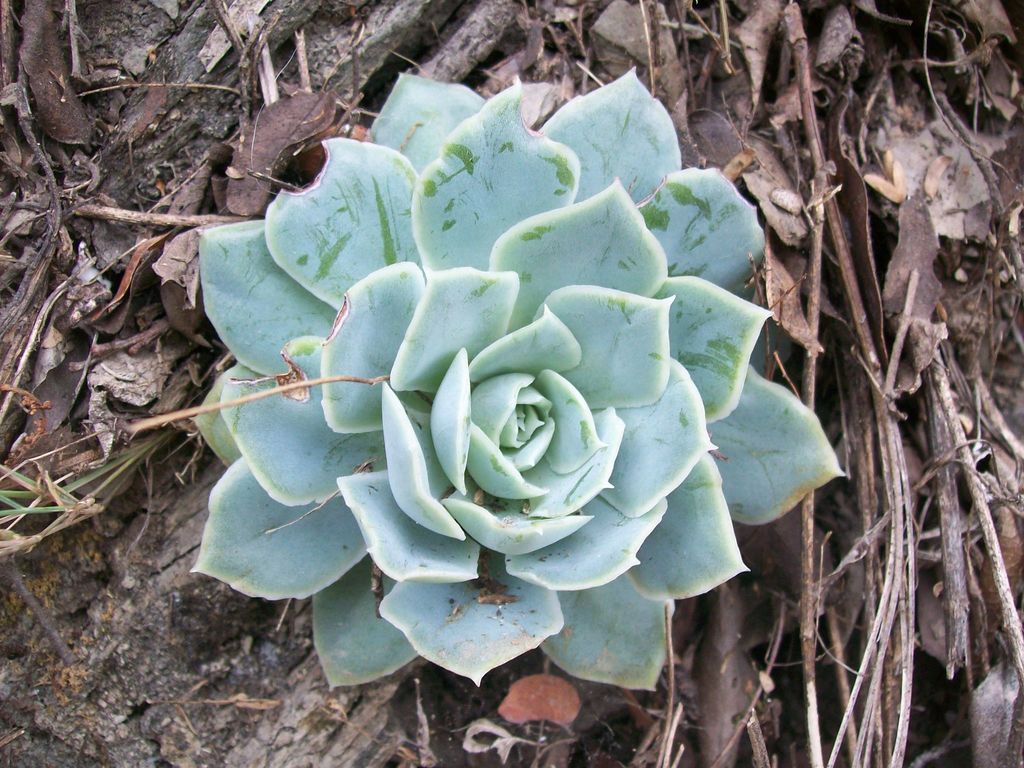
Las Echeverias son suculentas preciosas que forman rosetas y prosperan en lugares soleados. Almacenan agua en sus hojas carnosas, lo que las hace bastante tolerantes a la sequía. Estas plantas son perfectas para añadir un toque de encanto arquitectónico a tu hogar.
De un vistazo
- Nivel de cuidados
- Fácil
- Tipo de planta
- Suculenta
- Luz
- Sol pleno a sombra parcial
- Luz en interior
- Sol directo
- Riego
- Cada 10 a 21 días
- Tamaño adulto
- 15 a 30 cm
- Ritmo de crecimiento
- Lento
- Rusticidad
- USDA 9 a 12
- Floración
- Finales de invierno a verano
Cuidados
Proporciona mucha luz brillante para mantener las rosetas compactas. Deja que la tierra se seque completamente entre riegos para prevenir la pudrición de las raíces. Busca hojas blandas, que a menudo indican que la planta está recibiendo demasiada humedad.
- Riego
- Riega abundantemente solo cuando la tierra se haya secado por completo.
- Abonado
- Usa un fertilizante líquido equilibrado diluido a la mitad de su fuerza durante la temporada de crecimiento.
- Poda
- Retira las hojas inferiores muertas o marchitas y los tallos de flores marchitos.
- Trasplante
- Trasplanta cuando la planta supere su maceta o la tierra se agote.
- Suelo
- Mezcla bien drenada para cactus o suculentas
- pH del suelo
- 6.0 a 7.0
- Temperatura
- 5 a 30°C
- Humedad
- 20 a 50%
- Tolerancia a la sequía
- Alta
- Longevidad
- Perenne, típicamente de 3 a 5 años con el cuidado adecuado.
- Resistencia a ciervos y conejos
- Moderada
Señales de que necesita trasplante
- Raíces que crecen fuera del orificio de drenaje.
- La planta se ha vuelto pesada en la parte superior e inestable.
- La tierra ya no absorbe el agua de manera efectiva.
Seguridad
- Personas
- La planta generalmente se considera no tóxica para los humanos.
- Mascotas
- La Echeveria generalmente se considera no tóxica para gatos y perros.
- Niños
- Las hojas son algo frágiles y pueden suponer un peligro de asfixia si los niños pequeños las rompen en pedazos pequeños.
- Alérgenos por contacto
- Algunas personas pueden experimentar una leve irritación en la piel por el recubrimiento polvoriento de las hojas.
- Alérgenos en el aire
- No hay informes significativos de alergias respiratorias asociadas con esta planta.
- Comestibilidad
- Echeveria no se considera una planta alimenticia y no debe consumirse.
Cómo identificarla
- Rosetas simétricas de hojas como rosas
- Hojas carnosas y suculentas
- A menudo cubiertas de una pruina polvorienta
- Flores en forma de campana en tallos largos
- Altura
- 0,05 a 0,3m
- Anchura
- 0,05 a 0,3m
- Hojas
- verde, azul, púrpura, rosa, perenne
- Flores
- rosa, naranja, amarillo, rojo, 1 a 2cm
Problemas a vigilar
- Cochinillas algodonosasComún
- Podredumbre radicularComún
- Araña rojaPoco común
- Moscas del mantilloPoco común
- Cochinillas — Pequeños insectos blancos algodonosos que se alimentan de la savia de la planta.
- Pudrición de raíces — Causada por el exceso de riego o un drenaje deficiente.
Revisa tu echeveria con una foto
Pocket Botanist mira una foto de tu planta y te dice qué le pasa y qué probar primero.
Cómo cultivarla
- Propagación
- esquejes, división, semilla
- Cuándo plantar
- primavera, verano
- Cuidados en invierno
- Traslada a un lugar libre de heladas y mantén la tierra muy seca durante los meses de invierno.
- En maceta
- Prosperan en contenedores con excelente drenaje, una maceta de 10 cm suele ser suficiente para una sola planta.
Esquejes de hoja
- 1. Separa suavemente una hoja sana del tallo.
- 2. Deja que la hoja cale durante 2 a 3 días.
- 3. Coloca la hoja sobre tierra bien drenada.
- 4. Rocía ligeramente hasta que aparezcan raíces.
Agrupa las suculentas con necesidades de agua similares para evitar regar en exceso la Echeveria.
Buenas compañeras
- Sedum — Comparten requisitos similares de agua y luz.
- Aloe — Crean un contraste visualmente agradable en los arreglos de suculentas.
Especies parecidas
- Graptopetalum — Tienen un hábito de crecimiento similar en roseta.
- Siempreviva de tejado — También se les conoce como gallinas y pollitos y comparten una apariencia similar.
Ciencia
- Familia
- Crassulaceae
- Género
- Echeveria
- Orden
- Saxifragales
- Clase
- Magnoliopsida
- Distribución natural
- Zonas semidesérticas de América Central y del Sur.
- Conservación
- La mayoría de las especies no están amenazadas actualmente, pero algunas variedades raras están protegidas en sus hábitats nativos.
Crecen en suelos rocosos y bien drenados donde almacenan agua en sus gruesas hojas para sobrevivir a largos períodos secos.
- Valor para la fauna
- fuente de néctar
- Polinizadores
- abejas, colibríes
- Usos
- ornamental, jardinería en contenedores, jardines de rocas
A lo largo del año
Indicadores ecológicos
- Reacción del suelo
- 6/9
- Luz
- 8/9
- Temperatura
- 7/9
- Humedad
- 2/9
- Salinidad
- 2/9
- Nutrientes
- 2/9
Taxonomía cotejada con GBIF.
Lo que más preguntan
- ¿Por qué mi Echeveria se está estirando?
- Es probable que no esté recibiendo suficiente luz solar directa y esté buscando más luz.
- ¿Con qué frecuencia debo regar?
- Riega solo cuando la tierra esté completamente seca al tacto.
De dónde viene el nombre
El género lleva el nombre de Atanasio Echeverría y Godoy, un artista botánico mexicano que ilustró muchas plantas.
Bueno saberlo
- Las Echeverias a menudo se llaman gallinas y pollitos por la forma en que producen retoños.
- El recubrimiento polvoriento de las hojas se llama farina y ayuda a proteger la planta del sol.
- Son muy tolerantes a la sequía debido a sus hojas suculentas.
- Necesitan luz brillante para mantener su forma compacta.
También en
Que tu echeveria siga creciendo
Esta página es una guía general. Guarda tu planta en Pocket Botanist y tendrás recordatorios de cuidado pensados para esta planta, además de un historial de cuidados que muestra qué ha funcionado.
Esta guía se ha generado con IA y se ha cotejado con la taxonomía de GBIF. Es información general, no asesoramiento botánico ni veterinario. Descubre cómo elaboramos estas guías.