 Pocket Botanist
Plant guide
Hens and Chicks.
Sempervivum
Pronounced sem-per-VYE-vum
Also known as hen-and-chickens, house-leeks, houseleek, houseleeks



Scan with your phone's camera to get the app
Or go to pocketbotanist.app/get on your phone

These charming succulents form tight rosettes that spread by producing offsets. They are incredibly hardy and thrive in rocky, well-draining spots. You will love how they add texture to your garden or containers.
At a glance
- Care level
- Easy
- Plant type
- Succulent
- Light
- Full sun
- Indoor light
- Direct sun
- Water
- Every 7 to 14 days
- Mature size
- 6 inches tall
- Growth rate
- Slow
- Hardiness
- USDA 3 to 8
- Bloom time
- Mid to late summer
Care
Plant them in gritty soil and let the medium dry out completely between waterings. Watch for mushy leaves, which indicate too much moisture, or shriveled leaves, which mean they need a drink. Ensure they get plenty of sun to keep their compact shape.
- Watering
- Water only when the soil has dried out entirely to prevent root rot.
- Feeding
- Feed sparingly with a balanced liquid fertilizer during the active growing season.
- Pruning
- Remove dead or shriveled lower leaves and spent flower stalks as needed.
- Repotting
- Repot only when the offsets have crowded the container and have no room to grow.
- Soil
- Sandy or rocky, well-draining cactus mix
- Soil pH
- 6.0 to 7.5
- Temperature
- -40 to 35°C
- Humidity
- 10 to 40%
- Drought tolerance
- High
- Lifespan
- Perennial, individual rosettes live 2 to 3 years.
- Deer and rabbits
- High
Signs it needs repotting
- The container is completely filled with offsets.
- The soil has broken down and holds too much moisture.
Safety
- People
- This plant is generally considered non-toxic to humans.
- Pets
- This plant is generally considered non-toxic to cats and dogs.
- Children
- The rosettes are sturdy but can be sharp if handled roughly, so keep them away from very young children.
- Contact allergens
- The sap can cause mild skin irritation in sensitive individuals.
- Airborne allergens
- There are no notable respiratory allergens associated with this plant.
- Edibility
- While not considered toxic, they are not typically consumed and may cause digestive upset.
How to identify it
- Tight rosettes of fleshy leaves
- Offsets grow around the mother plant
- Leaves often have pointed tips
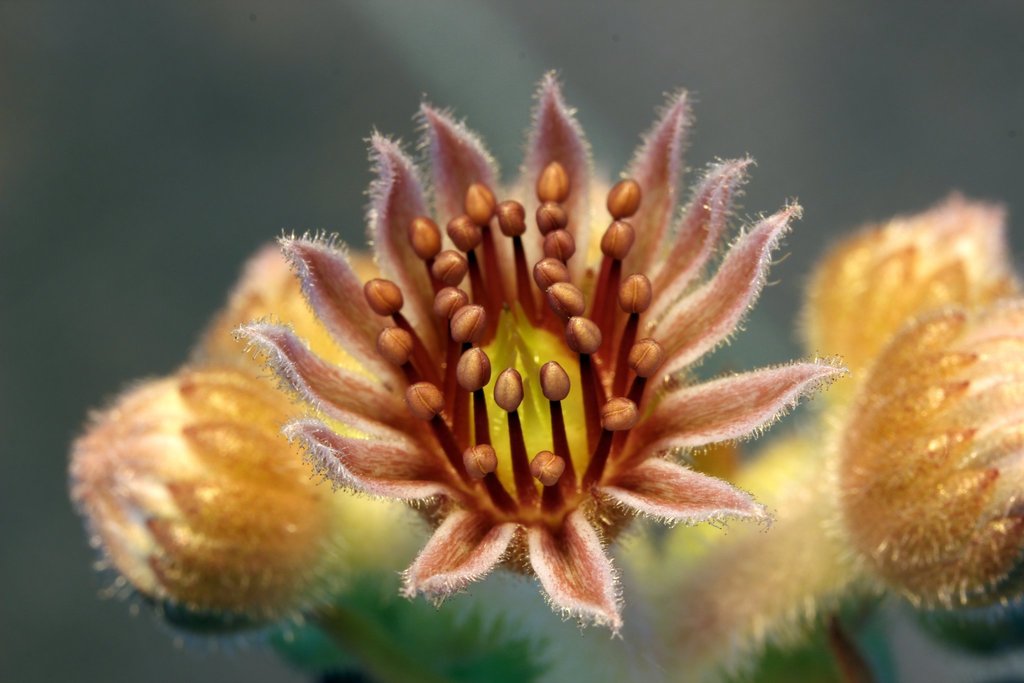
- Star shaped flowers on stalks
- Height
- 0.05 to 0.2m
- Spread
- 0.1 to 0.3m
- Leaves
- green, red, purple, bronze, evergreen
- Flowers
- pink, yellow, white, 1 to 3cm
Problems to watch for
- MealybugsCommon
- Root RotCommon
- AphidsUncommon
- DehydrationUncommon
Check your hens and chicks from a photo
Pocket Botanist looks at a photo of your plant and tells you what's wrong and what to try first.
Scan with your phone's camera to get the app
Or go to pocketbotanist.app/get on your phone
Growing it
- Propagation
- division, seed
- When to plant
- spring, summer
- Overwintering
- Keep the soil dry during winter to prevent rot. They are fully hardy and do not require protection from cold.
- In containers
- They grow perfectly in shallow pots with excellent drainage, a minimum depth of 5 centimeters is sufficient.
Division
- Gently pull the small offset chicks away from the parent hen.
- Allow the cut end to callous over for a day or two.
- Place the offset on top of well draining soil and press lightly.
Pair these with other drought tolerant succulents that do not require frequent fertilization.
Grows well with
- Sedum · They share similar water and light requirements for a low maintenance display.
- Thyme · Creeping thyme provides a nice textural contrast and thrives in similar dry conditions.
Similar species
- Echeveria · They look similar but are not frost hardy and require different care.
Science
- Family
- Crassulaceae
- Genus
- Sempervivum
- Order
- Saxifragales
- Class
- Magnoliopsida
- Native range
- Mountains of Europe and parts of Asia.
- Conservation
- Not of conservation concern.
They survive in thin, rocky soils by storing moisture in their succulent leaves and forming dense mats to reduce evaporation.
- Value to wildlife
- nectar source
- Pollinators
- bees, butterflies
- Uses
- rock gardens, container gardening, green roofs, ground cover
Through the year
Ecological indicators
- Salinity
- 2/9
- Soil reaction
- 6/9
- Light
- 8/9
- Temperature
- 5/9
- Moisture
- 2/9
- Nutrients
- 2/9
Taxonomy resolved against GBIF.
Questions people ask
- Do they need a lot of water?
- No, they prefer to dry out completely between waterings.
- Can I grow them indoors?
- They struggle indoors without very bright, direct light and cool temperatures.
Where the name comes from
The name comes from the Latin semper, meaning always, and vivus, meaning living. It reflects their evergreen nature and hardiness.
Good to know
- They are commonly called hens and chicks because the main plant produces many small offsets.
- Each rosette only flowers once before dying, but the offsets continue to grow.
- They store water in their fleshy leaves to survive long droughts.
Also in
Keep your hens and chicks growing
This page is a general guide. Save your plant in Pocket Botanist and you get care reminders timed for this plant, plus a care history that shows what worked.
Scan with your phone's camera to get the app
Or go to pocketbotanist.app/get on your phone
This guide was generated with AI on and checked against GBIF taxonomy. It is general information, not horticultural or veterinary advice. Read about how we build these guides.