 Pocket Botanist
Plant guide
String of Buttons.
Crassula perforata
Pronounced KRASS-yoo-luh per-for-AY-tuh


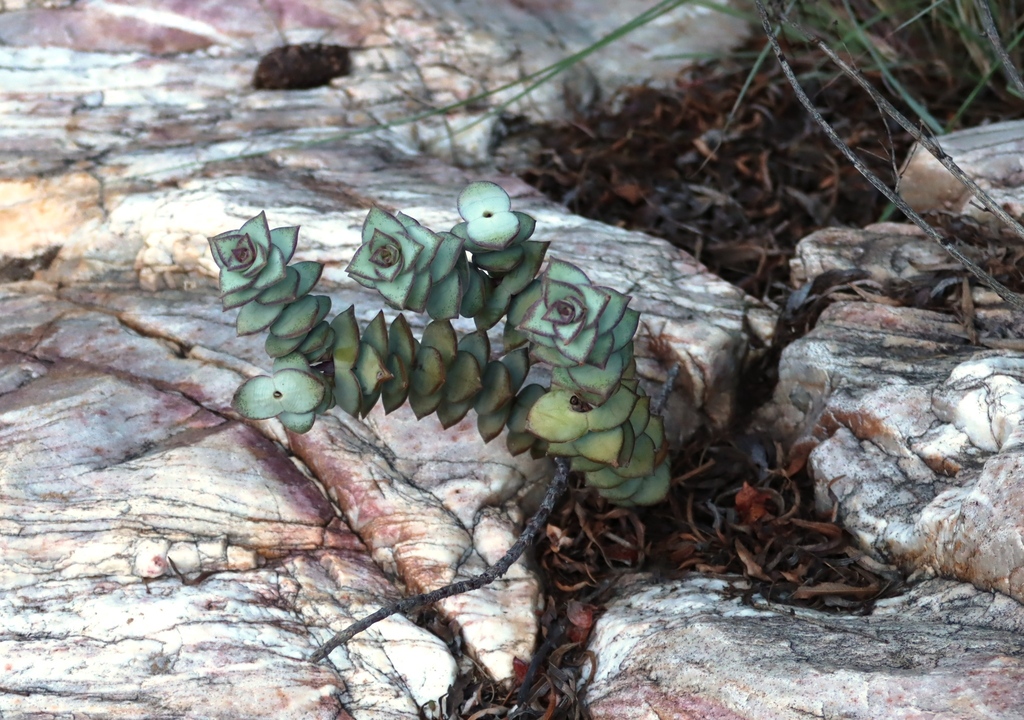
The String of Buttons is a charming succulent that looks like it is stacked on a string. It is a fantastic choice for sunny windowsills or rock gardens. You will love how its leaves spiral around the stem as it grows.

At a glance
- Care level
- Easy
- Plant type
- Succulent
- Light
- Full sun to partial shade
- Indoor light
- Bright indirect
- Water
- Every 10 to 21 days
- Mature size
- 30 to 45 cm tall
- Growth rate
- Medium
- Hardiness
- USDA 9 to 11
- Bloom time
- Late winter to spring
Care
Let the soil dry out completely between waterings to prevent root rot. Watch for shriveling leaves which indicate the plant needs a drink. Ensure it gets plenty of light to keep the stems from stretching out.
- Watering
- Water only when the soil is completely dry to the touch.
- Feeding
- Use a balanced liquid fertilizer diluted by half during the growing season.
- Pruning
- Trim back leggy stems in spring to encourage a bushier shape.
- Repotting
- Repot only when the plant becomes rootbound or the soil breaks down.
- Soil
- Well-draining cactus and succulent mix
- Soil pH
- 6.0 to 7.0
- Temperature
- 5 to 35°C
- Humidity
- 10 to 40%
- Drought tolerance
- High
- Lifespan
- Perennial, typically 5 to 10 years
- Deer and rabbits
- Moderate
Signs it needs repotting
- Roots growing out of the drainage holes.
- Stunted growth despite proper care.
- Soil drying out much faster than usual.
Safety
- People
- The plant is generally considered non-toxic, but ingestion should be avoided.
- Pets
- This plant is considered non-toxic to cats and dogs.
- Children
- Keep out of reach of small children as the stems are brittle and can be a choking hazard if broken into small pieces.
- Contact allergens
- The sap may cause mild skin irritation in sensitive individuals.
- Airborne allergens
- There are no known significant respiratory allergens associated with this plant.
- Edibility
- This plant is not considered edible and may cause stomach upset if ingested.
How to identify it
- Stacked triangular leaves
- Leaves spiral around stem
- Pale green with reddish edges
- Small woody stems
- Height
- 0.15 to 0.45m
- Spread
- 0.15 to 0.3m
- Leaves
- green, yellow, red, evergreen
- Flowers
- white, yellow, 0.5 to 1cm
Problems to watch for
- MealybugsCommon
- Root RotCommon
- EdemaUncommon
- Fungus GnatsUncommon
By symptom
Check your string of buttons from a photo
Pocket Botanist looks at a photo of your plant and tells you what's wrong and what to try first.
Growing it
- Propagation
- cuttings, division
- When to plant
- spring, summer
- Overwintering
- Move to a frost-free location indoors or a greenhouse if temperatures drop below freezing. Keep the soil very dry during the winter months to prevent rot.
- In containers
- It thrives in containers, provided they have drainage holes and a well-draining succulent potting mix.
Stem cuttings
- 1. Snip a healthy stem section.
- 2. Allow the cut end to callous for two days.
- 3. Insert the calloused end into dry, well-draining soil.
- 4. Wait a week before lightly watering.
Group succulents with similar water needs to prevent rot in more thirsty companions.
Grows well with
Similar species
- Crassula rupestris — It has a similar stacked growth habit but with different leaf shapes.
Science
- Family
- Crassulaceae
- Genus
- Crassula
- Order
- Saxifragales
- Class
- Magnoliopsida
- Native range
- South Africa
- Conservation
- This species is not currently listed as endangered or threatened in its native habitat.
It grows in rocky, well-drained soils in arid regions where it stores water in its leaves to survive long dry spells.
- Value to wildlife
- nectar source
- Pollinators
- bees, butterflies
- Uses
- container gardening, rock gardens, indoor decor
Through the year
Ecological indicators
- Salinity
- 2/9
- Soil reaction
- 6/9
- Light
- 7/9
- Moisture
- 2/9
- Nutrients
- 3/9
- Temperature
- 7/9
Taxonomy resolved against GBIF.
Questions people ask
- How often should I water it?
- Water only when the soil has dried out completely.
- Does it need direct sun?
- It prefers bright, indirect light but can handle some direct morning sun.
Where the name comes from
The genus name Crassula comes from the Latin word crassus, meaning thick, referring to the succulent leaves. The species name perforata refers to the appearance of the stem passing through the leaves.
Good to know
- It is commonly called string of buttons.
- The leaves often develop a red edge when exposed to bright sunlight.
- It is a popular choice for succulent arrangements due to its unique stacking habit.
Also in
Keep your string of buttons growing
This page is a general guide. Save your plant in Pocket Botanist and you get care reminders timed for this plant, plus a care history that shows what worked.
This guide was generated with AI and checked against GBIF taxonomy. It is general information, not horticultural or veterinary advice. Read about how we build these guides.