 Pocket Botanist
Guide botanique
Sedum 'String of Buttons'.
Crassula perforata
Prononciation KRASS-yoo-luh per-for-AY-tuh


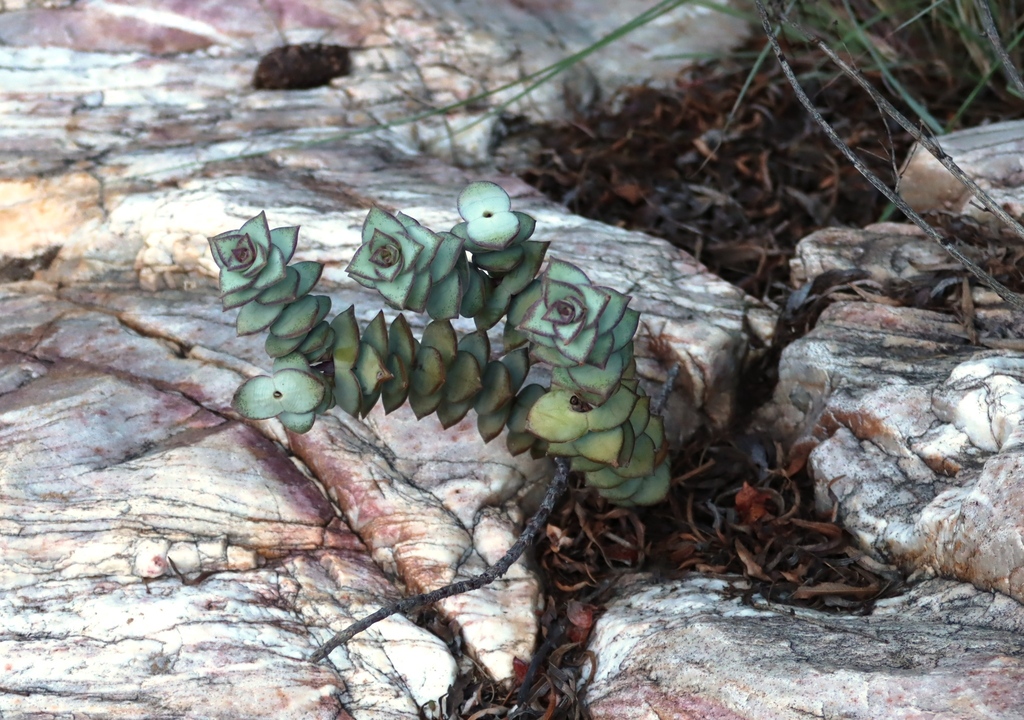
Le 'String of Buttons' est une succulente charmante qui ressemble à des perles enfilées. C'est un choix fantastique pour les rebords de fenêtre ensoleillés ou les jardins de rocaille. Vous aimerez comment ses feuilles s'enroulent en spirale autour de la tige à mesure qu'elle grandit.

En un coup d'œil
- Niveau d'entretien
- Facile
- Type de plante
- Succulente
- Lumière
- Plein soleil à mi-ombre
- Lumière en intérieur
- Lumière vive indirecte
- Arrosage
- Tous les 10 à 21 jours
- Taille adulte
- 30 à 45 cm de haut
- Croissance
- Moyenne
- Rusticité
- USDA 9 à 11
- Floraison
- Fin de l'hiver au printemps
Entretien
Laissez le sol sécher complètement entre les arrosages pour éviter la pourriture des racines. Surveillez le flétrissement des feuilles, signe que la plante a besoin d'un peu d'eau. Assurez-vous qu'elle reçoive suffisamment de lumière pour éviter que les tiges ne s'allongent.
- Arrosage
- Arrosez seulement lorsque le sol est complètement sec au toucher.
- Engrais
- Utilisez un engrais liquide équilibré, dilué de moitié, pendant la saison de croissance.
- Taille
- Taillez les tiges qui s'allongent au printemps pour encourager une forme plus buissonnante.
- Rempotage
- Rempotez uniquement lorsque la plante est à l'étroit dans son pot ou que le terreau se dégrade.
- Sol
- Mélange bien drainant pour cactus et succulentes
- pH du sol
- 6,0 à 7,0
- Température
- 5 à 35°C
- Humidité
- 10 à 40%
- Résistance à la sécheresse
- Élevée
- Durée de vie
- Plante vivace, généralement 5 à 10 ans
- Résistance aux chevreuils et lapins
- Moyenne
Signes qu'il faut rempoter
- Les racines sortent des trous de drainage.
- Croissance ralentie malgré des soins appropriés.
- Le sol se dessèche beaucoup plus rapidement que d'habitude.
Sécurité
- Humains
- La plante est généralement considérée comme non toxique, mais l'ingestion doit être évitée.
- Animaux
- Cette plante est considérée comme non toxique pour les chats et les chiens.
- Enfants
- Tenir hors de portée des jeunes enfants car les tiges sont cassantes et peuvent présenter un risque d'étouffement si elles sont brisées en petits morceaux.
- Allergènes de contact
- La sève peut provoquer une légère irritation cutanée chez les personnes sensibles.
- Allergènes aéroportés
- Aucun allergène respiratoire important connu n'est associé à cette plante.
- Comestibilité
- Cette plante n'est pas considérée comme comestible et peut provoquer des maux d'estomac en cas d'ingestion.
Comment l'identifier
- Feuilles triangulaires empilées
- Feuilles en spirale autour de la tige
- Vert pâle avec des bords rougeâtres
- Petites tiges ligneuses
- Hauteur
- 0,15 à 0,45m
- Envergure
- 0,15 à 0,3m
- Feuilles
- green, yellow, red, evergreen
- Fleurs
- white, yellow, 0,5 à 1cm
Problèmes à surveiller
- Cochenilles farineusesCourant
- Pourriture des racinesCourant
- Mouches du terreauPeu courant
- ŒdèmePeu courant
- Cochenilles — De petits insectes blancs cotonneux qui se regroupent dans les aisselles des feuilles.
Vérifie la santé de ta plante en photo
Pocket Botanist analyse une photo de ta plante et te dit ce qui ne va pas et quoi essayer en premier.
La cultiver
- Multiplication
- cuttings, division
- Quand planter
- spring, summer
- Hivernage
- Déplacez dans un endroit à l'abri du gel à l'intérieur ou dans une serre si les températures descendent en dessous de zéro. Gardez le sol très sec pendant les mois d'hiver pour éviter la pourriture.
- En pot
- Il prospère dans les conteneurs, à condition qu'ils aient des trous de drainage et un mélange de terre pour succulentes bien drainant.
Stem cuttings
- 1. Coupez une section de tige saine.
- 2. Laissez la coupe sécher pendant deux jours.
- 3. Insérez l'extrémité durcie dans un sol sec et bien drainant.
- 4. Attendez une semaine avant d'arroser légèrement.
Regroupez les succulentes ayant des besoins en eau similaires pour éviter la pourriture chez les plantes plus assoiffées.
Bonnes associations
Espèces similaires
- Crassula rupestris — Elle a une croissance empilée similaire mais avec des formes de feuilles différentes.
Science
- Famille
- Crassulaceae
- Genre
- Crassula
- Ordre
- Saxifragales
- Classe
- Magnoliopsida
- Région d'origine
- Afrique du Sud
- Préservation
- Cette espèce n'est actuellement pas répertoriée comme étant en danger ou menacée dans son habitat d'origine.
Il pousse dans les sols rocheux bien drainés des régions arides où il stocke l'eau dans ses feuilles pour survivre aux longues périodes de sécheresse.
- Intérêt pour la faune
- nectar source
- Pollinisateurs
- abeilles, papillons
- Utilisations
- jardinage en conteneur, jardins de rocaille, décoration intérieure
Au fil des saisons
Repères écologiques
- Salinité
- 2/9
- Réaction du sol
- 6/9
- Lumière
- 7/9
- Humidité
- 2/9
- Nutriments
- 3/9
- Température
- 7/9
Taxonomie vérifiée avec le GBIF.
Ce qu'on demande souvent
- À quelle fréquence dois-je l'arroser ?
- Arrosez uniquement lorsque le sol a complètement séché.
- A-t-il besoin de soleil direct ?
- Il préfère une lumière vive et indirecte, mais peut supporter un peu de soleil direct le matin.
D'où vient le nom
Le nom du genre Crassula vient du mot latin crassus, qui signifie épais, en référence aux feuilles succulentes. L'espèce perforata fait référence à l'apparence de la tige passant à travers les feuilles.
Bon à savoir
- Il est communément appelé chaîne de boutons.
- Les feuilles développent souvent un bord rouge lorsqu'elles sont exposées à une forte lumière du soleil.
- C'est un choix populaire pour les arrangements de succulentes en raison de son mode de croissance unique en empilement.
Aussi dans
Garde ta plante en pleine forme
Cette page est un guide général. Enregistre ta plante dans Pocket Botanist et tu reçois des rappels d'entretien adaptés à cette plante, ainsi qu'un historique d'entretien qui montre ce qui a marché.
Ce guide a été généré par IA et vérifié avec la taxonomie du GBIF. Il s'agit d'informations générales, et non de conseils horticoles ou vétérinaires. Découvre comment nous concevons ces guides.