 Pocket Botanist
Guía de plantas
Collar de Botones.
Crassula perforata
Pronunciación KRASS-yoo-luh per-for-AY-tuh


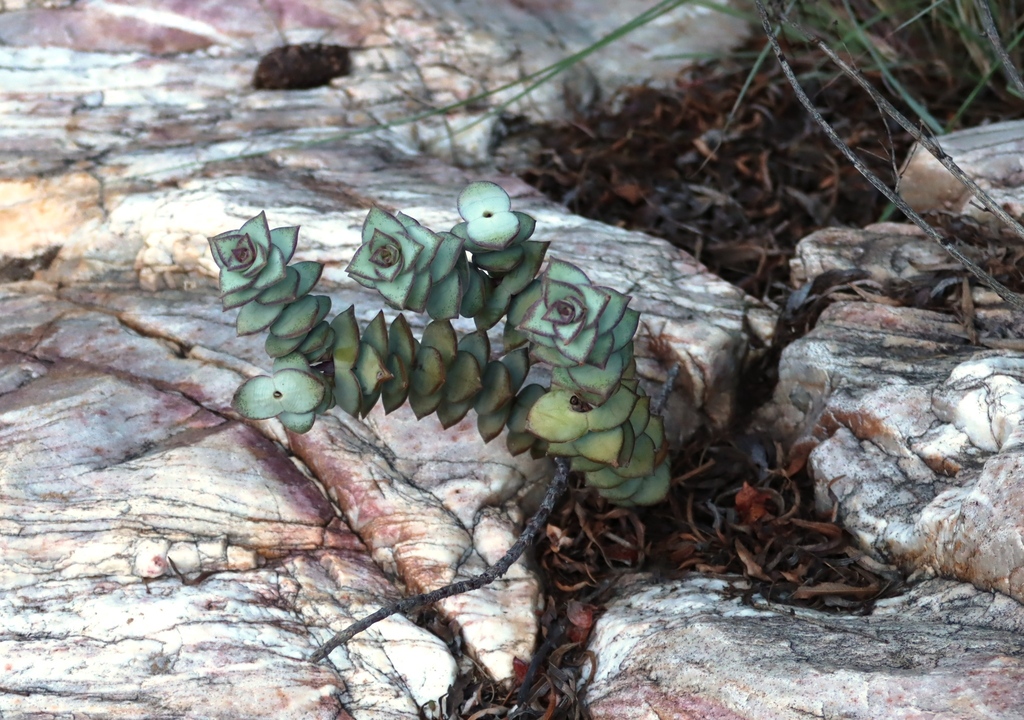
La planta Collar de Botones es una suculenta encantadora que parece ensartada en un hilo. Es una opción fantástica para alféizares soleados o jardines de rocas. Te encantará cómo sus hojas se enroscan alrededor del tallo a medida que crece.

De un vistazo
- Nivel de cuidados
- Fácil
- Tipo de planta
- Suculenta
- Luz
- Sol pleno a sombra parcial
- Luz en interior
- Luz indirecta brillante
- Riego
- Cada 10 a 21 días
- Tamaño adulto
- 30 a 45 cm de alto
- Ritmo de crecimiento
- Medio
- Rusticidad
- USDA 9 a 11
- Floración
- Finales de invierno a primavera
Cuidados
Deja que la tierra se seque por completo entre riegos para prevenir la pudrición de las raíces. Observa si las hojas se marchitan, lo que indica que la planta necesita agua. Asegúrate de que reciba suficiente luz para evitar que los tallos se alarguen.
- Riego
- Riega solo cuando la tierra esté completamente seca al tacto.
- Abonado
- Usa un fertilizante líquido equilibrado diluido a la mitad durante la temporada de crecimiento.
- Poda
- Recorta los tallos alargados en primavera para fomentar una forma más frondosa.
- Trasplante
- Trasplanta solo cuando la planta tenga las raíces apretadas o la tierra se descomponga.
- Suelo
- Mezcla para cactus y suculentas bien drenada
- pH del suelo
- 6.0 a 7.0
- Temperatura
- 5 a 35°C
- Humedad
- 10 a 40%
- Tolerancia a la sequía
- Alta
- Longevidad
- Perenne, típicamente de 5 a 10 años
- Resistencia a ciervos y conejos
- Moderada
Señales de que necesita trasplante
- Raíces saliendo de los agujeros de drenaje.
- Crecimiento atrofiado a pesar del cuidado adecuado.
- La tierra se seca mucho más rápido de lo normal.
Seguridad
- Personas
- La planta generalmente se considera no tóxica, pero se debe evitar la ingestión.
- Mascotas
- Esta planta se considera no tóxica para gatos y perros.
- Niños
- Mantener fuera del alcance de los niños pequeños, ya que los tallos son quebradizos y pueden representar un peligro de asfixia si se rompen en pedazos pequeños.
- Alérgenos por contacto
- La savia puede causar irritación leve de la piel en personas sensibles.
- Alérgenos en el aire
- No se conocen alérgenos respiratorios significativos asociados con esta planta.
- Comestibilidad
- Esta planta no se considera comestible y puede causar malestar estomacal si se ingiere.
Cómo identificarla
- Hojas triangulares apiladas
- Hojas se enroscan alrededor del tallo
- Verde pálido con bordes rojizos
- Tallos leñosos pequeños
- Altura
- 0,15 a 0,45m
- Anchura
- 0,15 a 0,3m
- Hojas
- verde, amarillo, rojo, perenne
- Flores
- blanco, amarillo, 0,5 a 1cm
Problemas a vigilar
- Cochinillas algodonosasComún
- Podredumbre radicularComún
- EdemaPoco común
- Moscas del mantilloPoco común
- Cochinillas — Pequeños insectos blancos algodonosos que se agrupan en las axilas de las hojas.
- Pudrición de raíz — Decaimiento fúngico causado por exceso de riego o mal drenaje del suelo.
Revisa tu collar de botones con una foto
Pocket Botanist mira una foto de tu planta y te dice qué le pasa y qué probar primero.
Cómo cultivarla
- Propagación
- esquejes, división
- Cuándo plantar
- primavera, verano
- Cuidados en invierno
- Trasládala a un lugar interior protegido de las heladas o a un invernadero si las temperaturas descienden bajo cero. Mantén la tierra muy seca durante los meses de invierno para prevenir la pudrición.
- En maceta
- Prospera en contenedores, siempre que tengan agujeros de drenaje y una mezcla para suculentas bien drenada.
Esquejes de tallo
- 1. Corta una sección de tallo sana.
- 2. Deja que el extremo cortado se calle durante dos días.
- 3. Inserta el extremo calloso en tierra seca y bien drenada.
- 4. Espera una semana antes de regar ligeramente.
Agrupa las suculentas con necesidades de agua similares para prevenir la pudrición en las más sedientas.
Buenas compañeras
Especies parecidas
- Crassula rupestris — Tiene un hábito de crecimiento apilado similar pero con diferentes formas de hoja.
Ciencia
- Familia
- Crassulaceae
- Género
- Crassula
- Orden
- Saxifragales
- Clase
- Magnoliopsida
- Distribución natural
- Sudáfrica
- Conservación
- Esta especie no está actualmente catalogada como en peligro de extinción o amenazada en su hábitat nativo.
Crece en suelos rocosos y bien drenados en regiones áridas, donde almacena agua en sus hojas para sobrevivir a largas sequías.
- Valor para la fauna
- fuente de néctar
- Polinizadores
- abejas, mariposas
- Usos
- jardinería en contenedores, jardines de rocas, decoración de interiores
A lo largo del año
Indicadores ecológicos
- Salinidad
- 2/9
- Reacción del suelo
- 6/9
- Luz
- 7/9
- Humedad
- 2/9
- Nutrientes
- 3/9
- Temperatura
- 7/9
Taxonomía cotejada con GBIF.
Lo que más preguntan
- ¿Con qué frecuencia debo regarla?
- Riega solo cuando la tierra se haya secado por completo.
- ¿Necesita sol directo?
- Prefiere luz brillante e indirecta, pero puede tolerar algo de sol directo por la mañana.
De dónde viene el nombre
El nombre del género Crassula proviene de la palabra latina crassus, que significa grueso, refiriéndose a las hojas suculentas. El nombre de la especie perforata se refiere a la apariencia del tallo que pasa a través de las hojas.
Bueno saberlo
- Comúnmente se le llama planta del collar de perlas o cordón de botones.
- Las hojas a menudo desarrollan un borde rojo cuando se exponen a la luz solar brillante.
- Es una opción popular para arreglos de suculentas debido a su hábito único de apilamiento.
También en
Que tu collar de botones siga creciendo
Esta página es una guía general. Guarda tu planta en Pocket Botanist y tendrás recordatorios de cuidado pensados para esta planta, además de un historial de cuidados que muestra qué ha funcionado.
Esta guía se ha generado con IA y se ha cotejado con la taxonomía de GBIF. Es información general, no asesoramiento botánico ni veterinario. Descubre cómo elaboramos estas guías.