 Pocket Botanist
Plant guide
Chocolate cosmos.
Cosmos atrosanguineus
Pronounced KOS-mos at-ro-san-GWIN-ee-us
Also known as black cosmos, chocolate cosmos



Scan with your phone's camera to get the app
Or go to pocketbotanist.app/get on your phone
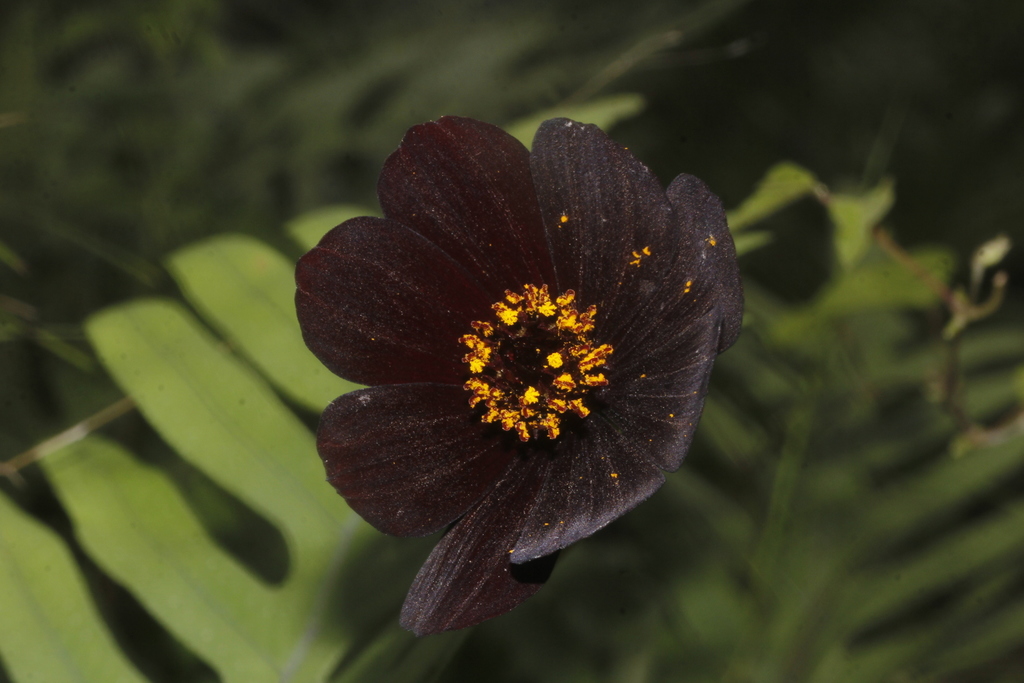
This unique perennial is famous for its deep maroon petals and distinct scent of dark chocolate. It thrives in warm climates and adds a rich, moody aesthetic to any garden bed. You will love how it attracts pollinators while serving as a conversation piece.

At a glance
- Care level
- Moderate
- Plant type
- Perennial
- Light
- Full sun
- Indoor light
- Direct sun
- Water
- Every 3 to 7 days
- Mature size
- 2 to 3 feet
- Growth rate
- Medium
- Hardiness
- USDA 7 to 11
- Bloom time
- Mid summer to late autumn
Care
Plant in well draining soil and ensure it gets plenty of sunshine to encourage blooming. Watch for drooping leaves which indicate a need for water, but be careful not to let the roots sit in soggy soil. Deadhead spent flowers regularly to keep the plant producing new buds throughout the season.
- Watering
- Water when the top inch of soil feels dry to the touch.
- Feeding
- Apply a balanced liquid fertilizer once a month during the active growing season.
- Pruning
- Regularly remove faded blooms to encourage continuous flowering.
- Repotting
- Repot in the spring if the plant becomes root bound in its container.
- Soil
- Well draining, fertile loam
- Soil pH
- 6.0 to 7.5
- Temperature
- 5 to 30°C
- Humidity
- 40 to 60%
- Drought tolerance
- Moderate
- Lifespan
- Perennial, typically 3 to 5 years with proper tuber care.
- Fragrance
- Strong
- Deer and rabbits
- Moderate
Signs it needs repotting
- Roots growing out of the drainage holes.
- Water sitting on the surface for too long.
- Plant growth slowing down significantly.
Safety
- People
- All parts of the plant are considered mildly toxic if ingested.
- Pets
- This plant is generally considered non toxic to cats and dogs.
- Children
- Keep this plant away from small children as ingestion of any part can cause stomach discomfort.
- Contact allergens
- Handling the foliage may cause mild skin irritation in sensitive individuals.
- Airborne allergens
- The pollen can trigger mild reactions in those with seasonal allergies.
- Edibility
- The plant is not considered edible and ingestion may cause digestive upset.
How to identify it
- Deep maroon to chocolate brown petals
- Dark green pinnate foliage
- Distinct chocolate scent in warm sun
- Daisy like flower heads
- Slender branching stems
- Height
- 0.4 to 0.75m
- Spread
- 0.3 to 0.5m
- Leaves
- dark green, deciduous
- Flowers
- deep maroon, chocolate brown, 3 to 5cm
Problems to watch for
- AphidsCommon
- Powdery MildewCommon
- Root RotUncommon
- Slugs and SnailsUncommon
Check your chocolate cosmos from a photo
Pocket Botanist looks at a photo of your plant and tells you what's wrong and what to try first.
Scan with your phone's camera to get the app
Or go to pocketbotanist.app/get on your phone
Growing it
- Propagation
- division, cuttings
- When to plant
- spring
- Overwintering
- In cold climates, dig up the tubers after the first frost kills the foliage. Clean off soil and store them in a box of dry peat or sand in a cool, dark, frost-free location until spring.
- In containers
- It thrives in containers, provided the pot is at least 30 centimeters wide and has excellent drainage.
Tuber Division
- 1. Carefully lift the clump of tubers in spring.
- 2. Gently pull the tubers apart ensuring each has a growing eye.
- 3. Replant immediately in well draining soil.
Plant these in groups of three to five to create a noticeable impact with their unique color and scent.
Grows well with
Similar species
- Garden Cosmos · It is a related species with similar foliage but much larger, brighter flowers.
Science
- Family
- Asteraceae
- Genus
- Cosmos
- Order
- Asterales
- Class
- Magnoliopsida
- Native range
- Mexico
- Conservation
- This species is extinct in the wild and only exists in cultivation.
It evolved in the high-altitude meadows of Mexico where it relied on tuber storage to survive seasonal dry periods.
- Value to wildlife
- nectar source
- Pollinators
- bees, butterflies
- Uses
- ornamental border, container plant, cut flower
Through the year
Ecological indicators
- Salinity
- 2/9
- Soil reaction
- 6/9
- Light
- 7/9
- Temperature
- 6/9
- Moisture
- 5/9
- Nutrients
- 5/9
Taxonomy resolved against GBIF.
Questions people ask
- Does it really smell like chocolate?
- Yes, the velvety petals release a rich, cocoa-like fragrance.
- Can I leave it outside in winter?
- Only in frost-free climates; otherwise, lift the tubers and store them in a cool, dry place.
Where the name comes from
The genus name comes from the Greek word for order or beauty, while the species name refers to its dark, blood-red color.
Good to know
- It is a tuberous perennial that produces fleshy roots.
- The chocolate scent is most intense on warm, sunny afternoons.
- It was introduced to the UK from Mexico in the early 19th century.
Keep your chocolate cosmos growing
This page is a general guide. Save your plant in Pocket Botanist and you get care reminders timed for this plant, plus a care history that shows what worked.
Scan with your phone's camera to get the app
Or go to pocketbotanist.app/get on your phone
This guide was generated with AI on and checked against GBIF taxonomy. It is general information, not horticultural or veterinary advice. Read about how we build these guides.