 Pocket Botanist
Plant guide
Columbine.
Aquilegia
Pronounced ak-wi-LEE-jee-uh
Also known as Columbine, Columbines, granny's bonnets



Columbines are charming perennials known for their unique, spurred flowers that dance above delicate foliage. They bring a touch of woodland elegance to any garden bed. These plants are favorites among gardeners for their ability to attract hummingbirds and butterflies.
At a glance
- Care level
- Easy
- Plant type
- Herbaceous perennial
- Light
- Partial shade to full sun
- Indoor light
- Bright indirect
- Water
- Every 3 to 7 days
- Mature size
- 1 to 3 feet
- Growth rate
- Medium
- Hardiness
- USDA 3 to 9
- Bloom time
- Mid to late spring
Care
Keep the soil consistently moist but never waterlogged to ensure the best blooms. Watch for wilting leaves as a sign of thirst or leaf miners that leave white trails on the foliage. Deadheading spent flowers encourages the plant to produce more blossoms throughout the season.
- Watering
- Water when the top inch of soil feels dry to the touch.
- Feeding
- Apply a balanced liquid fertilizer once a month during the growing season.
- Pruning
- Remove faded flower stalks to promote new growth and keep the plant tidy.
- Repotting
- Repot in early spring if the plant becomes root bound in its container.
- Soil
- Well draining, humus rich soil
- Soil pH
- 6.0 to 7.5
- Temperature
- -30 to 30°C
- Humidity
- 40 to 60%
- Drought tolerance
- Moderate
- Lifespan
- Short lived perennial, typically 3 to 5 years.
- Deer and rabbits
- Moderate
Signs it needs repotting
- Roots growing out of the drainage holes.
- Water sitting on the surface for too long.
- Plant growth slowing significantly.
Safety
- People
- All parts of the plant contain cyanogenic glycosides which can cause significant digestive distress if eaten.
- Pets
- This plant is considered toxic to cats and dogs if ingested.
- Children
- Keep this plant away from small children as ingestion of any part can cause nausea and vomiting.
- Contact allergens
- Handling the foliage can cause mild skin irritation in sensitive individuals.
- Airborne allergens
- The pollen is generally not considered a significant airborne allergen.
- Edibility
- Columbines are considered toxic if ingested and should not be consumed.
How to identify it
- Distinctive spurred petals
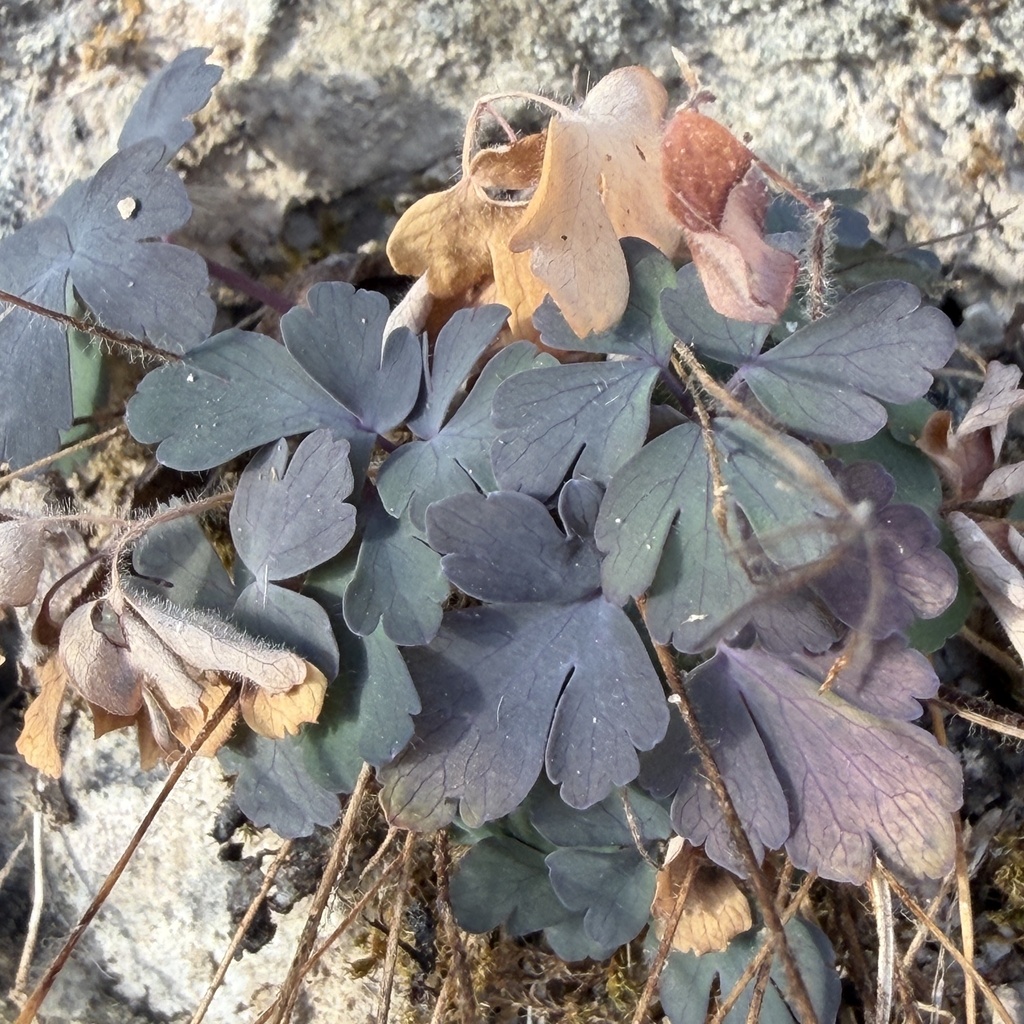
- Delicate, fern like blue green foliage
- Nodding or upright bell shaped blooms
- Compound leaves with rounded leaflets
- Height
- 0.3 to 0.9m
- Spread
- 0.3 to 0.6m
- Leaves
- blue-green, green, deciduous
- Flowers
- blue, purple, red, yellow, white, pink, 3 to 8cm
Problems to watch for
- Columbine Leaf MinerCommon
- Powdery MildewCommon
- AphidsUncommon
- Leaf SpotUncommon
- Root RotUncommon
- Slugs and SnailsUncommon
By symptom
Check your columbine from a photo
Pocket Botanist looks at a photo of your plant and tells you what's wrong and what to try first.
Growing it
- Propagation
- seed, division
- When to plant
- spring, autumn
- Overwintering
- Cut back the dead foliage to the ground in late autumn after the first frost. A light layer of mulch can help protect the crown during extreme cold.
- In containers
- They grow well in containers provided the pot has excellent drainage and is at least 25 centimeters deep.
Seed Sowing
- 1. Collect seeds in late summer once pods dry.
- 2. Sow seeds in pots during autumn for cold stratification.
- 3. Keep pots in a sheltered outdoor area over winter.
- 4. Transplant seedlings in spring.
Plant them with other spring bloomers to ensure a succession of color in your shade garden.
Grows well with
- Bleeding Heart — They share similar light and moisture requirements in woodland settings.
- Coral Bells — The foliage textures contrast beautifully while both prefer partial shade.
Similar species
- Wild Columbine — This is a native North American species that is excellent for attracting hummingbirds.
Science
- Family
- Ranunculaceae
- Genus
- Aquilegia
- Order
- Ranunculales
- Class
- Magnoliopsida
- Native range
- Northern Hemisphere temperate regions
- Conservation
- Most species are common, but some rare local varieties should never be collected from the wild.
They thrive in dappled shade and well drained soils, often found on rocky slopes or woodland edges.
- Value to wildlife
- nectar source
- Pollinators
- bees, butterflies, hummingbirds
- Uses
- cottage gardens, pollinator borders, woodland gardens
Through the year
Ecological indicators
- Light
- 5/9
- Moisture
- 5/9
- Salinity
- 2/9
- Soil reaction
- 5/9
- Temperature
- 4/9
- Nutrients
- 4/9
Taxonomy resolved against GBIF.
Questions people ask
- Why is my columbine disappearing?
- They are naturally short lived and often die back after a few seasons, though they usually leave behind seedlings.
- Do I need to deadhead them?
- Deadheading prevents seed production and keeps the plant tidy, but leaving them allows for naturalizing.
Where the name comes from
The genus name Aquilegia is derived from the Latin word for eagle, while the common name Columbine comes from the Latin for dove due to the flower shape.
Good to know
- The name comes from the Latin word for eagle because the spurs resemble eagle talons.
- Columbines are short lived perennials that often self seed to maintain their presence in the garden.
- They are a classic favorite for old fashioned cottage gardens.
Also in
Keep your columbine growing
This page is a general guide. Save your plant in Pocket Botanist and you get care reminders timed for this plant, plus a care history that shows what worked.
This guide was generated with AI and checked against GBIF taxonomy. It is general information, not horticultural or veterinary advice. Read about how we build these guides.