 Pocket Botanist
Guide botanique
Ancolie.
Aquilegia
Prononciation ak-wi-LEE-jee-uh
Aussi appelée Ancolie, Ancolies, cornettes



Les ancolies sont de charmantes vivaces connues pour leurs fleurs uniques en forme d'éperon qui dansent au-dessus d'un feuillage délicat. Elles apportent une touche d'élégance sylvestre à n'importe quel massif de jardin. Ces plantes sont les préférées des jardiniers pour leur capacité à attirer les colibris et les papillons.
En un coup d'œil
- Niveau d'entretien
- Facile
- Type de plante
- Vivace herbacée
- Lumière
- Mi-ombre à plein soleil
- Lumière en intérieur
- Lumière vive indirecte
- Arrosage
- Tous les 3 à 7 jours
- Taille adulte
- 30 à 90 cm
- Croissance
- Moyenne
- Rusticité
- USDA 3 à 9
- Floraison
- Mi à fin du printemps
Entretien
Gardez le sol constamment humide mais jamais détrempé pour assurer les meilleures floraisons. Surveillez le flétrissement des feuilles comme signe de soif ou les mineuses qui laissent des traînées blanches sur le feuillage. La suppression des fleurs fanées encourage la plante à produire plus de fleurs tout au long de la saison.
- Arrosage
- Arrosez lorsque le premier centimètre de terre est sec au toucher.
- Engrais
- Appliquez un engrais liquide équilibré une fois par mois pendant la saison de croissance.
- Taille
- Retirez les tiges florales fanées pour favoriser une nouvelle croissance et garder la plante nette.
- Rempotage
- Rempotez au début du printemps si la plante est à l'étroit dans son pot.
- Sol
- Sol bien drainé et riche en humus
- pH du sol
- 6,0 à 7,5
- Température
- -30 à 30°C
- Humidité
- 40 à 60%
- Résistance à la sécheresse
- Moyenne
- Durée de vie
- Vivace de courte durée, généralement de 3 à 5 ans.
- Résistance aux chevreuils et lapins
- Moyenne
Signes qu'il faut rempoter
- Les racines sortent des trous de drainage.
- L'eau reste trop longtemps à la surface.
- La croissance de la plante ralentit considérablement.
Sécurité
- Humains
- Toutes les parties de la plante contiennent des glycosides cyanogènes qui peuvent causer des troubles digestifs importants si consommées.
- Animaux
- Cette plante est considérée comme toxique pour les chats et les chiens si ingérée.
- Enfants
- Tenez cette plante à l'écart des jeunes enfants car l'ingestion de toute partie peut provoquer des nausées et des vomissements.
- Allergènes de contact
- La manipulation du feuillage peut provoquer une légère irritation cutanée chez les personnes sensibles.
- Allergènes aéroportés
- Le pollen n'est généralement pas considéré comme un allergène aéroporté important.
- Comestibilité
- Les ancolies sont considérées comme toxiques si ingérées et ne doivent pas être consommées.
Comment l'identifier
- Pétales distinctifs en forme d'éperon
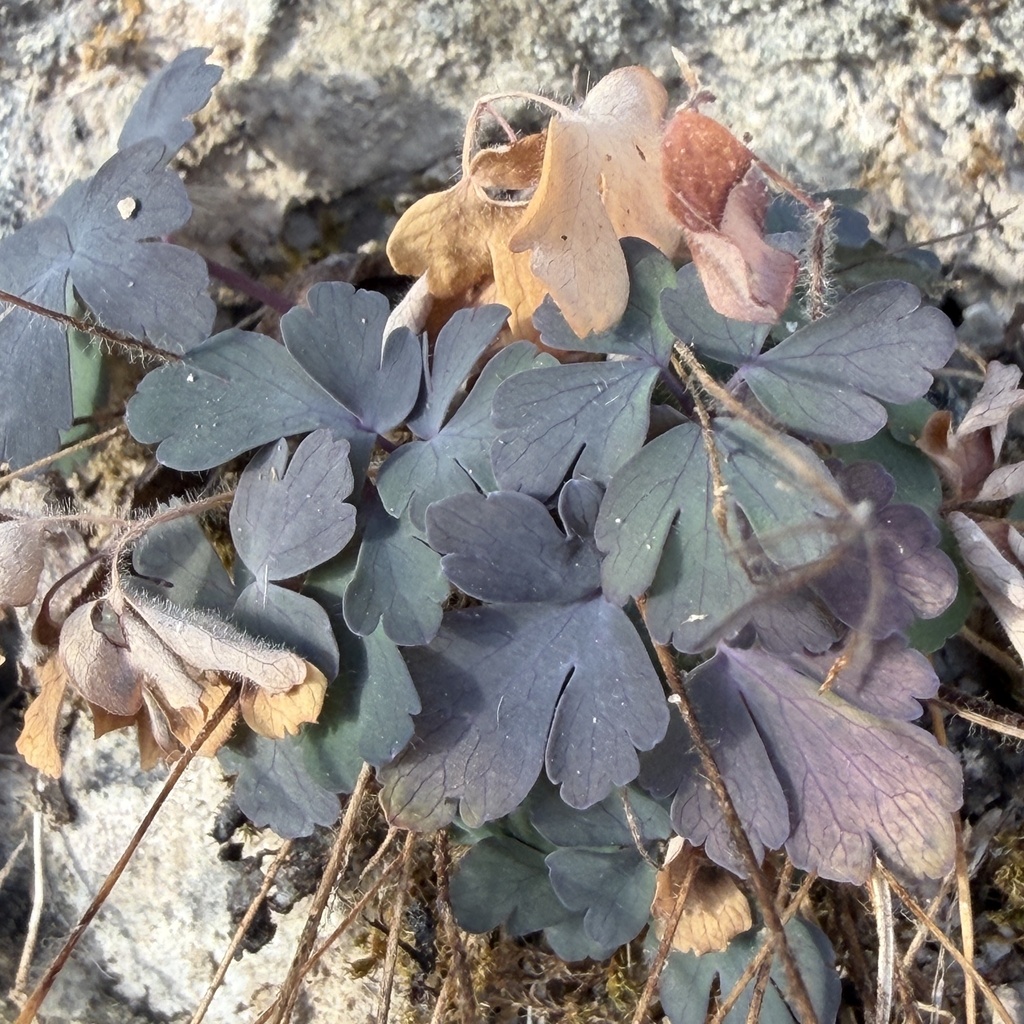
- Feuillage délicat bleu-vert semblable à des fougères
- Fleurs en forme de cloche inclinées ou dressées
- Feuilles composées à folioles arrondies
- Hauteur
- 0,3 à 0,9m
- Envergure
- 0,3 à 0,6m
- Feuilles
- vert-bleu, vert, deciduous
- Fleurs
- bleu, violet, rouge, jaune, blanc, rose, 3 à 8cm
Problèmes à surveiller
- Mineuse de l'ancolieCourant
- OïdiumCourant
- Limaces et escargotsPeu courant
- Pourriture des racinesPeu courant
- PuceronsPeu courant
- Taches foliairesPeu courant
- Mineuse de feuilles d'ancolie — De petites larves créent des tunnels blancs sinueux à l'intérieur des feuilles.
- Mildiou poudreux — Un revêtement fongique blanc apparaît sur le feuillage par temps humide.
Par symptôme
Vérifie la santé de ta plante en photo
Pocket Botanist analyse une photo de ta plante et te dit ce qui ne va pas et quoi essayer en premier.
La cultiver
- Multiplication
- semis, division
- Quand planter
- printemps, automne
- Hivernage
- Taillez le feuillage mort jusqu'au sol à la fin de l'automne après le premier gel. Une légère couche de paillis peut aider à protéger la couronne pendant le froid extrême.
- En pot
- Elles poussent bien en conteneurs à condition que le pot ait un excellent drainage et ait au moins 25 centimètres de profondeur.
Semis
- 1. Récoltez les graines à la fin de l'été une fois les cosses sèches.
- 2. Semez les graines en pots à l'automne pour une stratification à froid.
- 3. Gardez les pots dans un endroit abrité à l'extérieur pendant l'hiver.
- 4. Transplantez les semis au printemps.
Plantez-les avec d'autres floraisons printanières pour assurer une succession de couleurs dans votre jardin d'ombre.
Bonnes associations
- Lamprocapnos spectabilis — Ils partagent des exigences similaires en matière de lumière et d'humidité dans les milieux boisés.
- Heuchère — Les textures du feuillage contrastent magnifiquement tandis que les deux préfèrent la mi-ombre.
Espèces similaires
- Ancolie du Canada — C'est une espèce indigène d'Amérique du Nord qui est excellente pour attirer les colibris.
Science
- Famille
- Ranunculaceae
- Genre
- Aquilegia
- Ordre
- Ranunculales
- Classe
- Magnoliopsida
- Région d'origine
- Régions tempérées de l'hémisphère Nord
- Préservation
- La plupart des espèces sont communes, mais certaines variétés locales rares ne devraient jamais être collectées dans la nature.
Elles prospèrent à mi-ombre et dans des sols bien drainés, on les trouve souvent sur les pentes rocheuses ou en bordure de bois.
- Intérêt pour la faune
- source de nectar
- Pollinisateurs
- abeilles, papillons, colibris
- Utilisations
- jardins de campagne, bordures pour pollinisateurs, jardins de sous-bois
Au fil des saisons
Repères écologiques
- Lumière
- 5/9
- Humidité
- 5/9
- Salinité
- 2/9
- Réaction du sol
- 5/9
- Température
- 4/9
- Nutriments
- 4/9
Taxonomie vérifiée avec le GBIF.
Ce qu'on demande souvent
- Pourquoi mon ancolie disparaît-elle ?
- Elles sont naturellement de courte durée et meurent souvent après quelques saisons, bien qu'elles laissent généralement des semis.
- Dois-je les ébourgeonner ?
- L'ébourgeonnage empêche la production de graines et maintient la plante nette, mais les laisser permet la naturalisation.
D'où vient le nom
Le nom du genre Aquilegia vient du mot latin pour aigle, tandis que le nom commun Columbine vient du latin pour colombe en raison de la forme de la fleur.
Bon à savoir
- Le nom vient du mot latin pour aigle car les éperons ressemblent à des serres d'aigle.
- Les ancolies sont des vivaces de courte durée qui se ressèment souvent pour maintenir leur présence dans le jardin.
- Elles sont un favori classique des jardins de campagne à l'ancienne.
Aussi dans
Garde ta plante en pleine forme
Cette page est un guide général. Enregistre ta plante dans Pocket Botanist et tu reçois des rappels d'entretien adaptés à cette plante, ainsi qu'un historique d'entretien qui montre ce qui a marché.
Ce guide a été généré par IA et vérifié avec la taxonomie du GBIF. Il s'agit d'informations générales, et non de conseils horticoles ou vétérinaires. Découvre comment nous concevons ces guides.