 Pocket Botanist
Plant guide
Abal Palm.
Acoelorraphe wrightii
Pronounced ah-koh-loh-RAY-fee RITE-ee-eye
Also known as Everglades palm, Madiera palm, Paurotis Palm, Silver saw palmetto


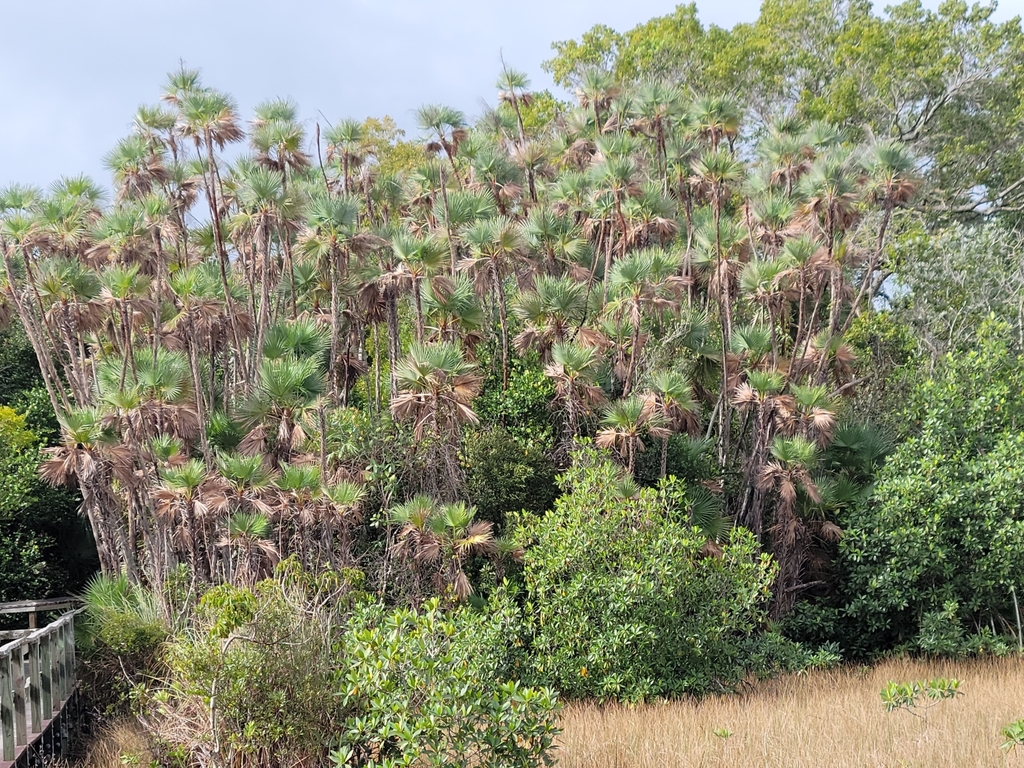
The Paurotis palm is a beautiful clumping fan palm that brings a tropical feel to any landscape. It features slender, multi-stemmed trunks topped with vibrant, star-shaped fronds. This palm is quite hardy and thrives in wet, swampy conditions where other palms might struggle.
At a glance
- Care level
- Easy
- Plant type
- Palm
- Light
- Full sun to partial shade
- Indoor light
- bright-indirect
- Water
- Every 2 to 5 days
- Mature size
- 6 to 10 meters
- Growth rate
- slow
- Hardiness
- USDA 9 to 11
- Bloom time
- Late spring to early summer
Care
Keep the soil consistently moist as this palm loves water and does not like to dry out. Watch for yellowing fronds which often indicate a need for more magnesium or potassium. Ensure it has plenty of space to spread as it naturally forms a wide clump.
- Watering
- Keep the soil evenly moist at all times.
- Feeding
- Use a palm-specific fertilizer during the growing season.
- Pruning
- Remove dead or damaged fronds to keep the plant tidy.
- Repotting
- Repot only when the root system has clearly outgrown the container.
- Soil
- Moist, well-draining, acidic to neutral soil
- Soil pH
- 6.0 to 7.5
- Temperature
- -4 to 38°C
- Humidity
- 50 to 90%
- Drought tolerance
- low
- Lifespan
- Perennial, typically 30 to 50 years.
- Deer and rabbits
- high
Signs it needs repotting
- Roots growing out of the drainage holes.
- Water running straight through the pot without soaking in.
- Stunted growth despite regular fertilization.
Safety
- People
- This plant is considered non-toxic to humans.
- Pets
- This plant is considered non-toxic to cats and dogs.
- Children
- Keep children away from the sharp, serrated spines on the leaf stems to prevent accidental injury.
- Contact allergens
- The sharp spines located on the leaf petioles can cause painful scratches and skin irritation.
- Airborne allergens
- There are no significant respiratory allergens associated with this palm.
- Edibility
- The fruit is technically edible but generally considered unpalatable and not worth the effort.
How to identify it
- Clumping habit with multiple slender trunks
- Fan shaped leaves with silvery undersides
- Fibrous brown matting on stems
- Small orange to black fruit clusters
- Height
- 4 to 10m
- Spread
- 3 to 6m
- Leaves
- green, silver, evergreen
- Flowers
- white, yellow, 0.5 to 1cm
- Fruit
- orange, black, Autumn
Common problems
- Lethal Bronzing — A phytoplasma infection that causes the fronds to turn brown and die prematurely.
- Scale Insects — Small sap-sucking insects that cluster on the undersides of leaves and stems.
Growing it
- Propagation
- seed, division
- When to plant
- spring, summer
- Overwintering
- In colder regions, protect the crown from frost and ensure the soil does not freeze solid. Potted specimens should be moved to a sheltered, frost-free location.
- In containers
- It can grow in large containers, but it prefers being in the ground due to its clumping nature and large root system.
Seed propagation
- 1. Harvest ripe, dark-colored fruit from the palm.
- 2. Clean the pulp off the seeds thoroughly.
- 3. Plant seeds in a moist, well-draining potting mix.
- 4. Keep the soil warm and consistently damp until germination occurs.
Group this palm with other moisture-loving plants to create a lush, tropical wetland aesthetic in your landscape.
Grows well with
- Canna Lily — They both thrive in the same moist soil conditions and provide a nice contrast in leaf texture.
- Pickerelweed — This aquatic plant complements the palm in boggy garden areas.
Similar species
- Saw Palmetto — It shares a similar native range and preference for coastal environments.
Science
- Family
- Arecaceae
- Genus
- Acoelorraphe
- Order
- Arecales
- Class
- Liliopsida
- Native range
- Southern Florida, the Caribbean, and Central America.
- Conservation
- It is not currently listed as endangered, but wild populations are protected in some regions due to habitat loss.
It survives in the wild by tolerating saturated, nutrient-poor soils where many other plants struggle to grow.
- Value to wildlife
- nectar source, nesting habitat
- Pollinators
- bees, butterflies
- Uses
- ornamental specimen, privacy screen, wetland restoration
Through the year
Ecological indicators
- Salinity
- 3/9
- Soil reaction
- 6/9
- Light
- 7/9
- Temperature
- 8/9
- Moisture
- 8/9
- Nutrients
- 4/9
Taxonomy resolved against GBIF.
Questions people ask
- How tall does it get?
- It typically reaches 15 to 25 feet in height.
- Does it need a lot of water?
- It loves moisture and can handle standing water, so it is perfect for low-lying areas.
Where the name comes from
The genus name Acoelorraphe comes from Greek words meaning sheathless seam, referring to the fruit structure, while wrightii honors the collector Charles Wright.
Good to know
- It is commonly called the Everglades palm because it thrives in swampy, flooded environments.
- The scientific name honors Charles Wright, a famous botanist who collected extensively in Cuba.
- It can grow in both full sun and partial shade, making it quite versatile for landscaping.
- The clumping habit means it naturally forms a wide, circular cluster of stems over time.
Is your abal palm looking unwell?
This page is a general guide. Pocket Botanist diagnoses problems from a photo of your actual plant, works out watering for your light and conditions, and reminds you when care is due.
This guide was generated with AI and checked against GBIF taxonomy. It is general information, not horticultural or veterinary advice. Read about how we build these guides.