 Pocket Botanist
Plant guide
Canna Lily.
Canna indica
Pronounced KAN-uh IN-dih-kuh
Also known as African arrowroot, Canna plurituberosa, Cannon, Indian Canna, Indian Shot, Indian-shot, Queensland arrowroot


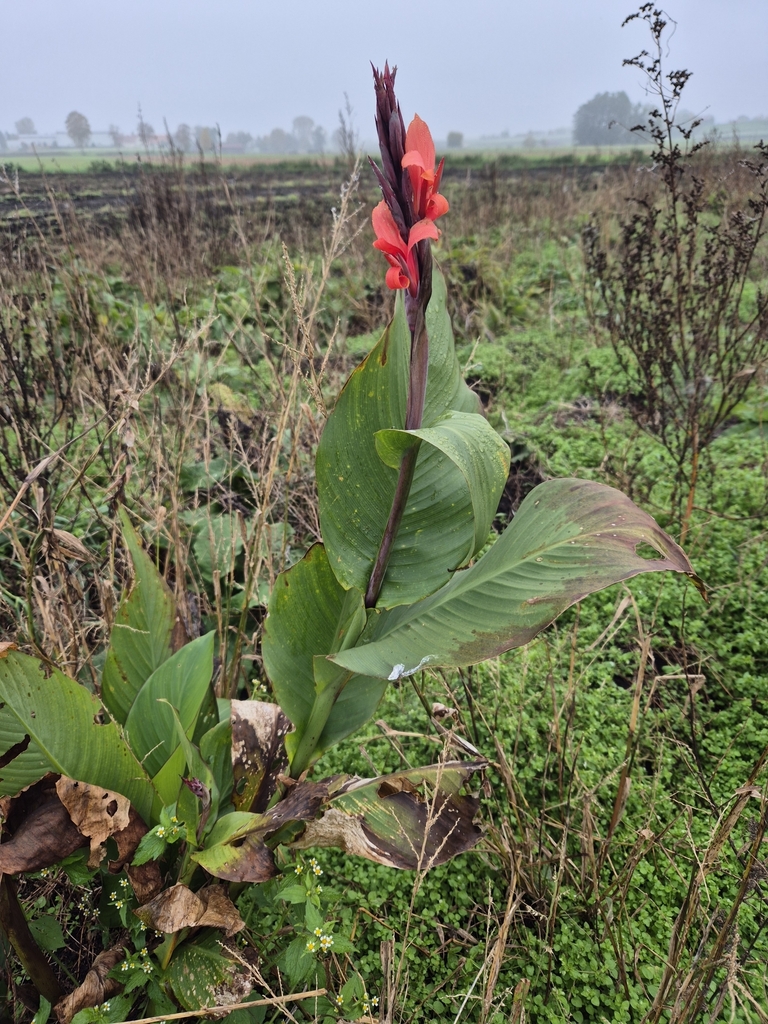
Canna lilies are bold tropical perennials that bring a dramatic, exotic flair to any garden. They feature large, paddle shaped leaves and vibrant, iris like flowers that bloom throughout the summer. These plants thrive in heat and moisture, making them perfect for sunny spots.

At a glance
- Care level
- Easy
- Plant type
- Herbaceous perennial
- Light
- Full sun
- Indoor light
- Direct sun
- Water
- Every 2 to 4 days
- Mature size
- 150 to 200 cm
- Growth rate
- Fast
- Hardiness
- USDA 7 to 11
- Bloom time
- Mid summer to late autumn
Care
Keep the soil consistently moist and provide plenty of direct sunlight for the best blooms. Watch for yellowing leaves which may indicate overwatering or poor drainage. In colder climates, dig up the rhizomes before the first frost to store them indoors for winter.
- Watering
- Keep the soil evenly moist but not waterlogged.
- Feeding
- Apply a balanced liquid fertilizer monthly during the growing season.
- Pruning
- Deadhead spent flowers to encourage continuous blooming throughout the season.
- Repotting
- Repot when the rhizomes become crowded in the container.
- Soil
- Rich, loamy, well-draining soil
- Soil pH
- 6.0 to 7.0
- Temperature
- 10 to 35°C
- Humidity
- 60 to 90%
- Drought tolerance
- Low
- Lifespan
- Perennial, typically 5 to 10 years
- Deer and rabbits
- Moderate
Signs it needs repotting
- Roots growing out of the drainage holes
- Stunted growth during the active season
- Rhizomes pushing the plant out of the pot
Safety
- People
- This plant is generally considered non toxic to humans.
- Pets
- This plant is generally considered non-toxic to cats and dogs.
- Children
- The hard, pea sized seeds can be a choking hazard for small children.
- Edibility
- The starchy rhizomes are technically edible but often fibrous and require extensive cooking.
How to identify it
- Large, paddle shaped foliage
- Bright, iris like flowers
- Tall, unbranched stems
- Rhizomatous root system
- Height
- 0.9 to 1.8m
- Spread
- 0.45 to 0.9m
- Leaves
- green, bronze, deciduous
- Flowers
- red, orange, yellow, 5 to 10cm
- Fruit
- black, Late autumn
Problems to watch for
- Canna Leaf RollerCommon
- Canna RustCommon
- AphidsUncommon
- ChlorosisUncommon
- Slugs and SnailsUncommon
- Tuber RotUncommon
By symptom
Check your canna lily from a photo
Pocket Botanist looks at a photo of your plant and tells you what's wrong and what to try first.
Growing it
- Propagation
- division, seed
- When to plant
- spring
- Overwintering
- Cut back the foliage after the first frost. In cold climates, dig up the rhizomes, let them dry slightly, and store them in peat moss in a frost free area.
- In containers
- They grow very well in large containers, provided you use a pot at least 40 cm wide to accommodate the rhizomes.
Division
- Dig up the clump in early spring.
- Use a sharp, clean knife to cut the rhizomes into sections.
- Ensure each section has at least one healthy growth bud.
- Replant the sections about 10 cm deep.
Pair these with other moisture loving tropicals to create a lush, high impact display.
Grows well with
- Coleus — They share similar moisture needs and provide a nice foliage contrast.
- Elephant Ear — Both plants thrive in the same tropical, water loving conditions.
Similar species
- Canna glauca — A related species that is even more tolerant of standing water.
Science
- Family
- Cannaceae
- Genus
- Canna
- Order
- Zingiberales
- Class
- Liliopsida
- Native range
- Tropical Americas
- Conservation
- This species is widely naturalized and not of conservation concern.
It thrives in damp, sunny habitats where it can spread via its vigorous rhizome system.
- Value to wildlife
- nectar source
- Pollinators
- hummingbirds, bees, butterflies
- Uses
- ornamental border, tropical container plant, pond edge planting
Through the year
Ecological indicators
- Salinity
- 2/9
- Soil reaction
- 6/9
- Temperature
- 8/9
- Light
- 8/9
- Moisture
- 7/9
- Nutrients
- 7/9
Taxonomy resolved against GBIF.
Questions people ask
- Do I need to dig up my cannas in winter?
- In zones colder than 7, you should lift the rhizomes and store them in a cool, dry place.
- How often should I water them?
- Cannas love moisture and should be kept consistently damp throughout the growing season.
Where the name comes from
The name Canna comes from the Greek word for a reed, while indica refers to its historical association with the East Indies.
Good to know
- The seeds are so hard they have been used as beads in jewelry and rattles.
- It is often called Indian shot because the seeds resemble lead shot from a firearm.
- These plants are excellent at cleaning water in wetland environments.
Keep your canna lily growing
This page is a general guide. Save your plant in Pocket Botanist and you get care reminders timed for this plant, plus a care history that shows what worked.
This guide was generated with AI and checked against GBIF taxonomy. It is general information, not horticultural or veterinary advice. Read about how we build these guides.