 Pocket Botanist
Guide botanique
Melon.
Cucumis melo
Prononciation KYOO-kuh-miss MEE-loh
Aussi appelée Cantaloupe, Hami melon, Melon, Melons, Oriental melon, Rock melon, honeydew


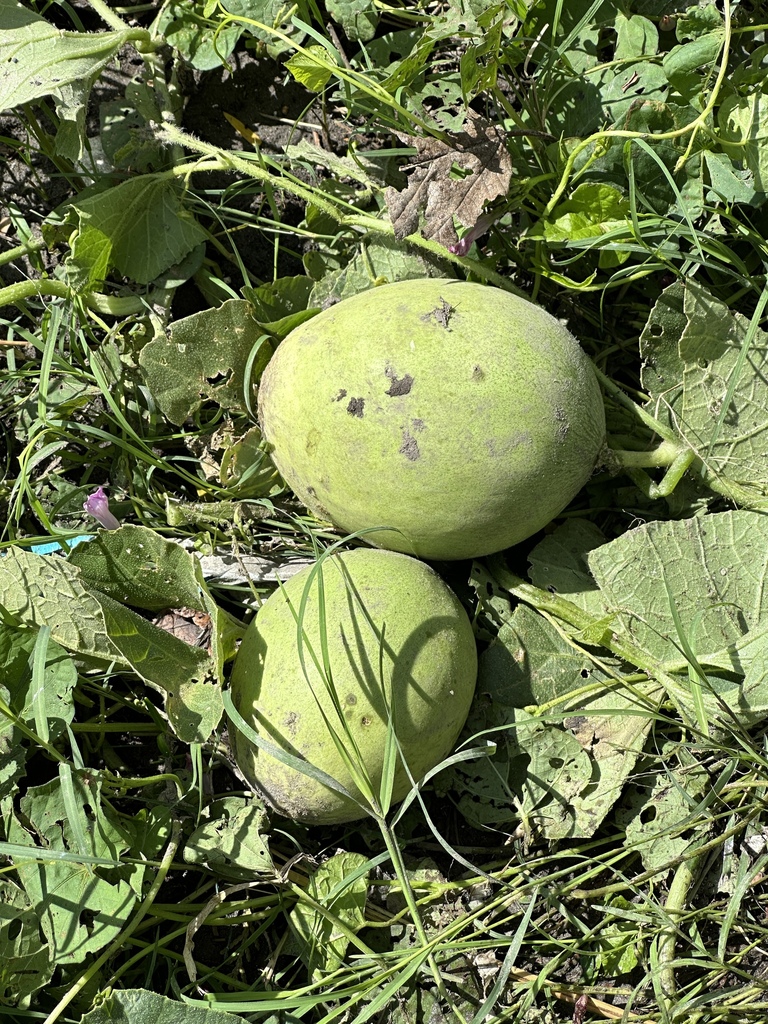
Melons are vining plants that thrive in warm, sunny gardens during the summer months. They produce sweet, juicy fruits that are a favorite for home gardeners. You will need plenty of space for these sprawling vines to grow.

En un coup d'œil
- Niveau d'entretien
- Moyenne
- Type de plante
- Annual vegetable
- Lumière
- Full sun
- Lumière en intérieur
- Soleil direct
- Arrosage
- Tous les 2 à 4 jours
- Taille adulte
- 6 to 10 feet long
- Croissance
- Rapide
- Rusticité
- USDA 9 à 11
- Floraison
- Mid to late summer
Entretien
Provide consistent moisture and plenty of heat to encourage fruit development. Watch for powdery mildew on the leaves and harvest when the fruit stem slips easily from the vine. Ensure the soil is rich and well drained for the best results.
- Arrosage
- Keep the soil consistently moist but not waterlogged, especially while the fruit is developing.
- Engrais
- Apply a balanced fertilizer once the vines begin to run and flowers appear.
- Taille
- Pinch back the tips of the vines to encourage branching and fruit production.
- Rempotage
- Melons are annuals and are typically grown directly in the garden soil.
- Sol
- Rich, well draining sandy loam
- pH du sol
- 6.0 to 6.8
- Température
- 15 à 35°C
- Humidité
- 40 à 70%
- Résistance à la sécheresse
- Faible
- Durée de vie
- Annual, typically 1 season
- Parfum
- Fort
- Résistance aux chevreuils et lapins
- Faible
Signes qu'il faut rempoter
- Roots circling the bottom of the container
- Stunted growth despite regular feeding
Sécurité
- Humains
- The plant is generally non-toxic, though the seeds and rind are not typically consumed.
- Enfants
- The large seeds pose a minor choking hazard to small children if ingested raw.
- Allergènes de contact
- Handling the fuzzy stems and leaves may cause mild skin irritation in sensitive individuals.
- Allergènes aéroportés
- Pollen from the flowers can trigger seasonal allergies in susceptible people.
- Comestibilité
- Ensure fruit is fully ripe before consumption to avoid potential digestive upset from immature flesh.
Comment l'identifier
- Large, lobed, fuzzy green leaves
- Yellow, funnel shaped flowers
- Vining growth habit
- Large, fleshy, edible fruits
- Hauteur
- 0,15 à 0,3m
- Envergure
- 1,5 à 3m
- Feuilles
- green, deciduous
- Fleurs
- yellow, 2 à 4cm
- Fruits
- tan, green, yellow, Late summer to early autumn
Problèmes courants
- Powdery Mildew — A fungal infection that appears as white dusty spots on leaves.
- Cucumber Beetle — Small striped or spotted beetles that feed on foliage and spread bacterial wilt.
La cultiver
- Multiplication
- seed
- Quand planter
- spring
- Hivernage
- This plant is an annual and will die with the first frost, so it does not require overwintering.
- En pot
- They can grow in large containers of at least 20 liters, provided they have a sturdy trellis for support.
Seed Sowing
- 1. Start seeds indoors 3 to 4 weeks before the last frost date.
- 2. Use biodegradable pots to minimize root disturbance during transplanting.
- 3. Plant seeds 2 centimeters deep in warm, moist soil.
- 4. Move seedlings outdoors only after all danger of frost has passed.
- 5. Space plants at least 1 meter apart to ensure good airflow.
Planting aromatic herbs like dill or oregano nearby can help mask the scent of the vines from hungry beetles.
Bonnes associations
À éloigner de
- Potato — Potatoes compete for nutrients and can harbor similar soil pathogens.
Espèces similaires
- Watermelon — Another popular vining fruit in the same family that requires similar growing conditions.
- concombre — A close relative that shares similar growth habits and pest vulnerabilities.
Science
- Famille
- Cucurbitaceae
- Genre
- Cucumis
- Ordre
- Cucurbitales
- Classe
- Magnoliopsida
- Région d'origine
- Africa and Southwest Asia
- Préservation
- Not of conservation concern as it is a widely cultivated agricultural crop.
It thrives in warm, sunny environments with well drained soil and relies on insect pollinators to set fruit.
- Intérêt pour la faune
- nectar source
- Pollinisateurs
- abeilles, papillons
- Utilisations
- culinary fruit, summer garden crop
Au fil des saisons
Repères écologiques
- Salinité
- 2/9
- Réaction du sol
- 6/9
- Lumière
- 8/9
- Température
- 8/9
- Humidité
- 6/9
- Nutriments
- 7/9
Taxonomie vérifiée avec le GBIF.
Ce qu'on demande souvent
- How do I know when a melon is ripe?
- The stem will usually slip away from the fruit with gentle pressure when it is ready.
- Do they need a lot of water?
- They need consistent moisture while growing, but you should reduce watering as the fruit ripens to improve flavor.
D'où vient le nom
The genus name Cucumis is the classical Latin term for cucumber, while melo is derived from the Greek word for apple or melon.
Bon à savoir
- Melons were first cultivated in ancient Egypt and Iran.
- They require plenty of sun and heat to develop their signature sweetness.
- The fruit is technically a pepo, a type of berry with a hard rind.
Ta plante a mauvaise mine ?
Cette page est un guide général. Pocket Botanist diagnostique les problèmes directement à partir d'une photo de ta plante, adapte l'arrosage à sa luminosité et te prévient quand il faut t'en occuper.
Ce guide a été généré par IA et vérifié avec la taxonomie du GBIF. Il s'agit d'informations générales, et non de conseils horticoles ou vétérinaires. Découvre comment nous concevons ces guides.