 Pocket Botanist
Guía de plantas
Pepino.
Cucumis sativus L.
Pronunciación KYOO-kuh-miss sah-TEE-vus
También se conoce como Pepino, Pepino común


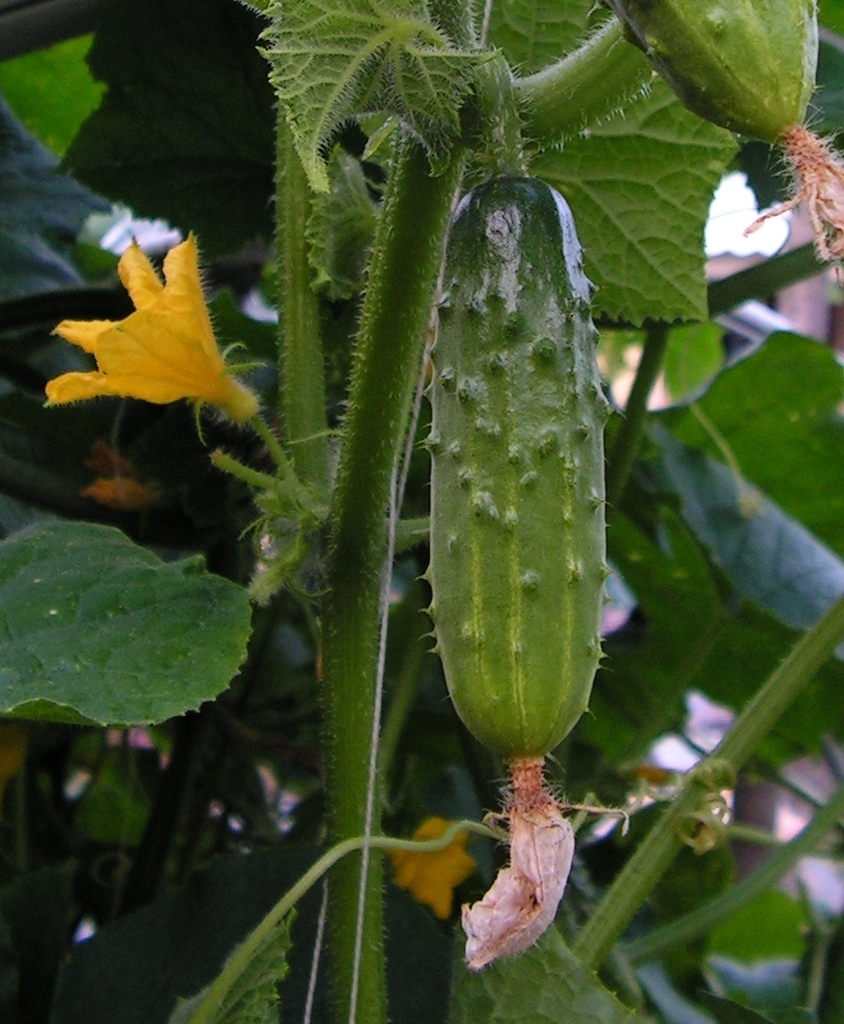
Los pepinos son plantas trepadoras populares de rápido crecimiento que aman el calor del verano. Producen frutos crujientes y refrescantes que son perfectos para ensaladas o encurtidos. Necesitarás una espaldera o mucho espacio para que se extiendan por tu jardín.

De un vistazo
- Nivel de cuidados
- Fácil
- Tipo de planta
- Hortaliza anual
- Luz
- Sol pleno
- Luz en interior
- Sol directo
- Riego
- Cada 1 a 3 días
- Tamaño adulto
- 6 a 8 pies
- Ritmo de crecimiento
- Rápido
- Rusticidad
- USDA 4 a 11
- Floración
- Principios a finales de verano
Cuidados
Proporciona una espaldera resistente para mantener las enredaderas fuera del suelo y mejorar la circulación del aire. Vigila el oídio en las hojas, que parece polvo blanco, y cosecha las frutas regularmente para fomentar una mayor producción. La humedad constante es clave para prevenir pepinos de sabor amargo.
- Riego
- Mantén la tierra constantemente húmeda pero nunca encharcada.
- Abonado
- Aplica un fertilizante líquido equilibrado cada dos semanas una vez que la planta comience a florecer.
- Poda
- Recorta los brotes laterales excesivos para enfocar la energía de la planta en la producción de frutos.
- Trasplante
- Los pepinos son anuales y generalmente no se trasplantan.
- Suelo
- Tierra orgánica rica y bien drenada
- pH del suelo
- 6.0 a 6.8
- Temperatura
- 15 a 35°C
- Humedad
- 50 a 80%
- Tolerancia a la sequía
- Baja
- Longevidad
- Anual, típicamente de 4 a 6 meses
- Resistencia a ciervos y conejos
- Baja
Señales de que necesita trasplante
- Las raíces crecen fuera de los orificios de drenaje.
- El agua pasa directamente a través de la tierra sin remojarla.
Seguridad
- Personas
- La planta no es tóxica para los humanos.
- Niños
- Los tallos gruesos y ásperos pueden arañar la piel delicada si los niños los manipulan sin supervisión.
- Alérgenos por contacto
- Algunas personas pueden experimentar irritación leve de la piel por los pelos ásperos en los tallos y las hojas.
- Alérgenos en el aire
- No hay un riesgo significativo de alergia respiratoria por esta planta.
- Comestibilidad
- Siempre lave los pepinos comprados en la tienda, ya que pueden estar recubiertos de cera de grado alimenticio o pesticidas.
Cómo identificarla
- Hojas grandes, peludas y en forma de corazón
- Flores amarillas en forma de campana
- Frutos alargados, verdes, con bultos o lisos
- Tallos vigorosos y trepadores
- Altura
- 0,2 a 3m
- Anchura
- 0,6 a 1,5m
- Hojas
- verde, deciduo
- Flores
- amarillo, 2 a 5cm
- Frutos
- verde, amarillo, Verano a principios de otoño
Problemas a vigilar
- Escarabajo rayado del pepinoComún
- MildiuComún
- OídioComún
- PulgonesComún
- Araña rojaPoco común
- Babosas y caracolesPoco común
- Barrenador de la calabazaPoco común
- Podredumbre apicalPoco común
- Escarabajo del pepino — Escarabajos pequeños rayados o moteados que se alimentan del follaje y transmiten el marchitamiento bacteriano.
Por síntoma
Revisa tu pepino con una foto
Pocket Botanist mira una foto de tu planta y te dice qué le pasa y qué probar primero.
Cómo cultivarla
- Propagación
- semilla
- Cuándo plantar
- Primavera, Principios de verano
- Cuidados en invierno
- Esta es una planta anual que morirá con la primera helada, así que retira y composta las enredaderas una vez que dejen de producir.
- En maceta
- Crecen bien en macetas si eliges una variedad de arbusto y proporcionas una espaldera resistente, usando al menos una maceta de 20 litros.
Siembra Directa
- 1. Espera hasta que la tierra esté caliente.
- 2. Planta las semillas a 2 centímetros de profundidad.
- 3. Separa las semillas 30 centímetros.
Plantar hierbas aromáticas cerca puede ayudar a enmascarar el olor de las enredaderas para los escarabajos hambrientos.
Buenas compañeras
- Capuchina Común — Actúan como un cultivo trampa para los pulgones.
- Rábano — Crecen rápidamente y ayudan a disuadir a los escarabajos del pepino.
- Eneldo — El eneldo atrae avispas depredadoras beneficiosas que se comen las plagas del pepino.
Mantenla lejos de
- Papa — Compiten por los nutrientes del suelo y pueden fomentar el tizón.
Especies parecidas
Ciencia
- Familia
- Cucurbitaceae
- Género
- Cucumis
- Orden
- Cucurbitales
- Clase
- Magnoliopsida
- Distribución natural
- Sur de Asia
- Conservación
- No es de preocupación para la conservación, ya que es un cultivo ampliamente cultivado.
Es una enredadera rastrera o trepadora que usa zarcillos para trepar sobre otra vegetación en su hábitat nativo.
- Valor para la fauna
- fuente de néctar
- Polinizadores
- abejas, mariposas
- Usos
- culinario, encurtidos, ensaladas
A lo largo del año
Indicadores ecológicos
- Salinidad
- 2/9
- Reacción del suelo
- 6/9
- Luz
- 8/9
- Humedad
- 7/9
- Temperatura
- 8/9
- Nutrientes
- 8/9
Taxonomía cotejada con GBIF.
Lo que más preguntan
- ¿Por qué mis pepinos están amargos?
- La amargura a menudo es causada por el estrés por calor o un riego inconsistente.
- ¿Necesito podar mis enredaderas?
- La poda no es estrictamente necesaria, pero puede mejorar el flujo de aire y el tamaño de la fruta.
De dónde viene el nombre
El nombre del género Cucumis es el nombre latino clásico para el pepino, mientras que el epíteto específico sativus significa cultivado.
Bueno saberlo
- Los pepinos tienen alrededor del 95 por ciento de agua.
- Pertenecen a la misma familia que las calabazas y los melones.
- El récord mundial del pepino más largo es de más de 100 centímetros.
- Los pepinos se originaron en la India hace más de 3.000 años.
Que tu pepino siga creciendo
Esta página es una guía general. Guarda tu planta en Pocket Botanist y tendrás recordatorios de cuidado pensados para esta planta, además de un historial de cuidados que muestra qué ha funcionado.
Esta guía se ha generado con IA y se ha cotejado con la taxonomía de GBIF. Es información general, no asesoramiento botánico ni veterinario. Descubre cómo elaboramos estas guías.