 Pocket Botanist
Plant guide
Calla Lily.
Zantedeschia aethiopica
Pronounced zan-te-DES-kee-uh ee-thee-OH-pih-kuh
Also known as Altar-Lily, Arum Lily, Arun Lily, Calla lily, Common Arum, Common Arum Lily, Egyption Lily, Florist's Calla



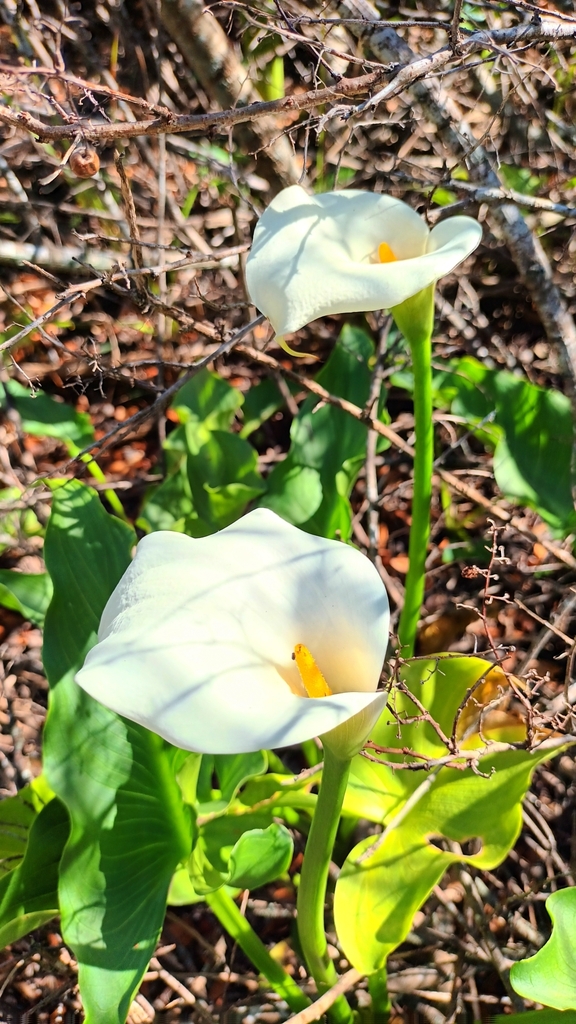
The Calla Lily is a stunning plant known for its elegant, trumpet shaped spathes. It thrives in moist environments and adds a touch of sophistication to any space. These plants are actually rhizomatous perennials that appreciate consistent moisture.
At a glance
- Care level
- Moderate
- Plant type
- Perennial
- Light
- Bright indirect light
- Indoor light
- Bright indirect
- Water
- Every 3 to 7 days
- Mature size
- 90 to 120 cm
- Growth rate
- Medium
- Hardiness
- USDA 7 to 10
- Bloom time
- Late spring to early summer
Care
Keep the soil consistently moist but never waterlogged to prevent rot. Watch for yellowing leaves which often signal overwatering or poor drainage. Ensure the plant receives plenty of bright light to encourage those beautiful blooms.
- Watering
- Keep the soil evenly moist at all times without letting it dry out completely.
- Feeding
- Apply a balanced liquid fertilizer during the active growing season.
- Pruning
- Remove spent flowers and yellowing foliage to keep the plant tidy.
- Repotting
- Repot in the spring if the rhizomes become too crowded in the container.
- Soil
- Rich, well draining potting mix
- Soil pH
- 6.0 to 6.5
- Temperature
- -5 to 35°C
- Humidity
- 60 to 90%
- Drought tolerance
- Low
- Lifespan
- Perennial, typically 5 to 10 years.
- Fragrance
- Light
- Deer and rabbits
- Moderate
Signs it needs repotting
- Roots growing out of the drainage holes.
- The plant has become crowded and stopped blooming well.
- Water runs straight through the pot without soaking in.
Safety
- People
- The plant is toxic to humans and pets if eaten, causing swelling of the mouth and throat.
- Pets
- This plant is toxic to cats and dogs if ingested as it contains calcium oxalate crystals.
- Children
- Keep this plant away from children as the leaves and stems contain irritating sap that can cause pain if handled or chewed.
- Contact allergens
- The sap can cause skin irritation or dermatitis in sensitive individuals.
- Airborne allergens
- The pollen is generally not considered a major airborne allergen.
- Edibility
- All parts of this plant contain calcium oxalate crystals which cause severe irritation if ingested.
How to identify it
- Large arrow shaped deep green leaves
- Showy white funnel shaped spathes
- Bright yellow central spadix
- Sturdy succulent like stems
- Height
- 0.6 to 1.2m
- Spread
- 0.3 to 0.6m
- Leaves
- green, deciduous
- Flowers
- white, 10 to 25cm
- Fruit
- green, yellow, Late summer
Problems to watch for
- AphidsCommon
- Brown Leaf EdgesCommon
- Root RotCommon
- Soft RotCommon
- Botrytis BlightUncommon
- Slugs and SnailsUncommon
- ThripsUncommon
By symptom
Check your calla lily from a photo
Pocket Botanist looks at a photo of your plant and tells you what's wrong and what to try first.
Growing it
- Propagation
- division, seed
- When to plant
- spring
- Overwintering
- In colder regions, dig up the rhizomes after the first frost, clean them, and store them in a cool, dry place until spring.
- In containers
- It grows very well in containers, provided you use a large pot that retains moisture well.
Rhizome Division
- Carefully dig up the plant during its dormant period.
- Gently separate the rhizome clumps with a clean, sharp knife.
- Ensure each section has at least one healthy growth point.
- Replant the divisions in moist, rich soil.
Group these with other moisture loving plants to create a cohesive bog garden aesthetic.
Grows well with
Similar species
- Golden Calla — It has similar growth habits but features yellow spathes.
Science
- Family
- Araceae
- Genus
- Zantedeschia
- Order
- Alismatales
- Class
- Liliopsida
- Native range
- Southern Africa
- Conservation
- This species is common and not of conservation concern.
It grows naturally in marshy areas and along stream banks where it has constant access to moisture.
- Value to wildlife
- nectar source
- Pollinators
- bees, butterflies
- Uses
- cut flowers, pond margins, container gardens
Through the year
Ecological indicators
- Salinity
- 2/9
- Moisture
- 8/9
- Nutrients
- 6/9
- Soil reaction
- 5/9
- Light
- 6/9
- Temperature
- 7/9
Taxonomy resolved against GBIF.
Questions people ask
- Does it need full sun?
- It prefers bright, indirect light or partial shade in hotter climates.
- Can I grow it in a pot?
- Yes, it makes a lovely container plant if kept consistently moist.
Where the name comes from
The genus honors Italian botanist Giovanni Zantedeschi, while the species name refers to its origin in Ethiopia, though it is actually native to southern Africa.
Good to know
- It is the national flower of Saint Helena.
- Despite the common name, it is not a true lily.
- It thrives in very wet soil and can even grow in shallow water.
Also in
Keep your calla lily growing
This page is a general guide. Save your plant in Pocket Botanist and you get care reminders timed for this plant, plus a care history that shows what worked.
This guide was generated with AI and checked against GBIF taxonomy. It is general information, not horticultural or veterinary advice. Read about how we build these guides.