 Pocket Botanist
Plant guide
Spineless Yucca.
Yucca elephantipes
Pronounced YUK-uh jy-GAN-tee-uh
Also known as Yucca elephantipes



Scan with your phone's camera to get the app
Or go to pocketbotanist.app/get on your phone

The Spineless Yucca is a fantastic, architectural plant that brings a touch of the desert indoors. It is loved for its soft, flexible leaves that lack the sharp tips found on other yucca species. It is a very forgiving plant that thrives on neglect.
At a glance
- Care level
- Easy
- Plant type
- Evergreen shrub
- Light
- Bright, indirect light is best, though it can handle some direct morning sun.
- Indoor light
- Bright indirect
- Water
- Every 14 to 21 days
- Mature size
- Up to 300 cm tall indoors
- Growth rate
- Slow
- Hardiness
- USDA 9 to 11
- Bloom time
- Late spring to early summer
Care
Keep your yucca in a spot with plenty of light and let the soil dry out significantly between waterings. Watch for yellowing leaves, which often signal that the plant is getting too much water. Wipe the leaves occasionally with a damp cloth to keep them free of dust.
- Watering
- Allow the top half of the soil to dry out completely before watering again.
- Feeding
- Feed with a balanced liquid fertilizer diluted to half strength during the growing season.
- Pruning
- Trim away any dead or damaged lower leaves to maintain the plant's tidy appearance.
- Repotting
- Repot only when the plant becomes top heavy or clearly root bound.
- Soil
- Well draining cactus or succulent mix
- Soil pH
- 6.0 to 7.5
- Temperature
- -7 to 38°C
- Humidity
- 20 to 50%
- Drought tolerance
- High
- Lifespan
- Long lived perennial, often decades.
- Fragrance
- Light
- Deer and rabbits
- High
Signs it needs repotting
- Roots growing out of the drainage holes.
- The plant becomes top heavy and unstable.
- Water runs straight through the soil without soaking in.
Safety
- People
- The plant contains saponins which can cause irritation if ingested or handled frequently.
- Pets
- This plant is toxic to cats and dogs if ingested.
- Children
- The leaves are fairly soft and lack the sharp spine tips of other yuccas, so the puncture risk is low. The plant does contain saponins, so keep it out of reach of small children who might chew the leaves, as this can cause stomach upset.
- Contact allergens
- The sharp, pointed leaf tips can cause mechanical skin punctures and minor irritation.
- Airborne allergens
- The pollen may cause mild reactions in sensitive individuals during the flowering season.
- Edibility
- While the flowers are edible when cooked, the leaves contain saponins that can cause digestive distress if consumed.
How to identify it
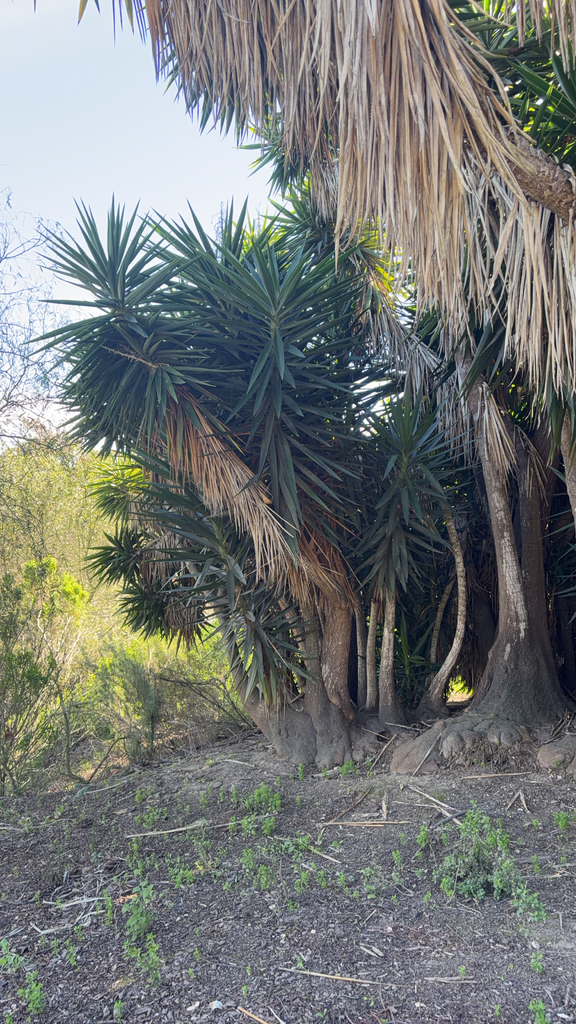
- Soft, flexible, sword shaped leaves
- Thick, woody, cane like stems
- Rosettes of deep green foliage
- Smooth leaf margins without spines
- Height
- 3 to 9m
- Spread
- 1.5 to 4.5m
- Leaves
- green, blue-green, evergreen
- Flowers
- white, cream, 3 to 6cm
- Fruit
- black, Late summer
Problems to watch for
- Root RotCommon
- Scale InsectsCommon
- Brown Leaf EdgesUncommon
- MealybugsUncommon
- Spider MitesUncommon
- Yucca Plant BugUncommon
Check your spineless yucca from a photo
Pocket Botanist looks at a photo of your plant and tells you what's wrong and what to try first.
Scan with your phone's camera to get the app
Or go to pocketbotanist.app/get on your phone
Growing it
- Propagation
- cuttings, division, seed
- When to plant
- spring, early autumn
- Overwintering
- Keep the plant dry during winter to prevent rot. If grown in a pot, move it to a sheltered area if temperatures drop below freezing.
- In containers
- It grows well in large, heavy containers that prevent tipping, requiring a pot at least 40 cm wide.
Stem Cuttings
- 1. Cut a healthy stem section.
- 2. Let the cut end callous for a few days.
- 3. Plant in well draining soil.
Pair this plant with other drought tolerant species to ensure consistent watering needs across the garden bed.
Grows well with
Similar species
- Spanish Dagger · It has a similar architectural form but is generally smaller.
- Joshua Tree · It shares the tree like growth habit but prefers a more arid climate.
Science
- Family
- Asparagaceae
- Genus
- Yucca
- Order
- Asparagales
- Class
- Liliopsida
- Native range
- Central America and southern Mexico.
- Conservation
- This species is not currently listed as endangered, though wild collection should be avoided to protect local populations.
It grows in dry, rocky, or sandy soils where its deep root system helps it survive extended droughts.
- Value to wildlife
- nectar source, larval host plant
- Pollinators
- moths
- Uses
- ornamental specimen, edible flowers, xeriscaping
Through the year
Ecological indicators
- Soil reaction
- 6/9
- Temperature
- 7/9
- Moisture
- 2/9
- Nutrients
- 3/9
- Salinity
- 4/9
- Light
- 8/9
Taxonomy resolved against GBIF.
Questions people ask
- Does it need full sun?
- Not necessarily. Outdoors it thrives in full sun to light shade, and indoors it does best in bright, indirect light with some direct morning sun.
- How often should I water it?
- Water sparingly, allowing the soil to dry out completely between waterings.
Where the name comes from
The name gigantea refers to its impressive size compared to other yucca species.
Good to know
- It is one of the largest species in the genus.
- The flowers are often used in traditional Central American cuisine.
- It can grow as a tree with a thick, woody trunk.
- It is highly drought tolerant once established.
Also in
Keep your spineless yucca growing
This page is a general guide. Save your plant in Pocket Botanist and you get care reminders timed for this plant, plus a care history that shows what worked.
Scan with your phone's camera to get the app
Or go to pocketbotanist.app/get on your phone
This guide was generated with AI on and checked against GBIF taxonomy. It is general information, not horticultural or veterinary advice. Read about how we build these guides.