 Pocket Botanist
Plant guide
Spanish dagger.
Yucca gloriosa
Pronounced YUK-uh glor-ee-OH-suh
Also known as Adam's Leedle, Adam's needle, Roman candle, Sea Islands yucca, Spanish Dagger, Spanish bayonet, Spanish-dagger, glorious yucca



Scan with your phone's camera to get the app
Or go to pocketbotanist.app/get on your phone
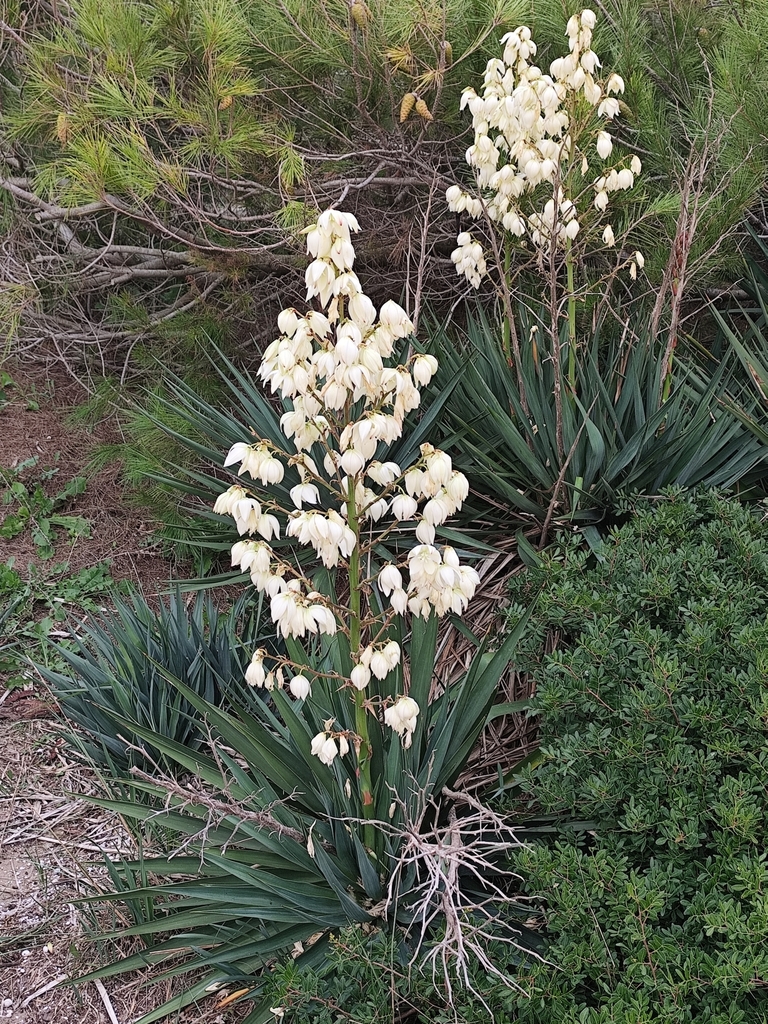
The Spanish dagger is a striking, architectural shrub that brings a bold look to any garden. It features stiff, sword shaped leaves that form a dense rosette. You will love how it produces tall, impressive spikes of creamy white flowers.

At a glance
- Care level
- Easy
- Plant type
- Evergreen shrub
- Light
- Full sun
- Indoor light
- Direct sun
- Water
- Every 14 to 21 days
- Mature size
- 8 feet tall
- Growth rate
- Slow
- Hardiness
- USDA 7 to 10
- Bloom time
- Late summer to early autumn
Care
Plant this beauty in well draining soil to prevent root rot. Keep an eye out for yellowing leaves, which often signal that the soil is staying too wet. It is quite drought tolerant once established, so you do not need to fuss over it much.
- Watering
- Allow the soil to dry out completely between waterings.
- Feeding
- Apply a balanced fertilizer during the active growing season.
- Pruning
- Remove spent flower stalks and dead leaves in late autumn.
- Repotting
- Repot only when the plant becomes root bound in its container.
- Soil
- Sandy, well draining soil
- Soil pH
- 6.0 to 7.5
- Temperature
- -15 to 35°C
- Humidity
- 20 to 50%
- Drought tolerance
- High
- Lifespan
- Perennial, typically 10 to 20 years.
- Fragrance
- Light
- Deer and rabbits
- High
Signs it needs repotting
- Roots growing out of the drainage holes
- Plant becoming top-heavy
- Stunted growth over several seasons
Safety
- People
- All parts of the plant contain saponins which are toxic if ingested and can cause skin irritation.
- Pets
- This plant is toxic to cats and dogs if ingested due to saponins.
- Children
- The extremely sharp, needle-like tips on the leaves pose a significant puncture risk to small children.
- Contact allergens
- The sharp, pointed leaf tips can cause puncture wounds and the sap may irritate sensitive skin.
- Airborne allergens
- The pollen can be a minor irritant for those with severe seasonal allergies.
- Edibility
- The plant is not considered edible and contains saponins that cause severe gastric distress.
How to identify it
- Stiff, sword shaped evergreen leaves
- Sharp, pointed leaf tips
- Dense, upright rosette growth habit
- Tall spikes of bell shaped flowers
- Height
- 1.5 to 2.5m
- Spread
- 1 to 1.8m
- Leaves
- blue-green, dark green, evergreen
- Flowers
- creamy white, greenish white, 5 to 8cm
- Fruit
- brown, Autumn
Problems to watch for
- Root rot · Occurs when the soil remains too wet for extended periods.
- Yucca moth · Usually beneficial but can cause minor damage to developing fruit.
Check your spanish dagger from a photo
Pocket Botanist looks at a photo of your plant and tells you what's wrong and what to try first.
Scan with your phone's camera to get the app
Or go to pocketbotanist.app/get on your phone
Growing it
- Propagation
- division, cuttings, seed
- When to plant
- spring, early autumn
- Overwintering
- Keep the soil dry during the winter months to prevent rot. If you live in a very cold area, you can wrap the crown with burlap to protect it from extreme frost.
- In containers
- It grows very well in pots, but ensure you use a heavy container to prevent it from tipping over as it grows.
Division
- 1. Carefully dig up the offsets or pups growing around the base of the main plant.
- 2. Use a sharp, clean knife to separate the pup from the parent.
- 3. Let the cut end dry for a few days to callous over.
- 4. Plant in a pot with well-draining cactus mix.
Group this plant with other drought-tolerant species to ensure you do not accidentally overwater it.
Grows well with
- Lavender · They share a love for dry, sunny conditions and well-drained soil.
- Sedum · These succulents provide a nice textural contrast while requiring similar care.
- Blue Fescue · The blue foliage of the grass complements the color of the yucca leaves.
Similar species
- Adam's Needle · It has similar foliage but is generally smaller and more cold hardy.
- Spanish Dagger · It grows into a taller, tree-like form with even sharper leaves.
Science
- Family
- Asparagaceae
- Genus
- Yucca
- Order
- Asparagales
- Class
- Liliopsida
- Native range
- Southeastern United States coastal regions.
- Conservation
- It is considered threatened in some parts of its native range due to habitat loss.
It thrives in sandy, well-drained soils and is adapted to survive in harsh, windy coastal environments.
- Value to wildlife
- nectar source
- Pollinators
- moths
- Uses
- architectural accent, coastal landscaping, xeriscaping
Through the year
Ecological indicators
- Salinity
- 7/9
- Soil reaction
- 6/9
- Light
- 8/9
- Temperature
- 7/9
- Moisture
- 2/9
- Nutrients
- 3/9
Taxonomy resolved against GBIF.
Questions people ask
- Does it need a lot of water?
- No, it is highly drought tolerant once established and prefers dry soil.
- Can I grow it in a pot?
- Yes, it does well in large containers with excellent drainage.
Where the name comes from
The name gloriosa refers to the glorious, large spikes of white flowers it produces. Yucca is a name derived from the Taino word for the cassava plant, though they are not related.
Good to know
- It is often called the mound lily because of its growth habit.
- The leaves are very stiff and end in a sharp spine.
- It is remarkably tolerant of salt spray, making it perfect for beach gardens.
- The flowers are edible if prepared correctly, but the rest of the plant is not.
Also in
Keep your spanish dagger growing
This page is a general guide. Save your plant in Pocket Botanist and you get care reminders timed for this plant, plus a care history that shows what worked.
Scan with your phone's camera to get the app
Or go to pocketbotanist.app/get on your phone
This guide was generated with AI on and checked against GBIF taxonomy. It is general information, not horticultural or veterinary advice. Read about how we build these guides.