 Pocket Botanist
Plant guide
Chinese Wisteria.
Wisteria
Pronounced wis-TEER-ee-uh sy-NEN-sis
Also known as Wisteria, wisterias



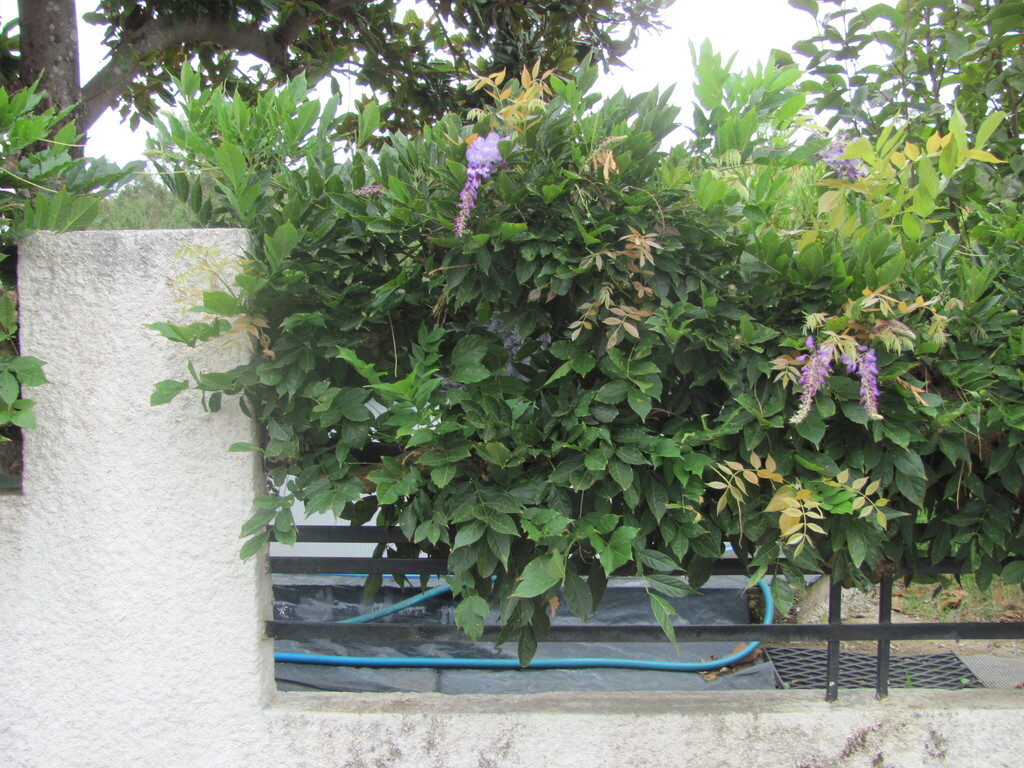
Wisteria is a stunning, woody vine known for its cascading clusters of fragrant, pea-like flowers. It is a vigorous climber that creates a dramatic focal point in any garden. You will need a very sturdy support structure to handle its heavy, mature weight.
At a glance
- Care level
- Moderate
- Plant type
- Deciduous woody vine
- Light
- Full sun to partial shade
- Indoor light
- Direct sun
- Water
- Every 5 to 10 days
- Mature size
- 20 to 30 feet
- Growth rate
- Fast
- Hardiness
- USDA 5 to 9
- Bloom time
- Mid to late spring
Care
Train your vine onto a strong trellis or arbor to manage its rapid growth. Prune back long, unruly shoots twice a year to encourage better flower production. Watch for yellowing leaves which can signal poor drainage or nutrient issues.
- Watering
- Keep the soil consistently moist but never waterlogged during the growing season.
- Feeding
- Apply a balanced fertilizer once in early spring before new growth begins.
- Pruning
- Prune back long stems in summer and again in winter to maintain shape and promote blooms.
- Repotting
- Only repot if the plant is grown in a container and has become severely root-bound.
- Soil
- Moist, fertile, well-draining soil
- Soil pH
- 6.0 to 7.0
- Temperature
- -20 to 35°C
- Humidity
- 40 to 70%
- Drought tolerance
- Moderate
- Lifespan
- Perennial, can live for many decades.
- Fragrance
- Strong
- Deer and rabbits
- Moderate
Signs it needs repotting
- Roots growing out of drainage holes.
- Water running straight through the pot.
- Stunted growth.
Safety
- People
- Ingesting any part of the plant can cause nausea, vomiting, and abdominal pain.
- Pets
- All parts of the wisteria plant are toxic to cats and dogs if ingested.
- Children
- The seed pods are attractive to children but are toxic if eaten, so keep them out of reach.
- Contact allergens
- The sap may cause mild skin irritation in sensitive individuals.
- Airborne allergens
- The pollen can trigger seasonal allergies in some people.
- Edibility
- All parts of the wisteria plant are considered toxic if ingested.
How to identify it
- Pinnately compound leaves with many leaflets
- Long, pendulous racemes of purple flowers
- Twining woody stems that grow clockwise
- Velvety, bean-like seed pods
- Height
- 3 to 9m
- Spread
- 3 to 6m
- Leaves
- green, deciduous
- Flowers
- purple, blue, white, pink, 1 to 2cm
- Fruit
- brown, Autumn
Problems to watch for
- Leaf SpotCommon
- Powdery MildewCommon
- Leaf ScorchUncommon
- Wisteria BorerUncommon
- Wisteria ScaleUncommon
- CankerRare
By symptom
Check your chinese wisteria from a photo
Pocket Botanist looks at a photo of your plant and tells you what's wrong and what to try first.
Growing it
- Propagation
- cuttings, layering, seed
- When to plant
- spring, autumn
- Overwintering
- Mulch the base to protect roots from extreme cold. Prune back long, unruly growth in late winter before new buds emerge.
- In containers
- It is generally too large for containers unless you use a very large tub and prune it heavily as a standard.
Softwood cuttings
- 1. Take 15cm cuttings in early summer.
- 2. Remove lower leaves.
- 3. Dip in rooting hormone.
- 4. Place in moist potting mix.
- 5. Keep in a humid spot until rooted.
Provide a very sturdy structure, as these vines become extremely heavy over time.
Grows well with
Similar species
- Trumpet Vine — Another vigorous woody climber with showy flowers.
Science
- Family
- Fabaceae
- Genus
- Wisteria
- Order
- Fabales
- Class
- Magnoliopsida
- Native range
- Eastern Asia and North America.
- Conservation
- Not of conservation concern.
It uses its twining stems to climb trees and structures to reach sunlight in forest edges.
- Value to wildlife
- nectar source
- Pollinators
- bees, butterflies
- Uses
- ornamental climber, pergola cover, wall accent
Through the year
Ecological indicators
- Salinity
- 2/9
- Soil reaction
- 6/9
- Temperature
- 6/9
- Moisture
- 5/9
- Nutrients
- 5/9
- Light
- 8/9
Taxonomy resolved against GBIF.
Questions people ask
- Why won't my wisteria bloom?
- It often needs more sunlight or may be too young to flower.
- How often should I prune it?
- Prune twice a year, once in summer and once in winter, to encourage blooms.
Where the name comes from
The genus was named in honor of Caspar Wistar, an American physician and anatomist.
Good to know
- Wisteria vines can live for over 100 years.
- Some wisteria species are capable of growing over 30 meters long.
- The vines twine in specific directions depending on the species.
Also in
Keep your chinese wisteria growing
This page is a general guide. Save your plant in Pocket Botanist and you get care reminders timed for this plant, plus a care history that shows what worked.
This guide was generated with AI and checked against GBIF taxonomy. It is general information, not horticultural or veterinary advice. Read about how we build these guides.