 Pocket Botanist
Guide botanique
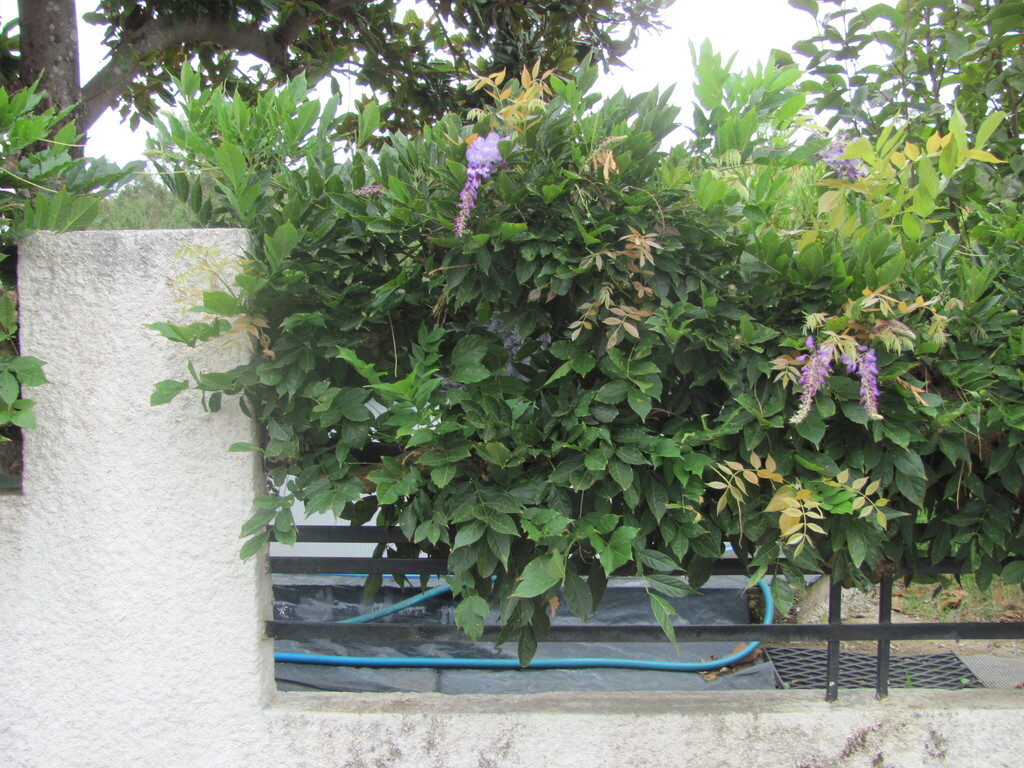
Chinese Wisteria.
Wisteria
Prononciation wis-TEER-ee-uh sy-NEN-sis
Aussi appelée Wisteria, wisterias



La glycine est une magnifique et vigoureuse liane ligneuse, réputée pour ses grappes de fleurs parfumées qui tombent en cascade. Elle offre un spectacle saisissant au printemps, recouvrant souvent pergolas ou murs avec aisance. Cette plante nécessite un support solide car elle devient assez lourde en mûrissant.
En un coup d'œil
- Niveau d'entretien
- Moyenne
- Type de plante
- Liane ligneuse caduque
- Lumière
- Plein soleil à mi-ombre
- Lumière en intérieur
- Soleil direct
- Arrosage
- Tous les 3 à 7 jours
- Taille adulte
- 9 à 12 mètres
- Croissance
- Rapide
- Rusticité
- USDA 5 à 9
- Floraison
- Mi à fin du printemps
Entretien
Prévoyez une treille ou une tonnelle très solide pour soutenir la croissance ligneuse et lourde. Taillez deux fois par an pour encourager la production de fleurs et éviter que la liane ne devienne envahissante. Surveillez le jaunissement des feuilles, qui peut indiquer un mauvais drainage ou des carences en nutriments.
- Arrosage
- Maintenez le sol constamment humide, mais pas détrempé, pendant la saison de croissance.
- Engrais
- Appliquez un engrais équilibré au début du printemps pour soutenir une croissance vigoureuse.
- Taille
- Taillez les longues pousses en été, puis à nouveau en hiver pour gérer la taille et favoriser la floraison.
- Rempotage
- Rempotez uniquement si nécessaire, car ces plantes préfèrent être un peu à l'étroit dans leurs pots.
- Sol
- Sol humide, fertile et bien drainé
- pH du sol
- Neutre à légèrement acide
- Température
- -20 à 35°C
- Humidité
- 40 à 70%
- Résistance à la sécheresse
- Moyenne
- Durée de vie
- Vivace, vivant souvent 50 à 100 ans et plus.
- Parfum
- Fort
- Résistance aux chevreuils et lapins
- Moyenne
Signes qu'il faut rempoter
- Les racines sortent des trous de drainage.
- L'eau traverse directement le pot sans s'imbiber.
- La plante cesse de pousser malgré une fertilisation régulière.
Sécurité
- Humains
- Les graines et les gousses contiennent de la wisterine et des lectines qui sont toxiques pour l'homme.
- Animaux
- Toutes les parties de la plante sont toxiques pour les chats et les chiens s'ils sont ingérés.
- Enfants
- Tenez les enfants éloignés des gousses de graines, car elles ressemblent à des pois comestibles mais sont très toxiques.
- Allergènes de contact
- La manipulation de la sève ou des tiges peut provoquer une légère irritation cutanée chez les personnes sensibles.
- Allergènes aéroportés
- Les fleurs parfumées peuvent déclencher des symptômes de rhume des foins ou d'asthme chez certaines personnes pendant la pleine floraison.
- Comestibilité
- Toutes les parties de la glycine sont considérées comme toxiques en cas d'ingestion et peuvent provoquer de graves troubles gastro-intestinaux.
Comment l'identifier
- Feuilles composées pennées avec de nombreux folioles
- Longs racèmes pendulaires de fleurs parfumées
- Tiges ligneuses volubiles qui s'enroulent dans le sens des aiguilles d'une montre
- Gousses veloutées, semblables à des haricots, contenant des graines
- Hauteur
- 3 à 9m
- Envergure
- 3 à 6m
- Feuilles
- vert, caduc
- Fleurs
- violet, bleu, blanc, 1 à 2cm
- Fruits
- brun, Automne
Problèmes à surveiller
- OïdiumCourant
- Taches foliairesCourant
- Brûlures du feuillagePeu courant
- Cochenille de la glycinePeu courant
- Cossus de la glycinePeu courant
- ChancreRare
Par symptôme
Vérifie la santé de ta plante en photo
Pocket Botanist analyse une photo de ta plante et te dit ce qui ne va pas et quoi essayer en premier.
La cultiver
- Multiplication
- bouturage, marcottage, semis
- Quand planter
- printemps, automne
- Hivernage
- Taille la croissance longue et souple à la fin de l'hiver pour garder la plante propre et encourager les floraisons printanières. Assurez-vous que la structure est suffisamment solide pour supporter le poids de la neige ou de la glace accumulée sur les vignes.
- En pot
- La glycine peut être cultivée dans de grands contenants, mais elle nécessite un pot très lourd pour éviter le basculement et une taille régulière des racines.
Boutures de bois tendre
- Prenez des boutures de 6 pouces au début de l'été.
- Retirez les feuilles inférieures et trempez la base dans de l'hormone de bouturage.
- Placez dans un mélange de terreau humide et bien drainant.
- Couvrez d'un sac en plastique pour maintenir l'humidité jusqu'à ce que les racines se forment.
Associez la glycine à des plantes qui apprécient l'ombre tachetée qu'elle offre une fois la canopée formée.
Bonnes associations
Espèces similaires
- Bignone — C'est une autre vigne ligneuse vigoureuse qui produit de grandes fleurs spectaculaires.
Science
- Famille
- Fabaceae
- Genre
- Wisteria
- Ordre
- Fabales
- Classe
- Magnoliopsida
- Région d'origine
- Est des États-Unis, Chine, Japon et Corée.
- Préservation
- Aucune des espèces de jardin communes n'est actuellement répertoriée comme menacée.
La glycine utilise ses tiges volubiles pour grimper sur les arbres et les structures afin d'atteindre la lumière du soleil en bordure de forêt.
- Intérêt pour la faune
- source de nectar
- Pollinisateurs
- abeilles, papillons
- Utilisations
- grimpante ornementale, couverture d'arbour, jardin pour pollinisateurs
Au fil des saisons
Repères écologiques
- Salinité
- 2/9
- Réaction du sol
- 6/9
- Température
- 6/9
- Humidité
- 5/9
- Nutriments
- 5/9
- Lumière
- 8/9
Taxonomie vérifiée avec le GBIF.
Ce qu'on demande souvent
- Pourquoi ma glycine ne fleurit-elle pas ?
- Elle a souvent besoin d'une taille sévère en été et en hiver pour encourager la formation de boutons floraux plutôt que simplement la croissance des feuilles.
- La glycine est-elle envahissante ?
- Certaines espèces non indigènes comme la glycine chinoise et japonaise peuvent être très envahissantes dans certaines régions, alors vérifiez votre réglementation locale.
D'où vient le nom
Le genre a été nommé en l'honneur de Caspar Wistar, un médecin et anatomiste américain.
Bon à savoir
- Les glycines peuvent vivre plus de 100 ans.
- Les fleurs pendent en longs racèmes pendantes qui peuvent atteindre jusqu'à 3 pieds de long.
- Certaines espèces sont capables de s'enrouler dans le sens des aiguilles d'une montre et dans le sens inverse des aiguilles d'une montre, selon la variété.
- La glycine fait partie de la famille des pois, les Fabacées.
Aussi dans
Garde ta plante en pleine forme
Cette page est un guide général. Enregistre ta plante dans Pocket Botanist et tu reçois des rappels d'entretien adaptés à cette plante, ainsi qu'un historique d'entretien qui montre ce qui a marché.
Ce guide a été généré par IA et vérifié avec la taxonomie du GBIF. Il s'agit d'informations générales, et non de conseils horticoles ou vétérinaires. Découvre comment nous concevons ces guides.