 Pocket Botanist
Plant guide
Blackhaw Viburnum.
Viburnum prunifolium
Pronounced vy-BUR-num proo-nih-FOH-lee-um
Also known as Black Haw, Black-haw viburnum, Blackhaw, Blackhaw Viburnum, VIBPRU


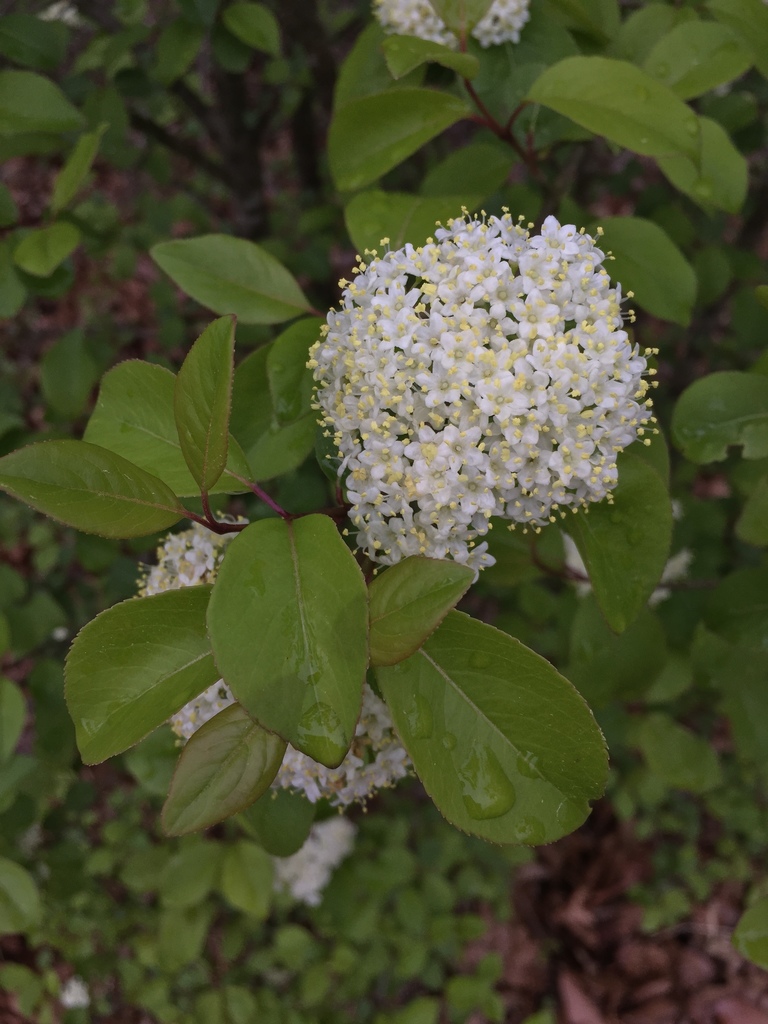
The Blackhaw Viburnum is a lovely native shrub that brings seasonal interest to any garden. It produces clusters of white flowers in spring followed by dark blue berries that birds really enjoy. You'll find its foliage turns a beautiful reddish purple in the fall.
At a glance
- Care level
- Easy
- Plant type
- Deciduous shrub
- Light
- Full sun to partial shade
- Indoor light
- Bright indirect
- Water
- Every 7 to 14 days
- Mature size
- 4 to 5 meters
- Growth rate
- Medium
- Hardiness
- USDA 3 to 9
- Bloom time
- Mid to late spring
Care
Plant this shrub in well-draining soil and ensure it gets enough sunlight to keep it happy. Watch for signs of stress like drooping leaves which might indicate it needs a bit more water during dry spells. Keep an eye out for common pests like aphids during the spring growth flush.
- Watering
- Water consistently until the plant is established, then it becomes quite drought tolerant.
- Feeding
- Apply a balanced slow-release fertilizer once in early spring before new growth starts.
- Pruning
- Prune immediately after flowering to shape the shrub and remove any dead or crossing branches.
- Repotting
- If grown in a container, move to a larger pot every few years to refresh the soil.
- Soil
- Well-draining, loamy, or clay soils
- Soil pH
- Acidic to neutral
- Temperature
- -30 to 35°C
- Humidity
- 40 to 70%
- Drought tolerance
- Moderate
- Lifespan
- Perennial, typically 30 to 50 years.
- Fragrance
- Light
- Deer and rabbits
- Moderate
Signs it needs repotting
- Roots growing out of the drainage holes.
- Water running straight through the pot without soaking in.
Safety
- People
- The plant is generally considered non-toxic, though eating large amounts of raw fruit is not recommended.
- Pets
- This plant is generally considered non-toxic to cats and dogs.
- Children
- The berries are not poisonous, but they may pose a minor choking hazard to very small children.
- Contact allergens
- No specific skin irritants are known.
- Airborne allergens
- The pollen may cause mild reactions in sensitive individuals during the spring.
- Edibility
- The berries are technically edible but can cause stomach upset if consumed in large quantities.
How to identify it
- Oval leaves with finely serrated edges
- Clusters of small white spring flowers
- Dark blue to black edible berries
- Stiff branches with dark gray bark
- Height
- 3 to 4.5m
- Spread
- 2.5 to 4m
- Leaves
- dark green, reddish purple, deciduous
- Flowers
- white, 0.5 to 1cm
- Fruit
- blue, black, Late summer to early autumn
Problems to watch for
- Powdery MildewCommon
- Viburnum Leaf BeetleCommon
- AphidsUncommon
- Leaf SpotUncommon
- CankerRare
- Root RotRare
By symptom
Check your blackhaw viburnum from a photo
Pocket Botanist looks at a photo of your plant and tells you what's wrong and what to try first.
Growing it
- Propagation
- seed, cuttings, division
- When to plant
- spring, autumn
- Overwintering
- No special care is needed as it is fully hardy. A layer of mulch can help retain soil moisture.
- In containers
- It can grow in large containers, but it is much happier when planted directly in the ground.
Softwood cuttings
- Take cuttings in early summer.
- Dip the ends in rooting hormone.
- Place in a moist, well-draining potting mix.
Plant in groups to encourage better fruit production through cross pollination.
Grows well with
- Serviceberry — They share similar soil and light requirements.
- Wild Ginger — It makes a lovely groundcover beneath the shrub.
Similar species
- Nannyberry — It has a similar growth habit and fruit.
Science
- Family
- Viburnaceae
- Genus
- Viburnum
- Order
- Dipsacales
- Class
- Magnoliopsida
- Native range
- Eastern and central North America.
- Conservation
- This species is secure and not of conservation concern.
It thrives in woodland edges and thickets where it can spread through suckering.
- Value to wildlife
- nectar source, bird food source, nesting habitat
- Pollinators
- bees, butterflies
- Uses
- ornamental shrub, hedging, wildlife garden, small tree
Through the year
Ecological indicators
- Soil reaction
- 6/9
- Temperature
- 5/9
- Moisture
- 5/9
- Nutrients
- 5/9
- Salinity
- 2/9
- Light
- 6/9
Taxonomy resolved against GBIF.
Questions people ask
- Is it easy to grow?
- Yes, it is a very low maintenance shrub once established.
- Does it need full sun?
- It prefers full sun but will tolerate partial shade.
Where the name comes from
The name prunifolium refers to the leaves, which resemble those of a plum tree.
Good to know
- The leaves turn a beautiful reddish purple in the autumn.
- It is commonly known as blackhaw because of its dark fruit.
- It is a very tough plant that tolerates a wide range of soil conditions.
- The fruit is a favorite snack for many songbirds.
Keep your blackhaw viburnum growing
This page is a general guide. Save your plant in Pocket Botanist and you get care reminders timed for this plant, plus a care history that shows what worked.
This guide was generated with AI and checked against GBIF taxonomy. It is general information, not horticultural or veterinary advice. Read about how we build these guides.