 Pocket Botanist
Guide botanique
Viorne d'Amérique.
Viburnum prunifolium
Prononciation vy-BUR-num proo-nih-FOH-lee-um
Aussi appelée Black Haw, Viorne noir, Viorne noir, Viorne d'Amérique, VIBPRU


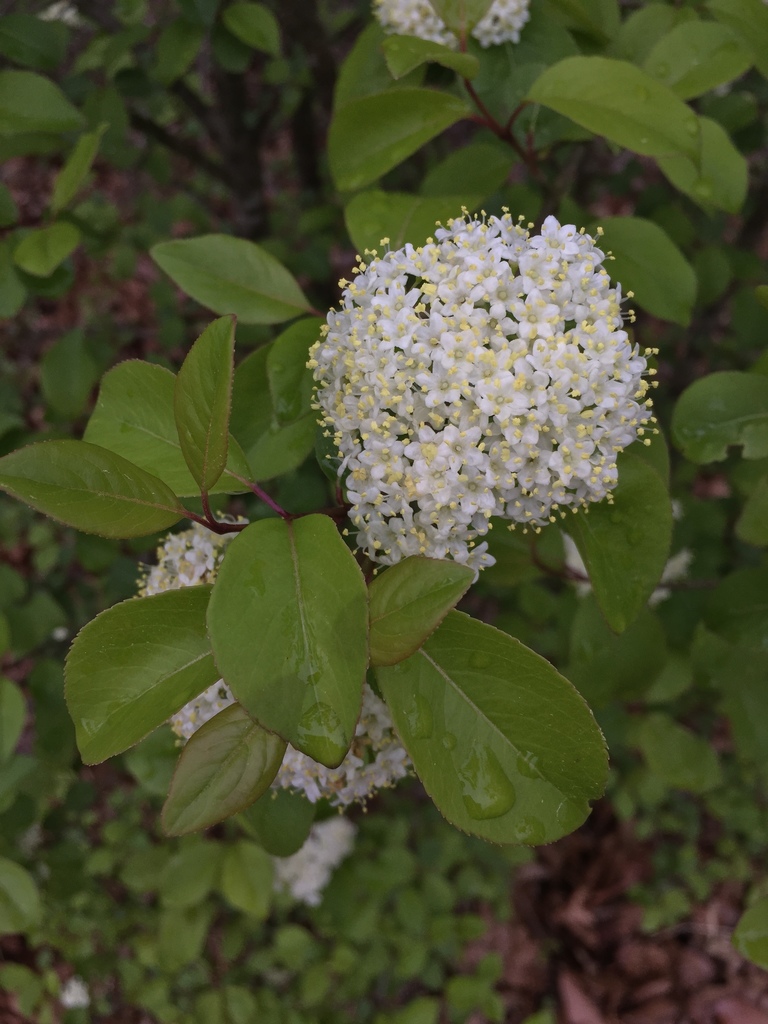
Le Viorne d'Amérique est un arbuste indigène charmant qui apporte un intérêt saisonnier à tout jardin. Il produit des grappes de fleurs blanches au printemps suivies de baies bleu foncé que les oiseaux apprécient beaucoup. Vous constaterez que son feuillage devient d'un beau violet rougeâtre à l'automne.
En un coup d'œil
- Niveau d'entretien
- Facile
- Type de plante
- Arbuste à feuilles caduques
- Lumière
- Plein soleil à mi-ombre
- Lumière en intérieur
- Lumière vive indirecte
- Arrosage
- Tous les 7 à 14 jours
- Taille adulte
- 4 à 5 mètres
- Croissance
- Moyenne
- Rusticité
- USDA 3 à 9
- Floraison
- Mi à fin du printemps
Entretien
Plantez cet arbuste dans un sol bien drainé et assurez-vous qu'il reçoive suffisamment de soleil pour qu'il soit heureux. Surveillez les signes de stress comme le flétrissement des feuilles, qui pourraient indiquer qu'il a besoin d'un peu plus d'eau pendant les périodes sèches. Gardez un œil sur les parasites courants comme les pucerons pendant la poussée de croissance printanière.
- Arrosage
- Arrosez régulièrement jusqu'à ce que la plante soit bien établie, puis elle devient assez tolérante à la sécheresse.
- Engrais
- Appliquez un engrais équilibré à libération lente une fois au début du printemps avant le démarrage de la nouvelle croissance.
- Taille
- Taillez immédiatement après la floraison pour donner forme à l'arbuste et enlever les branches mortes ou qui se croisent.
- Rempotage
- Si cultivé en pot, transplantez dans un pot plus grand tous les quelques années pour renouveler le sol.
- Sol
- Sols bien drainés, limoneux ou argileux
- pH du sol
- Acide à neutre
- Température
- -30 à 35°C
- Humidité
- 40 à 70%
- Résistance à la sécheresse
- Moyenne
- Durée de vie
- Vivace, généralement 30 à 50 ans.
- Parfum
- Léger
- Résistance aux chevreuils et lapins
- Moyenne
Signes qu'il faut rempoter
- Racines sortant des trous de drainage.
- L'eau traverse le pot sans l'imbiber.
Sécurité
- Humains
- La plante est généralement considérée comme non toxique pour l'homme, bien que les baies doivent être consommées avec prudence.
- Animaux
- Cette plante est généralement considérée comme non toxique pour les chats et les chiens.
- Enfants
- Les baies peuvent présenter un risque mineur d'étouffement pour les jeunes enfants si elles sont ingérées en grande quantité.
- Allergènes de contact
- Il n'y a pas d'irritants cutanés importants associés à cette plante.
- Allergènes aéroportés
- Le pollen peut provoquer des allergies saisonnières légères chez les personnes sensibles.
- Comestibilité
- Bien que les fruits soient techniquement comestibles, ils peuvent provoquer des maux d'estomac s'ils sont consommés en grande quantité ou lorsqu'ils ne sont pas mûrs.
Comment l'identifier
- Feuilles ovales aux bords finement dentelés
- Grappes de petites fleurs blanches printanières
- Baies comestibles bleu foncé à noires
- Rameaux rigides à écorce gris foncé
- Hauteur
- 3 à 4,5m
- Envergure
- 2,5 à 4m
- Feuilles
- vert, rouge, pourpre, caduc
- Fleurs
- blanc, 0,5 à 1cm
- Fruits
- bleu, noir, Fin de l'été à l'automne
Problèmes à surveiller
- Galéruque de la viorneCourant
- OïdiumCourant
- PuceronsPeu courant
- Taches foliairesPeu courant
- ChancreRare
- Pourriture des racinesRare
- Cribleuse des feuilles de Viburnum — De petits coléoptères qui peuvent causer une défoliation importante s'ils ne sont pas contrôlés.
- Mildiou poudreux — Un problème fongique qui crée un revêtement blanc poudreux sur les feuilles par temps humide.
Par symptôme
Vérifie la santé de ta plante en photo
Pocket Botanist analyse une photo de ta plante et te dit ce qui ne va pas et quoi essayer en premier.
La cultiver
- Multiplication
- bouturage, semis, division
- Quand planter
- printemps, automne
- Hivernage
- Il est entièrement rustique et ne nécessite aucune protection particulière pendant les mois d'hiver.
- En pot
- Il est généralement trop grand pour une culture de longue durée en conteneur, sauf s'il est conservé dans une très grande cuve.
Boutures de tiges semi-aoûtées
- Prenez des boutures au début de l'été.
- Trempez les extrémités dans de l'hormone d'enracinement.
- Placez dans un substrat humide et bien drainant.
Plantez-le avec d'autres arbustes indigènes de sous-bois pour créer un habitat en couches pour les oiseaux.
Bonnes associations
- Amelanchier arborea — Ils partagent des exigences similaires en matière de sol et de lumière dans les environnements boisés.
- Asarum canadense — Il constitue un joli couvre-sol sous l'arbuste.
Espèces similaires
- Viburnum lentago — Il a un port similaire mais une forme de feuille légèrement différente.
Science
- Famille
- Viburnaceae
- Genre
- Viburnum
- Ordre
- Dipsacales
- Classe
- Magnoliopsida
- Région d'origine
- Est et centre de l'Amérique du Nord.
- Préservation
- Il n'est actuellement pas concerné par la conservation et est largement réparti sur son aire de répartition indigène.
Il prospère en bordure de bois et dans les fourrés où il offre un abri et de la nourriture essentiels à la faune locale.
- Intérêt pour la faune
- source de nectar, fruits pour les oiseaux
- Pollinisateurs
- abeilles, papillons
- Utilisations
- arbuste d'ornement, haie pour la faune, jardin de sous-bois
Au fil des saisons
Repères écologiques
- Réaction du sol
- 6/9
- Température
- 5/9
- Humidité
- 5/9
- Nutriments
- 5/9
- Salinité
- 2/9
- Lumière
- 6/9
Taxonomie vérifiée avec le GBIF.
Ce qu'on demande souvent
- Quelle est sa taille adulte ?
- Il atteint généralement une hauteur et une largeur de 3 à 4,5 mètres.
- A-t-il besoin de plein soleil ?
- Il préfère le plein soleil à l'ombre partielle pour une meilleure floraison.
D'où vient le nom
Le nom prunifolium fait référence aux feuilles, qui ressemblent à celles d'un prunier. Viburnum est le nom latin ancien du viburnum obier.
Bon à savoir
- Il est souvent appelé "blackhaw" parce que le fruit devient d'un noir bleuté foncé à maturité.
- Les feuilles prennent une belle teinte rouge profond ou violette à l'automne.
- Il peut être cultivé comme un grand arbuste ou un petit arbre à plusieurs troncs.
Garde ta plante en pleine forme
Cette page est un guide général. Enregistre ta plante dans Pocket Botanist et tu reçois des rappels d'entretien adaptés à cette plante, ainsi qu'un historique d'entretien qui montre ce qui a marché.
Ce guide a été généré par IA et vérifié avec la taxonomie du GBIF. Il s'agit d'informations générales, et non de conseils horticoles ou vétérinaires. Découvre comment nous concevons ces guides.